
What Survival Mode Does to Mental Health
“I am fine. I am managing. I am getting things done.” Sometimes the hardest thing to see is that surviving is not the same as living, and your body already knows the difference.
Living in survival mode can feel invisible from the outside. You may still go to work, answer texts, care for the people who need you, and keep moving through the day. Inside, your mind and body may feel overwhelmed, numb, exhausted, or constantly on edge. If you have been running this way for a long time, you are not weak and you are not failing. You are tired in a way that rest alone does not seem to fix.
Many people in survival mode describe feeling like they are functioning but exhausted mentally. They feel cut off from joy, stuck in chronic stress, or unable to fully relax even in a quiet moment. Understanding what survival mode is can help you recognize patterns that are often tied to stress, burnout, anxiety, or unresolved trauma responses. More importantly, it can remind you that these reactions are not personal failures. They are protective responses from a nervous system trying to keep you safe.
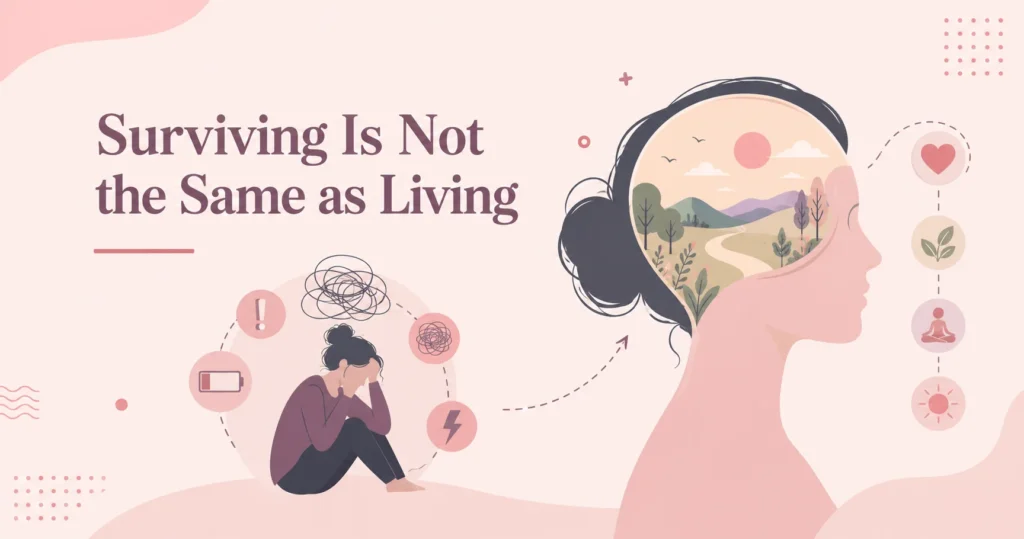
What Is Survival Mode?
Survival mode is when your body stays focused on protection instead of rest, connection, or long-term well-being. Under constant stress, the nervous system keeps the fight, flight, or freeze response (the body’s automatic threat reaction) switched on. You may keep functioning on the outside while feeling numb, exhausted, or on edge inside. It is a protective response, not a personal failure.
When the brain senses danger, uncertainty, or emotional overwhelm, it activates this stress response to help you react quickly. That reaction is meant to be brief. When stress becomes constant, though, the nervous system can struggle to return to balance. This is often called nervous system survival mode, or nervous system dysregulation (when your body’s stress response stays switched on long after the danger has passed).
People living in survival mode may experience emotional numbness, chronic overwhelm, mental fatigue, hypervigilance (always on alert), brain fog, anxiety, burnout symptoms, emotional detachment, and real difficulty resting or feeling safe. For some people this state builds slowly after months of pressure. For others, it follows a frightening event, a season of instability, or ongoing strain that never lets up.
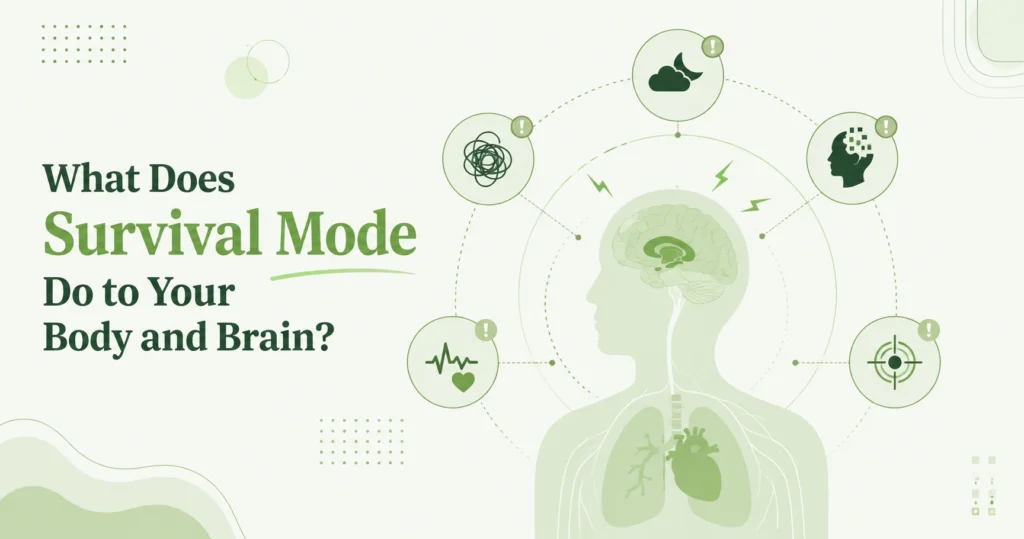
What Does Survival Mode Do to Your Body and Brain?
When the brain senses threat, it floods the body with cortisol and adrenaline (the body’s main stress hormones) to help you react fast. That is useful in a real emergency. Under chronic stress, the alarm stays on, and over time that can affect mood, memory, sleep, and concentration. These are physical adaptations, not character flaws.
As the Canadian Mental Health Association explains, stress is the body’s response to a real or perceived threat, meant to get you ready for action and out of danger. The trouble comes when the threat does not pass. CMHA notes that over time stress can have a big impact on physical health, with sleep difficulties, headaches, racing heart, and tense muscles among the common effects, and that prolonged stress makes it harder to concentrate, decide, and feel steady. None of this means something is broken in you. It means your system has been working overtime.
Signs Your Body Is Stuck in Survival Mode
Common signs include brain fog, constant fatigue that rest does not fix, emotional numbness, hypervigilance, irritability or shutdown, and pulling away from people. Some people feel wired and on edge. Others feel flat and shut down. Both point to a nervous system that needs support, and both are valid stress responses.
These signs of survival mode show up differently in everyone:
- Chronic brain fog: trouble concentrating, forgetting things, and feeling mentally slow even after rest.
- Emotional numbness: feeling disconnected from your emotions, from people, or from things you used to enjoy.
- Constant fatigue: that deep, bone-tired feeling that sleep does not seem to touch.
- Hypervigilance: always scanning for what might go wrong, startling easily, never quite able to relax even when things are calm.
- Irritability and shutdown: snapping over small things, or going completely flat and unavailable.
- Avoidance: stepping back from relationships, responsibilities, or anything that asks for emotional energy you do not have.
If you are quietly asking yourself “am I in survival mode,” reading this list as honest reflection, not as a diagnosis, can help. Saalvio does not diagnose through a blog post. But noticing the pattern is often the first step toward changing it.
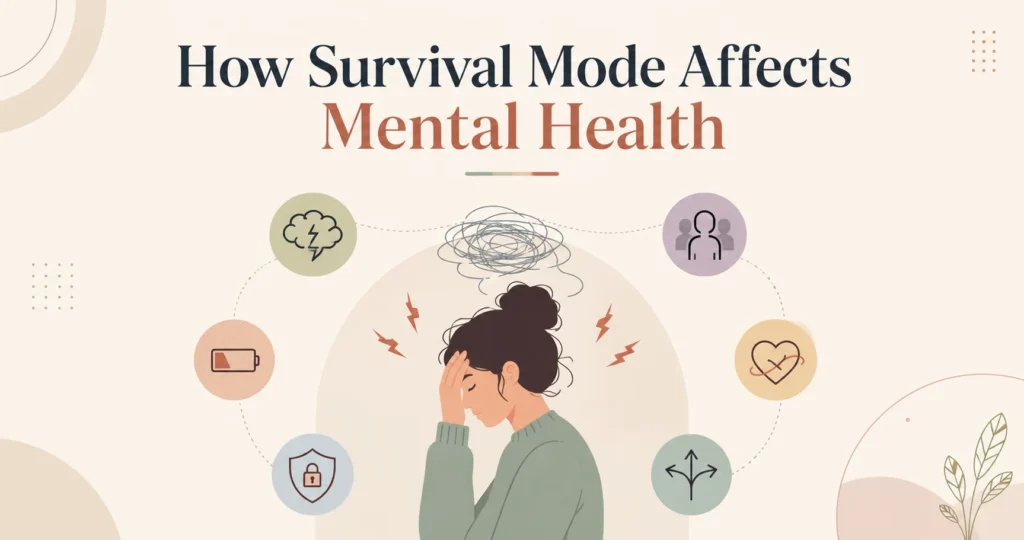
How Survival Mode Affects Mental Health
Living in emotional survival mode does not just feel bad in the moment. Over time it reshapes how you relate to yourself, to others, and to the world. Here is what that can look like across a few key areas.
Survival Mode and Anxiety
A nervous system stuck in fight or flight tends to read everything as urgent and dangerous, even things that are not. That is why survival mode and anxiety so often travel together. When the threat alarm is always on, worry has somewhere to land at every moment.
This is one place where structured support helps. CBT, or cognitive behavioural therapy (a practical talk therapy that works on thoughts and habits), offers evidence-based tools to gently interrupt these patterns and teach the brain to weigh real threats more accurately.
Survival Mode and Burnout
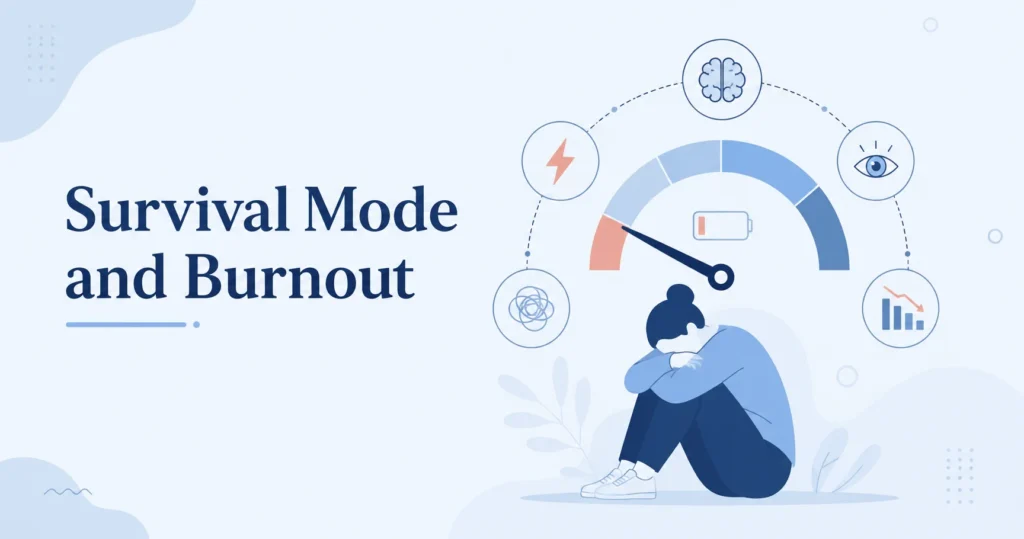
Burnout symptoms such as emotional exhaustion, cynicism, and a creeping sense that nothing matters often grow straight out of prolonged survival mode. When you have been running on stress hormones for months, your reserves simply run low. If that sounds like where you are, our page on burnout support explains what care can look like.
The World Health Organization defines burnout as a syndrome resulting from chronic workplace stress that has not been successfully managed. It is described by three features: energy depletion or exhaustion, growing mental distance or cynicism toward your work, and a drop in how effective you feel. Naming burnout for what it is can be the start of treating it with care instead of self-blame. Our guide on trauma, stress and burnout looks at how these overlap and how support can help.
Can Stress Change Your Personality?
Many people in chronic survival mode describe becoming someone they do not recognize: more withdrawn, more reactive, less present. Stress does not permanently rewrite who you are, but nervous system dysregulation can affect your patience, your empathy, and how you show up in your relationships. Our piece on whether emotional exhaustion can change who you are sits with this question in more depth. These shifts tend to ease with time, safety, and the right support. They are not a life sentence.
Your nervous system is not broken. It learned to survive. The work now is gently teaching it that it is safe to rest.
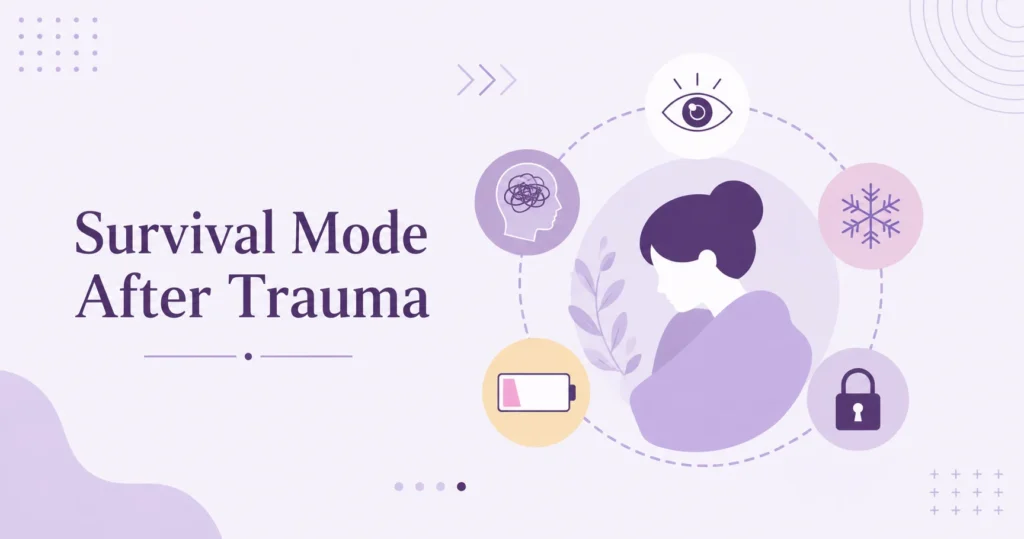
Survival Mode After Trauma
Trauma survival mode is its own specific and tender experience. When the nervous system is shaped by trauma, whether one overwhelming event or a long stretch of hard experiences, it can become wired to expect danger. This is not a choice, and it is not a weakness. It is the body doing exactly what once kept you safe.
Emotional detachment, hypervigilance, freeze responses, and shutdown are not character flaws in someone who has lived through trauma. They are the lingering echoes of a system that once had to stay on high alert. If this resonates, trauma-informed care and approaches like DBT, or dialectical behaviour therapy (a skills-based talk therapy for managing intense emotions), offer evidence-based paths toward feeling steadier. If you feel mentally exhausted even after doing nothing, your body may be working very hard beneath the surface to manage stress it never got to finish processing. Our guide to the signs of mental exhaustion can help you name what that feels like. That deserves care, not criticism.
How to Get Out of Survival Mode
Getting out of survival mode is not about willpower. You gradually teach your body that it is safe, through small, repeated, compassionate practices that signal calm to your threat-response system. Name what you are feeling, regulate through the body, lower stress where you can, protect your sleep, and build little moments of safety. Trauma-informed therapy helps when the roots run deep.
Recognize and name what you are experiencing
Awareness is the first act of healing. When you can say “I am in survival mode right now,” the thinking part of your brain begins to come back online. You are no longer only reacting. You are noticing.
Calm your nervous system through the body
When people ask how to calm your nervous system, the honest answer is that the body often leads and the mind follows. Gentle, repeatable practices may help your system move out of chronic stress, including:
- Slow breathing, with a longer out-breath than in-breath
- Grounding exercises, like naming what you can see, hear, and feel
- Walking outdoors and getting daylight
- A consistent sleep routine
- Lowering overstimulation, such as constant screens and noise
- Mindful movement, like stretching or gentle yoga
These are first steps that many people can practise on their own. They are support tools, not a cure, and they work best repeated over time.
Reduce cortisol load where you can
This means gently lowering stressors where it is possible, building predictable daily routines, protecting sleep, and easing the constant demands on your system. Chronic overwhelm does not resolve with more productivity. Sometimes the bravest thing is to do less, on purpose.
Work with a trauma-informed therapist
If your survival mode is rooted in trauma or long adversity, professional support can make a real difference. Saalvio offers online therapy in Ontario, delivered by registered psychotherapists and registered social workers, including trauma-informed care for people carrying chronic stress. Every Canadian’s first session with a Saalvio clinician is free, so trying therapy is not a gamble on fit. If you are not ready to book, you can message a therapist before you book and ask whatever you need to ask first. Messaging is a no-pressure way to start a conversation. It is not therapy by text and not crisis support.
Build safety through small, repeated experiences
The nervous system heals through gathered moments of safety, connection, and ease, not one big breakthrough. Small acts of rest, gentle company, and quiet joy slowly rewire threat-based patterns. You do not have to fix everything tonight.
Final Thoughts
Survival mode can make you feel disconnected from yourself, your emotions, and your sense of peace. But it is not a weakness. It is often the nervous system’s attempt to cope with prolonged stress, overwhelm, or pain. With awareness, support, and compassionate tools, healing becomes possible. Small moments of rest, safety, and connection can gradually help your body move out of chronic stress and toward steadier ground. You deserve support that helps you feel safe and understood, not just functional.
If your stress is severe, or if you ever feel unsafe, please reach for help right away. You can find more options on our crisis resources page.
Frequently Asked Questions
Why do I feel emotionally numb all the time?
Emotional numbness is often your nervous system protecting you from overwhelm. When stress signals stay constant, the brain can dial down emotional processing to keep you going. It is a survival mechanism, not a permanent state. With the right support, reconnecting to your emotions is possible.
Can you be in survival mode without realizing it?
Yes, and it is very common. Many people in survival mode look fully functional from the outside. They are working, parenting, and managing. Inside, they feel depleted, disconnected, or like they are running on empty and just going through the motions. Surviving is not the same as living.
How long does it take to get out of survival mode?
There is no single timeline. It depends on how long you have been in this state, what is driving it, and what support you can reach. Some people notice shifts within weeks. For those with trauma histories, healing often unfolds over months with professional support. The important thing is that it is possible.
Is survival mode the same as anxiety?
They overlap a lot, but they are not identical. Survival mode is the broader physical state, the chronic activation of the stress response. Anxiety is one of the experiences that often grows out of it. Someone in survival mode may feel anxiety, but also numbness, exhaustion, or shutdown. Calming the underlying dysregulation often helps both.
Where can I get help for chronic stress in Ontario?
Saalvio offers online counselling across Ontario with registered psychotherapists and registered social workers. If your survival mode is rooted in trauma or long stress, trauma-informed therapy can help. The first session is free, and you can message a therapist with questions before you book. Sessions are reimbursable through many extended health plans, and you receive a detailed receipt to submit.
Clinically reviewed
Usman Khan, Registered Psychotherapist
Usman Khan is the Clinical Director of Saalvio and a Registered Psychotherapist with the College of Registered Psychotherapists of Ontario (CRPO #13456). He holds an MD, an MPH from Western University, and an MA in Counselling Psychology from Yorkville University. He reviews all clinical content on saalvio.com before publish.
See also across Saalvio
Topics mentioned in this post that have their own page on the site.
Talk to our clinical team
Saalvio offers a free 30-minute consultation with any therapist on the team. There is no card on file. If we are not the right fit, we will say so and help you find one.