
How to Improve Your Mental Health: 10 Evidence Based Strategies
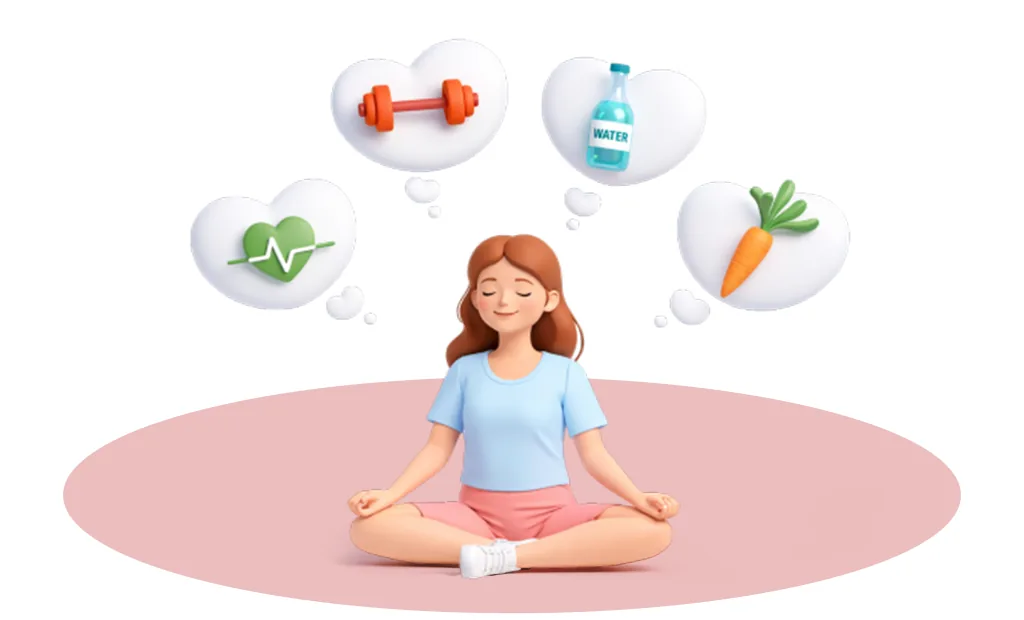
Some nights you are not in crisis. You are just tired in a way that sleep does not fix. The day went fine, and you still feel flat, or wound too tight, or somewhere behind a glass wall where the rest of life is happening without you. If you have been quietly wondering how to improve your mental health, you have already done the hardest part, which is admitting that something could be better.
This guide is for that quiet wondering. It walks through ten evidence based mental health strategies you can start small, one at a time, without a gym membership, a self-help shelf, or a single grand life change. None of these will fix everything, and we will not pretend they do. But each one builds a little steady ground under your feet. We will go gently, and we will go in small steps.
How Do You Improve Your Mental Health?
Start with one small change, not ten. Protect your sleep, move your body most days, eat and drink water regularly, stay connected to people you trust, and spend a little time outdoors. These habits will not fix everything, but they build steady ground. If they are not enough after a few weeks, talking to a therapist helps.
The honest truth about improving mental health is that it rarely comes from one big decision. Whether you are asking how to improve mental health in general or, more privately, how to improve my mental health right now, the real answer is the same: small steps to improve mental health, repeated on the ordinary days when no one is watching and nothing feels different yet. The World Health Organization describes mental health as a state of wellbeing that lets a person cope with the normal stresses of life, work and learn well, and contribute to their community. That is not a finish line. It is a direction. Below are ten ways to improve mental health that the research keeps pointing back to.
What Are Evidence Based Ways to Improve Mental Health?
The best supported daily habits are regular sleep, physical activity, social connection, time outdoors, balanced eating, limiting alcohol, and managing stress with breathing or mindfulness. The World Health Organization and the Canadian Mental Health Association point to these lifestyle factors. None replace professional care when symptoms are heavy, but each one helps.
These are not the same as a cure, and they are not a substitute for therapy or medical care when you need it. Think of them as the foundation a house is built on. You can have the foundation and still need the rest of the house. People often ask how to increase mental health as if there were one switch to flip, but in real life it is these small habits, stacked over time. With that said, here are the ten mental health strategies, each one a small thing you can actually do to enhance mental health day by day.
1. Protect Your Sleep First
Sleep is the foundation most other things rest on. When sleep is steady, mood, focus, and stress all get a little easier to carry. Keep a regular sleep and wake time, dim the screens before bed, and limit caffeine in the afternoon. This is sleep hygiene, which simply means a set of habits that protect good rest.
How Does Sleep Affect Mental Health?
Sleep and mental health work both ways: poor sleep makes low mood and anxiety worse, and stress makes sleep harder. Keeping a steady sleep and wake time, cutting screens before bed, and limiting late caffeine help. If sleep stays broken for weeks alongside low mood, it is worth talking to someone.
You do not have to fix your whole sleep at once. Pick one thing this week. Maybe it is putting the phone across the room. Maybe it is going to bed twenty minutes earlier. The Centre for Addiction and Mental Health treats sleep as a core part of mental health, not a luxury. When everything feels too heavy, protecting one steady bedtime is a real and worthy place to start.
2. Move Your Body, Even a Little
Regular movement is one of the most reliable ways to boost mental health. It lifts mood, lowers stress, and helps you sleep. The World Health Organization recommends adults get at least 150 to 300 minutes of moderate activity each week, and notes that physical activity helps reduce symptoms of anxiety and low mood.
How Does Exercise Affect Mental Health?
Regular movement lifts mood, lowers stress, and improves sleep. The World Health Organization recommends adults get at least 150 minutes of moderate activity a week, and even short walks help. You do not need a gym. Movement you enjoy and can repeat matters more than intensity.
The number can sound like a lot when getting off the couch already feels like a lot. So forget the number for now. A ten minute walk around the block counts. Stretching in your living room counts. Exercise and mental health are linked not because of how hard you push, but because of how often you show up. With a low mood, a little is a lot.
3. Stay Connected to People You Trust
When we feel low, the instinct is to pull away, to stop texting back, to tell everyone we are fine. But isolation feeds the very feeling it promises to protect us from. Staying in contact with even one person you trust is one of the most protective daily habits for mental health there is. You do not have to explain everything. You just have to not disappear.
Social connection does not mean a full calendar. It can be a short message to a sibling, a coffee with a neighbour, a phone call with the friend who always picks up. Reach toward the people who make you feel less like you are on an island. If reaching out feels impossible right now, that is worth paying attention to, and we will come back to it near the end of this guide.
4. Get Outside and into Daylight
Time outdoors and natural daylight genuinely support how to improve mental wellbeing, especially through the long Canadian winters when the sun clocks out early. Daylight helps steady your body clock, which in turn helps your sleep, which in turn helps your mood. A few minutes outside in the morning is a small habit with a long reach.
You do not need a forest or a mountain. A walk to the corner, ten minutes on a balcony, eating lunch by a window that actually opens. For people who feel the dark months press down hard, getting outside during daylight matters even more. Step outside, even when part of you would rather pull the blinds and disappear into the couch.
5. Eat and Hydrate Like You Matter
When mood drops, eating is often the first thing to slip. We skip meals, run on coffee, and forget water entirely. Regular, balanced meals and staying hydrated keep your energy and mood steadier through the day. This is not about a perfect diet. It is about not running your body on empty while asking it to carry something heavy.
Keep it forgiving. Drink water before your first coffee. Keep an easy meal on hand for the days when cooking feels like too much. Eat something at roughly regular times, even when you do not feel hungry. Small, kind acts of feeding yourself are a quiet way of telling your own nervous system that you are still worth looking after.
6. Go Easy on Alcohol
Alcohol can feel like it takes the edge off, but it tends to deepen low mood and disrupt sleep once it wears off. Cutting back, or noticing the nights you reach for it and why, is one of the more practical mental health tips on this list. You do not have to make a vow. You can just get curious about the pattern.
If alcohol has become the thing you lean on to get through the evenings, that is not a personal failing, and it is worth gentle attention. Many people find that even a small reduction steadies their sleep and their mornings, which then steadies everything else. If cutting back feels harder than it should, that is a sign that talking to someone could help.
7. Build Stress Skills You Can Actually Use
Stress is not going to vanish, so the goal is to carry it differently. A few simple skills genuinely help in the moment. Slow breathing, in for four and out for six, tells your nervous system you are safe. Mindfulness, which means paying gentle attention to the present without grabbing at it, slows the race of worried thoughts, and a short daily practice of meditation for mental health is one gentle way to build that skill. Journaling gets the heavy stuff out of your head and onto paper.
These are not just wellness buzzwords. They are small, repeatable tools you can reach for at the kitchen table at 11 p.m. when the worry will not settle. If your stress is tangled up with constant worry, our page on anxiety goes deeper into what helps. Some people also find that kinder self-talk, like the kind we cover in our post on positive affirmations for mental health, softens the harsh voice that stress tends to sharpen. The point of stress skills is not to feel calm all the time. It is to know you have something to do with the feeling besides brace against it.
8. Anchor the Day with a Simple Routine
Low mood and stress both blur the days together until time becomes one long, shapeless stretch. A simple routine gives the day edges again. Wake at a steady time, eat a real meal, set one small goal, even if it is only stepping onto the porch for fresh air. Routine is not rigidity. It is a handrail.
Behavioural activation, a clinical term for scheduling small doable activities so that doing leads the way back to feeling, is one of the better studied approaches for low mood. You do it by choosing the next small thing and doing it before you feel ready, because waiting to feel ready can take a very long time. When the mountain looks too high, just look at your feet.
9. Set Limits on Screens and News
A bottomless scroll and a steady drip of alarming headlines can quietly raise your baseline stress without you ever deciding to feel worse. Setting gentle limits on screen time and news, especially before bed, is a simple way to improve mental health and protect your sleep at the same time. You are allowed to put the phone down. You are allowed to not know everything happening everywhere all at once.
This is not about going off the grid. It is about noticing when the scroll has stopped being a break and started being a weight. Try one screen-free stretch a day, or charging the phone outside the bedroom. The quiet that follows can feel strange at first. For a tired mind, that quiet is often exactly the rest it has been missing.
10. Ask for Help When You Need It
The bravest strategy on this list is also the simplest to say and the hardest to do: ask for help. Self-help habits build a strong foundation, and sometimes the foundation is not enough on its own, and that is completely okay. Reaching for support is a sign of strength, not failure. You do not have to wait until things fall apart to be allowed to reach out.
Can You Improve Your Mental Health Naturally?
Yes, lifestyle steps like sleep, movement, connection, daylight, and stress skills genuinely support mental health and have strong research behind them. They work best as a foundation, not a replacement for therapy or medical care. If you have ongoing low mood, anxiety, or thoughts of self-harm, reach out to a professional too.
In any given year, one in five people in Canada experiences a mental health problem or illness, according to the Canadian Mental Health Association. If that is you right now, you are in very large and very ordinary company. Needing help does not make you broken. It makes you human, in a country where the wait for care is long and the silence around it is longer.
How Can the Saalvio App Support These Habits?
Habits are easier to keep when something helps you keep them. The Saalvio mobile app is built to support the daily strategies above, with mood tracking, a private journal, guided practices, sleep tools, calming music, and structured self-assessments, plus Thrive, an AI companion for the quiet hours between everything else. The full app is available across Canada and North America on the App Store and Google Play.
Your journal stays private to you. What you write, the days you mark as hard, the patterns Thrive notices, none of it is ever sold, and your data lives on Canadian servers under PHIPA and PIPEDA, with HIPAA-equivalent safeguards where they apply. A word on Thrive: it is a companion that listens, not a clinician, and not therapy. It is a place to put a thought at midnight, not a replacement for a real human conversation when you need one.
When Should You See a Therapist?
Consider talking to a therapist when low mood, worry, or stress lasts more than two weeks, gets in the way of work, sleep, or relationships, or self-help is not enough. You do not need to be in crisis to reach out. If you are not sure whether it is time, our guide on the signs you need therapy can help you read your own situation more clearly. In Ontario you can message a registered psychotherapist first to ask about fit.
This is also the honest answer to how to support your mental health, and how to better your mental health, when the habits are not carrying you anymore. If low mood or anxiety has settled in and will not lift, our pages on depression and anxiety walk through what helps, and our guide on how to find a therapist walks through the practical first steps. Asking for help is not the end of self-help. It is part of it.
Saalvio offers online therapy in Ontario, delivered by our clinical team of registered psychotherapists and registered social workers who use evidence-based approaches matched to what you are actually carrying. If you are curious about the practical side, our page on how sessions with Saalvio work lays out what to expect. Before you book anything, you can message a registered psychotherapist before you book and ask whatever you need to ask: whether they have worked with someone like you, whether their approach fits, whether they will understand the life you come from. There is no cost and no commitment. Messaging is for those questions and brief follow-ups, not therapy by text; the real work happens in a booked session.
Every Canadian’s first therapy session with a Saalvio clinician in Ontario is free, so deciding to try therapy is not a financial gamble on whether the fit will be right. Therapy with a Saalvio clinician is offered in Ontario today, and the Saalvio app is available across Canada and North America wherever you are reading this.
A Note on the Hardest Days
If reaching for any of this feels impossible, if the low mood has teeth, if you have had thoughts of not wanting to be here, please do not wait for the list. Reach for a person or a crisis resources line today. The strategies in this guide are for building steady ground over time. They are not what you reach for in the middle of a fire.
Frequently Asked Questions
How can I improve my mental health on my own?
Self-help works best in small, steady doses. Build a sleep routine, move daily, stay connected, get daylight, and use a breathing or journaling habit to manage stress. Track what helps and keep it simple. Tools like mood tracking, a journal, and guided practices in the Saalvio mobile app can support the habit. If self-help is not enough, therapy helps.
What is the single most important thing for mental health?
There is no single fix, but sleep is the foundation most others rest on. When sleep is steady, mood, focus, and stress all get easier to manage. If you can only change one thing this week, protect a regular sleep and wake time. Then add movement and connection from there.
How long does it take to improve your mental health?
There is no fixed timeline. Some people feel a small lift within a couple of weeks of steadier sleep, movement, and connection; for others it takes longer, especially with depression or anxiety. Aim for consistent, gentle progress rather than speed, and ask for help if things are not improving.
Can apps actually help your mental health?
They can support good habits. The Saalvio mobile app includes mood tracking, a private journal, guided practices, sleep tools, and Thrive, an AI companion for the moments between sessions. Thrive is not a clinician and not therapy. Apps are a helpful add-on, not a substitute for professional care when symptoms are heavy.
When should I get professional help instead of self-help?
Reach out when symptoms last more than two weeks, affect daily life, or self-help is not enough. You do not have to be in crisis. In Ontario you can message a registered psychotherapist or registered social worker on our team to ask about fit and approach before you book anything.
What should I do if I am in crisis right now?
Saalvio is not a crisis service. If you are in immediate danger, please call 911. If you are in mental health crisis, please call 988 (the Suicide Crisis Helpline of Canada) or visit your nearest emergency department.
Clinically reviewed
Usman Khan, Registered Psychotherapist
Usman Khan is the Clinical Director of Saalvio and a Registered Psychotherapist with the College of Registered Psychotherapists of Ontario (CRPO #13456). He holds an MD, an MPH from Western University, and an MA in Counselling Psychology from Yorkville University. He reviews all clinical content on saalvio.com before publish.
See also across Saalvio
Topics mentioned in this post that have their own page on the site.
Talk to our clinical team
Saalvio offers a free 30-minute consultation with any therapist on the team. There is no card on file. If we are not the right fit, we will say so and help you find one.