
Signs You Need Therapy: A Canadian Guide to Mental Health Support
There is a question many people quietly ask themselves in the middle of a hard week. Do I need therapy? Maybe something feels off and you cannot quite name it. Maybe you are holding it together on the surface and running on empty underneath. Maybe you have typed “therapist near me” into your phone more than once, late at night, and then closed the tab before anyone could see.
You are not the only one asking. And the fact that you are asking is already something. It means a part of you is still looking for a way through, even on the days that feel like there isn’t one.
This guide walks through what the signs you need therapy actually look like, the difference between stress and depression, how to find affordable and free mental health support, and what a first step could be, wherever you are, including right here in Ontario. We will go gently, and we will go in small steps.
Why Asking “Do I Need Therapy?” Is Already a Strength
Asking “do I need therapy” is a strength because it means you are taking your own experience seriously instead of waiting for it to get worse. Therapy is not only for people in crisis. It helps across a wide range of human experience, from daily stress to grief, relationship strain, burnout, or a quiet sense that something is just not right.
There is an old belief that therapy is only for people who have hit bottom. That belief keeps people stuck for years. The truth is that the sooner you reach for support, the more options you have. Therapy is not a last resort. It is a first-line tool for living, and you do not have to earn your way to it by suffering enough first.
Mental health disorders are among the top five causes of disability in Canada, and according to the Canadian Institute for Health Information (CIHI), when mental health concerns are left untreated, the impact reaches past emotional distress into physical health, work, relationships, and even life expectancy. Reaching out early is not an overreaction. It is how people protect the rest of their lives.
What Are the Signs You Need Therapy?
Common signs you need therapy include emotions that feel too big to manage, trouble functioning day to day, a low mood that will not lift, leaning on substances or habits to cope, strained relationships, unexplained physical symptoms, and disrupted sleep. These are not a diagnosis. If several last more than a couple of weeks and what you are doing is not helping, it is worth talking to someone.
The list below is a reflective self-check, not a quiz that hands you a verdict. No article can tell you what you are living with. Only a real conversation with a professional can do that. But if these signs of needing therapy land close to home, that recognition is worth listening to. It can also help to read about the wider mental health red flags worth taking seriously.
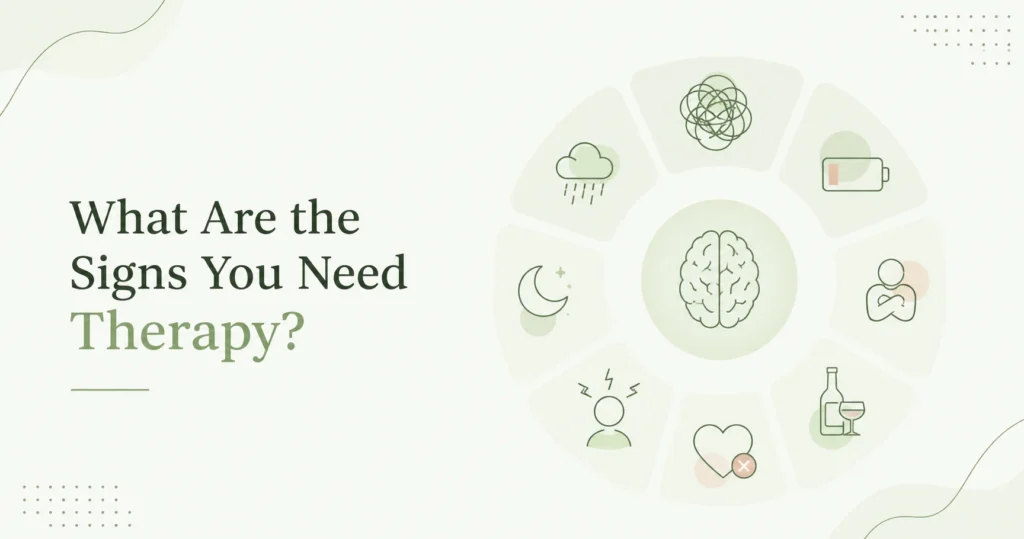
1. Your Emotions Feel Overwhelming or Hard to Control
Sadness that does not lift. Anger that arrives out of nowhere. Worry that follows you from one room to the next. When your emotions regularly feel too big, too constant, or too hard to manage on your own, a therapist can help you understand and steady them using evidence-based approaches like CBT, or cognitive behavioural therapy, a structured talk therapy that helps you notice and reshape unhelpful patterns of thinking.
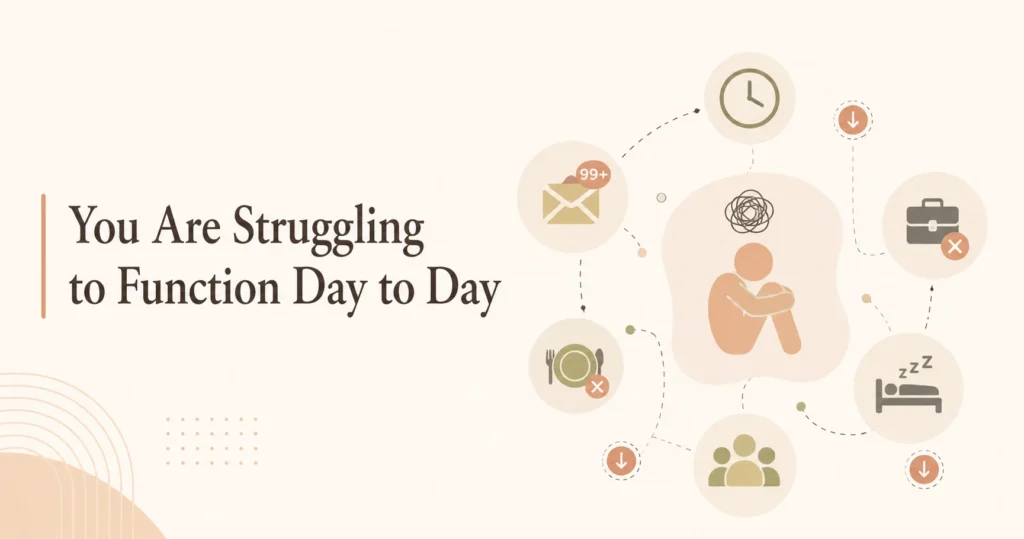
2. You Are Struggling to Function Day to Day
Missing work or deadlines. Letting messages pile up unanswered. Skipping meals, or sleeping the day away. When mental health challenges start getting in the way of showing up in your own life, that is a meaningful signal. CAMH advises seeking professional help when your functioning at work, school, home, or socially is affected.
3. You Feel Sad, Empty, or Hopeless More Often Than Not
Feeling persistently low, cut off from things that used to bring you joy, or like the future holds nothing, are signs worth taking seriously. This is different from a bad day or a hard week. It is a sustained shift in how you experience your own life, and it deserves more than waiting it out.
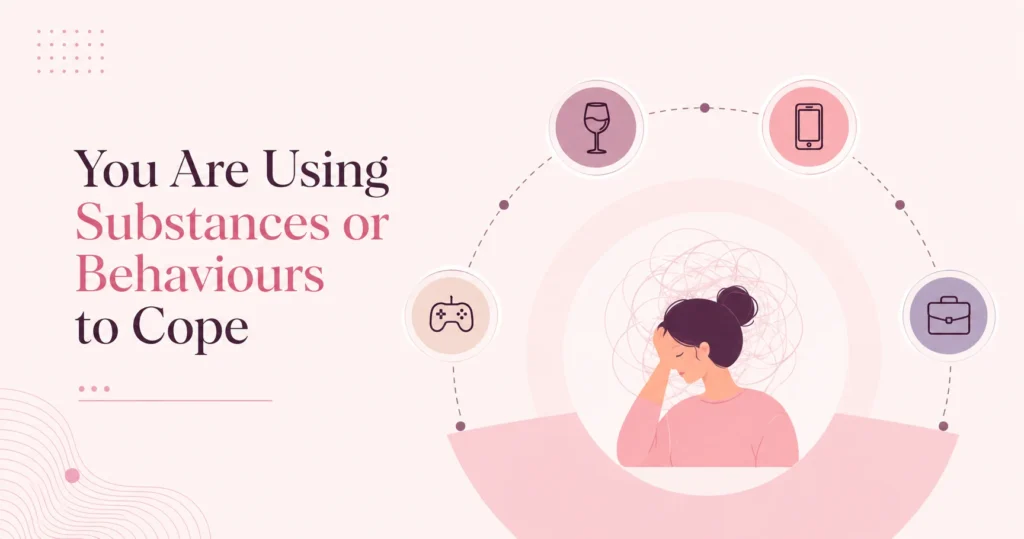
4. You Are Using Substances or Behaviours to Cope
Drinking more than you meant to. Scrolling for hours to stay ahead of a feeling. Overworking to keep the quiet away. When the things you do to get through the day become things you depend on, they are often pointing at something underneath that deserves care.
5. Something Happened That You Have Not Processed
A loss. A relationship that left a mark. A frightening event. A change that turned your life over. Sometimes we understand what happened in our heads while still carrying it, unfinished, in our bodies. Therapy is a structured and safe place to do that work at a pace you can handle.
6. Your Relationships Are Suffering
Conflict that keeps repeating. Trouble letting anyone close. Pulling away from the people you love most. Mental health challenges change how we connect. If your closest relationships feel strained and you cannot find the reason, that is worth exploring with someone trained to help you see it.

7. You Are Experiencing Physical Symptoms Without a Medical Cause
Headaches that keep coming back. Tension you cannot release. Stomach trouble. A tiredness that rest does not touch. The body and mind are not separate. Physical symptoms that persist with no clear medical cause are sometimes how unaddressed stress or emotional pain finds its way out. Talk to your doctor first, and know that emotional support can be part of the answer too.
8. You Feel Disconnected From Yourself or Your Life
Going through the motions. Watching your own life from somewhere outside it. Not quite recognizing your own reactions. This sense of disconnection can show up with burnout, depression, or what clinicians call dissociation, a feeling of being detached from yourself or your surroundings. All of it responds to support. You do not have to stay this far away from your own life.
9. Your Sleep Has Changed Significantly
Trouble falling asleep, waking through the night, surfacing too early, or sleeping far more than usual are all tied to anxiety, depression, and long-term stress. Sleep and mental health pull on each other in both directions, which makes a real change in your sleep an important signal to notice rather than push past.
10. You Have Had Thoughts of Hurting Yourself
If you are having thoughts of harming yourself, please reach out now. Call or text 988, the Suicide Crisis Helpline of Canada, available any hour of any day. You can also go to your nearest emergency department or call 911. These thoughts are not a weakness or a failing. They are a signal that you need and deserve immediate support, and that support exists. Our crisis resources page lists more places to turn.
When Should You Go to Therapy?
You should go to therapy when your emotional, mental, or behavioural health regularly gets in the way of your life and the ways you are coping are no longer working. You do not need a diagnosis. You do not need a crisis. Your own sense that something is off is reason enough. Many people find therapy most useful before a breaking point, not after.
This is the honest answer to how to know if you need therapy and the quiet “should I go to therapy” question so many people carry for months. There is no checklist that ends in a verdict, and you do not need anyone else’s permission to decide it is bad enough. When to see a therapist is, in the end, a personal call, and “I am not sure, but I am tired” is a completely valid place to start from.
Am I Depressed or Just Stressed?
Stress usually eases when the pressure lifts and stays tied to a clear cause. Depression lingers, flattens your interest in things you once enjoyed, and shows up most of the day for two weeks or more. The two can overlap, since long-term stress is one of the paths into depression and anxiety. If you are unsure which one you are living with, that uncertainty is itself a good reason to talk to a professional.
“Am I depressed or just stressed” is one of the most common things people type into a search bar at night, and it makes sense. From the outside the two can look almost the same. From the inside they feel different. A therapist can help you tell them apart and figure out what would actually help, and you can read more about depression and what sets it apart from a hard stretch.
Why Do I Feel Empty Inside?
Feeling empty or numb inside can be a sign of depression, burnout, grief, or long-term stress, or a reduced ability to feel pleasure, sometimes called anhedonia. It is a signal, not who you are. A therapist can help you understand what is driving the flatness and slowly rebuild your connection to your values and your life.
“Why do I feel empty inside” is hard to put into words and easy to recognize. Not sadness exactly. Not anger. Just a hollow, grey “what is the point” that drains the colour out of ordinary moments. The same goes for the related question so many people ask, “why do I feel emotionally numb.” Emptiness and numbness can settle in after long stretches of strain, almost like the mind quietly shutting a door to protect itself. Our piece on whether emotional exhaustion can change who you are speaks to that experience. The important thing to hold onto is that this feeling is not permanent and it is not your character. It responds to support, particularly approaches that help you reconnect with what matters to you.
Signs of an Anxiety Attack vs Chronic Stress Symptoms
An anxiety attack comes on fast and peaks within minutes. Chronic stress builds slowly over weeks and months. They feel different in the body and they ask for different kinds of care, so it helps to know which one you are dealing with.
What Are the Signs of an Anxiety Attack?
Common signs of an anxiety attack are a racing or pounding heart, shortness of breath, chest tightness, dizziness, sweating, trembling, and a strong sense of dread. Episodes usually peak within minutes and then ease, but they are deeply distressing. If you have had even one, it is worth speaking with a healthcare provider.
The signs people describe most often include:
- Racing or pounding heart, sometimes mistaken for a heart problem
- Shortness of breath, or feeling like you cannot get enough air
- Dizziness, lightheadedness, or feeling faint
- Chest tightness or pressure
- Sweating, trembling, or chills
- A strong sense of dread, that something terrible is about to happen
- Feeling detached from yourself or your surroundings
People often ask about the signs of an anxiety attack vs panic attack. In everyday language the two terms are used for the same experience, a sudden wave of intense fear with strong physical symptoms. What matters more than the label is that the feeling is real, it is treatable, and you do not have to ride it out alone. CAMH stress resources note that severe stress can be a symptom of an underlying anxiety disorder, and you can learn more about anxiety and the approaches that help.
What Are the Symptoms of Chronic Stress?
Chronic stress builds slowly: constant tiredness that rest does not fix, trouble concentrating, ongoing irritability, muscle tension in the neck, shoulders, or jaw, frequent headaches or stomach issues, pulling away from people, and a low hum of dread. It is easy to normalize, which is exactly why it is worth addressing before it grows harder to manage.
The chronic stress symptoms people most often live with include:
- Constant tiredness that does not improve with rest
- Trouble concentrating or making decisions
- Persistent irritability, a short fuse, or feeling easily set off
- Muscle tension, especially in the neck, shoulders, or jaw
- Frequent headaches or stomach trouble
- Social withdrawal, cancelling plans and not wanting to engage
- A creeping sense of dread or overwhelm that never fully lifts
Both therapy and evidence-based self-help tools, like the CBT-informed exercises in the Saalvio app, can make a real difference in stress management. Good stress management in Canada starts with naming what you are carrying, and these symptoms are worth taking seriously long before they tip into something heavier.
What Are the Signs of Emotional Exhaustion?
Emotional exhaustion shows up as dread for things you used to handle easily, feeling detached or cynical, low patience with everyone, trouble caring about outcomes or even yourself, waking up tired, and feeling close to tears. It is common in caregivers and parents. It is a signal that your mental health needs attention, not a character flaw. When the tiredness is more mental than physical, our guide to the symptoms of mental exhaustion unpacks what it looks like.
Emotional exhaustion is what happens when you have been giving and giving, managing and coping, until the tank is genuinely empty. People often ask what does emotional exhaustion feel like, and the honest answer is heavy, the kind of heavy that sleep does not lift. The emotional exhaustion signs people describe include:
- Dreading situations you used to take in stride
- Feeling detached or cynical about your work, your relationships, or your future
- Low patience for everything and everyone, even people you love
- Difficulty caring, about outcomes, about others, about yourself
- Physical heaviness, waking up tired, moving through the day tired, going to bed exhausted
- Crying without warning, or feeling one small thing away from breaking
If you recognize yourself here, please hear this clearly. This is not you failing at your own life. It is a signal that you have been strong for too long without enough support, and therapy can help you understand what is draining the tank and build a way to refill it that lasts.
How Do I Find a Therapist in Ontario?
To find a therapist in Ontario, start with your family doctor for OHIP-covered referrals. Call or text ConnexOntario at 1-866-531-2600 for a free navigator. Ontario adults 18 and older can self-refer to the free OSP program. Check your workplace benefits, which often include sessions with a registered psychotherapist. Saalvio’s web portal lets you book with our Ontario clinical team directly.
Searching “therapist near me” can feel overwhelming fast. Here is a practical path, whether you are looking for general mental health support in Ontario or trying to figure out how to find a therapist in Ontario specifically:
- Talk to your family doctor. They can refer you to psychiatrists, hospital programs, or the OSP program. This is a free starting point covered by OHIP, Ontario’s public health insurance.
- Call or text ConnexOntario. Dial 1-866-531-2600 or visit connexontario.ca. A trained navigator will help you find services matched to what you need and where you live, at no cost.
- Self-refer to the OSP Program. Ontario adults 18 and older can access free, structured CBT without a doctor’s referral through the Ontario Structured Psychotherapy Program, which CAMH helps lead.
- Check your employee benefits. Look for “Registered Psychotherapist” or “Psychological Services” in your plan. Many plans include several covered sessions each year.
- Try Saalvio. Our web portal connects you with our Ontario clinical team of registered psychotherapists and registered social workers, so you can book a session without a long waitlist. You can also explore how to find a therapist in our full resource guide.
Before you book anything, you can message a therapist before you book and ask whatever you need to ask, whether they have worked with someone like you, whether their approach fits, whether they will understand the life and family you come from. There is no cost and no commitment. It is a conversation, not a sales call. And every Canadian’s first session with a Saalvio clinician is free, so deciding to try therapy is not a gamble on whether the fit will be right.
What Does OHIP Cover for Therapy in Ontario?
OHIP covers therapy delivered through publicly funded settings: psychiatrists with a doctor’s referral, hospital-based programs, and government-funded clinics like the OSP program. Private therapy with a registered psychotherapist, registered social worker, or psychologist in private practice is not covered by OHIP, though many extended health benefit plans help with the cost.
For context on the wider market, private therapy in Ontario typically runs between $150 and $250 per session, with sliding-scale fees, often in the $60 to $120 range, and student-therapist rates making care more reachable for many people. Saalvio does not bill insurers directly, but sessions with our registered psychotherapists and registered social workers are typically reimbursable under most Canadian extended health benefit plans, and every client receives a detailed receipt to submit to their insurer. Coverage varies by plan, so it is worth confirming the details with your own provider.
What Is Online Therapy in Ontario, and Is It Effective?
Online therapy in Ontario delivers the same care as in-person sessions, with the same registered professionals, by video or phone. It is a practical option for people in smaller communities, those with full schedules, or anyone who finds getting to an office difficult. Research supports it: Health Quality Ontario’s health technology assessment found that guided internet-delivered CBT improves symptoms for people with mild to moderate depression and anxiety, and offers good value.
Whether you are in Toronto or a smaller Ontario community, online therapy in Ontario removes the commute, the waiting room, and a good deal of the dread of a first visit. Saalvio’s web portal at client.saalvio.com connects you with our registered psychotherapists and registered social workers in Ontario for therapy sessions and structured self-assessments. Therapy with a Saalvio clinician is offered in Ontario today, with active expansion underway across Canada.
The full set of self-help tools, including mood tracking, a private journal, guided practices, and CBT-informed exercises, lives in the Saalvio app self-help tools on the App Store and Google Play, and the app is available across Canada and North America. The web portal is for therapy and self-assessments; the app carries the self-help library. They are two different doors into the same care, and you can use either one, or both.
You do not have to figure all of this out tonight. You can reach for help tired and unsure. That still counts.
Frequently Asked Questions
How do I know if I need therapy or just self-help?
If what you are trying on your own is helping and life feels manageable, self-help tools may be enough for now. The Saalvio app offers CBT-informed exercises you can use across Canada and North America. If you have been struggling for more than two to four weeks, your functioning is affected, or things keep getting worse despite your efforts, therapy offers a depth of support that self-help alone cannot match.
Should I go to therapy even if I am not in crisis?
Yes. Therapy is not only for people in crisis. It is one of the most effective ways to build resilience, work through everyday challenges, strengthen relationships, and protect your long-term well-being. Many people find therapy most useful before they ever reach a breaking point, when there is more room to make small changes that hold.
What are the signs of an anxiety attack?
Common signs include a racing heart, shortness of breath, chest tightness, dizziness, trembling, sweating, and a strong sense of dread or that something terrible is about to happen. Episodes usually peak within minutes and then ease. If you have experienced these, speaking with a healthcare provider is worthwhile, because they are very treatable.
Can I get free mental health support in Ontario?
Yes. Free mental health support in Ontario includes the Ontario Structured Psychotherapy (OSP) program for adults 18 and older, BounceBack Ontario, ConnexOntario at 1-866-531-2600, community health centres, and workplace Employee Assistance Programs. The 988 Suicide Crisis Helpline is also free and available any hour of any day across Canada.
What is the difference between a counsellor and a therapist in Ontario?
In Ontario, look for a Registered Psychotherapist (RP) or a Registered Social Worker (RSW). Both are regulated, which means they answer to a professional college that sets standards and handles complaints. “Counsellor” is a broader term that is not always regulated the same way. The regulated titles carry real professional oversight, which protects you.
What does OHIP cover for therapy in Ontario?
OHIP covers therapy in publicly funded settings: psychiatrists with a referral, hospital programs, and government-funded clinics like OSP. Private therapy with a registered psychotherapist, social worker, or psychologist is not covered by OHIP, but many extended health benefit plans help with the cost, and OSP offers free structured CBT to Ontario adults 18 and older.
How long does therapy take to work?
It depends on what you are working through and the type of therapy. CBT is often shorter-term, commonly 8 to 20 sessions, with clear, measurable goals. Some people notice shifts within a few sessions, while deeper work may take longer. There are no guarantees, but a good therapist will set realistic expectations with you early on.
What is online therapy in Ontario, and is it effective?
Online therapy in Ontario delivers counselling and psychotherapy by video or phone, with the same registered professionals as in-person care. Health Quality Ontario found guided internet-delivered CBT improves symptoms for mild to moderate depression and anxiety. For many people it is just as helpful as an office visit, and far easier to reach.
Why do I feel empty inside?
Feeling empty can be a sign of depression, burnout, grief, or prolonged stress, or a reduced ability to feel pleasure, sometimes called anhedonia. It is not a character trait or a permanent state. It is a signal from your mind and body that something needs attention. A therapist can help you understand what is driving it and find your way back to connection.
Clinically reviewed
Usman Khan, Registered Psychotherapist
Usman Khan is the Clinical Director of Saalvio and a Registered Psychotherapist with the College of Registered Psychotherapists of Ontario (CRPO #13456). He holds an MD, an MPH from Western University, and an MA in Counselling Psychology from Yorkville University. He reviews all clinical content on saalvio.com before publish.
See also across Saalvio
Topics mentioned in this post that have their own page on the site.
Talk to our clinical team
Saalvio offers a free 30-minute consultation with any therapist on the team. There is no card on file. If we are not the right fit, we will say so and help you find one.