
How to Know If You Have Anger Issues
You promise yourself it will be different next time. You plan the calm words in your head. Then the moment comes, and the heat rises faster than the thought, and you say the thing you swore you would not say. After, in the quiet, you sit with the same question a lot of people carry alone: is something wrong with me?
That question is not a failure. It is the start of something. Anger is human, and we all feel it. But sometimes it feels bigger than us. It shows up faster. It stays longer. It leaves damage behind, and then it leaves you wondering, quietly, “do I have anger issues?” Asking is brave. This guide will help you read your own anger with clarity instead of shame. We will walk through the signs, the body’s part in it, what sets anger off, how it touches your life, and where to find real support in Ontario. This is reflection, not a diagnosis.
What Are Anger Issues, Really? When Is Anger Unhealthy?
Anger itself is not the problem. It is a natural response to feeling hurt, treated unfairly, or pushed past what you can carry. The Canadian Mental Health Association describes anger as a normal emotion that tells us something may be wrong, and one that can even help us act when it matches the situation. So when is anger unhealthy? Anger becomes a concern when it is:
- Too intense for what set it off
- Too frequent, showing up most days
- Too hard to bring back down
The same CMHA resource notes that anger becomes a problem when we bottle it up or blow up, and that both extremes hurt the person and the people around them. Unhealthy anger disrupts your daily life, strains your relationships, and can feel like it is running you instead of the other way around. It may come out loud as shouting. It may stay inside as silent, simmering resentment. Both matter. Both deserve care. “Anger issues” is just a plain way of naming anger that keeps causing harm and feels out of your control.
Anger vs Normal Frustration: Where Is the Line?
Not all anger is harmful. Sometimes it helps you set a boundary or speak up for yourself, and that is healthy. The difference is subtle but real, and learning the anger vs normal frustration signs can help you see your own pattern more clearly.
Normal frustration is short. It fits the situation, and it fades once the problem passes or you say what you needed to say. Unhealthy anger is bigger than the trigger. It lingers long after the moment is over, it spills onto people who did not cause it, and it is hard to calm. If your reactions feel out of proportion most of the time, and they leave a mess you have to clean up afterward, that is the line.
Early Signs of Anger Issues
Anger does not become overwhelming overnight. It builds slowly, often quietly. Noticing the early signs of anger issues can help you act before things spiral. Watch for patterns like:
- Getting irritated more easily than you used to
- Feeling tense or “on guard” most of the day
- Reacting strongly to small inconveniences
- Struggling to relax or switch off, even when nothing is wrong
These signs are not character flaws. They are signals. Your mind and body are asking for care, early, while it is still easier to answer.
What Are the Signs of Anger Issues in Adults?
Common signs of anger issues in adults include frequent arguments with people you love, trouble taking criticism, raising your voice often, using harsh or hurtful words, and feeling defensive, restless, or overwhelmed. Some people explode outward. Others shut down and hold silent resentment. Both patterns count, and both deserve attention. For a closer look at each one, our guide on the symptoms of anger issues breaks them down in more detail.
Anger can look different from one person to the next, but certain patterns repeat. You may notice:
- Frequent arguments with loved ones
- Difficulty handling feedback or criticism
- Feeling misunderstood or attacked
- Raising your voice more than you want to
- Reaching for harsh or hurtful words
Underneath, you might feel defensive, restless, or emotionally flooded. These experiences can be confusing and isolating. They are also far more common than most people think.
Emotional and Behavioural Symptoms of Anger Problems
Anger shapes more than your reactions. It changes how you think and feel. Understanding the symptoms of anger problems, including the emotional signs of anger issues, helps you see the whole picture instead of just the loudest moments.
Emotional symptoms:
- Irritability that does not quite lift
- A steady, low hum of frustration
- Feeling on edge
Behavioural symptoms:
- Yelling or snapping
- Going quiet and avoiding conversations
- Pulling away from people
Cognitive symptoms (the thinking patterns):
- Negative thinking that loops
- Jumping to conclusions
- Assuming the worst about people’s intentions
These layers often overlap, and living inside them is genuinely tiring.
Physical Signs of Anger Issues: What Your Body Is Sending
Anger is not only emotional. It is physical too, and your body often reacts before your mind catches up. The American Psychological Association explains that when you get angry, your heart rate and blood pressure go up, along with stress hormones like adrenaline. That is why anger is felt in the body, not just the mind. These are common physical signs of anger issues:
- A faster heartbeat
- A tight chest or tight muscles
- A clenched jaw or clenched fists
- Sweating or feeling hot
- Headaches
These signals are useful. They are your body’s early warning, its way of saying something is not right. Noticing them gives you a small but real window to pause before you react.
How to Tell If Someone Has Anger Issues
Signs that someone else may have anger issues include being easily set off by small things, frequent rage or visible tension, blaming others and rarely owning their part, passive-aggressive or sarcastic responses, and taking a long time to calm down after an outburst. You can name what you see with care, but only they can decide to get support.
Being Easily Set Off
A person struggling with anger often seems to run hot most of the time. Small things spark big reactions, and they may seem anxious or wound up over matters that would not bother most people.
Anger You Can See in the Body
Anger has a physical look to it: clenched fists, a tight jaw, a flushed face, a quicker breath. In its hardest forms, anger can lead to harm. If anger has ever felt like it could turn unsafe, for the person or anyone near them, that is a sign to reach for support, and to use the crisis resources at the bottom of this page if anyone is in danger.
The Blame Game
Owning a mistake is hard when anger is in charge. People struggling with anger often point outward instead, naming what someone else did or said as the reason for the outburst. Taking responsibility tends to come later, if at all, once things have cooled.
Being Passive-Aggressive
Passive-aggressive means showing anger indirectly, through sarcasm, cold silence, or a sharp comment, rather than saying plainly, “I am upset.” The anger is real. It is just pointed sideways instead of out.
Taking a Long Time to Calm Down
Someone whose body stays revved long after the moment has passed, who cannot bring their mood, their breath, or their heart rate back down for a long while, is often carrying more anger than they can easily regulate.
What Causes Anger Issues? Your Triggers and an Anger Triggers Self Test
Anger rarely appears at random. It has triggers, and the common ones are ongoing stress, feeling disrespected, unmet expectations, and old emotional wounds. Anger can also sit on top of softer feelings like hurt, fear, or plain exhaustion. Noticing what comes before your anger helps you spot your own pattern.
You can start with a simple anger triggers self test. A trigger is just a situation or thought that sets anger off. Ask yourself, gently and honestly:
- What situations make me react quickly?
- Who do I feel most triggered around?
- What thoughts run through my head right before the anger?
- How does my body feel in those moments?
Common triggers include:
- Stress that has been building for a while
- Feeling disrespected or dismissed
- Expectations that went unmet
- Past emotional wounds that the moment reopened
When you know your triggers, you gain something real. Not control over everything, but awareness of yourself, and that is where change starts.
How Anger Affects Your Life
Unmanaged anger does not stay in the moment. Over time, it shapes a life.
- Relationships. Frequent anger creates distance, chips at trust, and breeds misunderstandings. The people who love you may grow quiet, unsure, or afraid to speak honestly.
- Work. Anger narrows focus, sparks conflict, and clouds judgment when you most need a clear head.
- Mental health. Anger often travels with anxiety, depression, and emotional exhaustion, and our page on support for anxiety and stress covers how those feelings feed each other. It is rarely the whole story on its own.
- Physical health. This is the part many people miss. Research summarized by the U.S. National Institutes of Health found that even short episodes of anger can temporarily harm how blood vessels work, which is one reason long-term, unmanaged anger is linked with higher blood pressure and heart strain. Chronic anger can also disturb sleep.
This is why awareness matters. Not to judge yourself, but to protect your wellbeing, in your relationships and in your body.
How to Manage Anger in Healthier Ways
Change does not happen overnight, and anyone who promises a quick fix is not being honest with you. But small steps are real, and they add up. For a fuller set of day-to-day tools, our guide on how to control anger issues goes further. Here is how to manage anger more gently, day to day:
- Pause before reacting. Take a breath. Step away if you need to. That small pause creates space between the feeling and the action.
- Identify your triggers. Notice what repeats. The pattern you can see is the pattern you can work with.
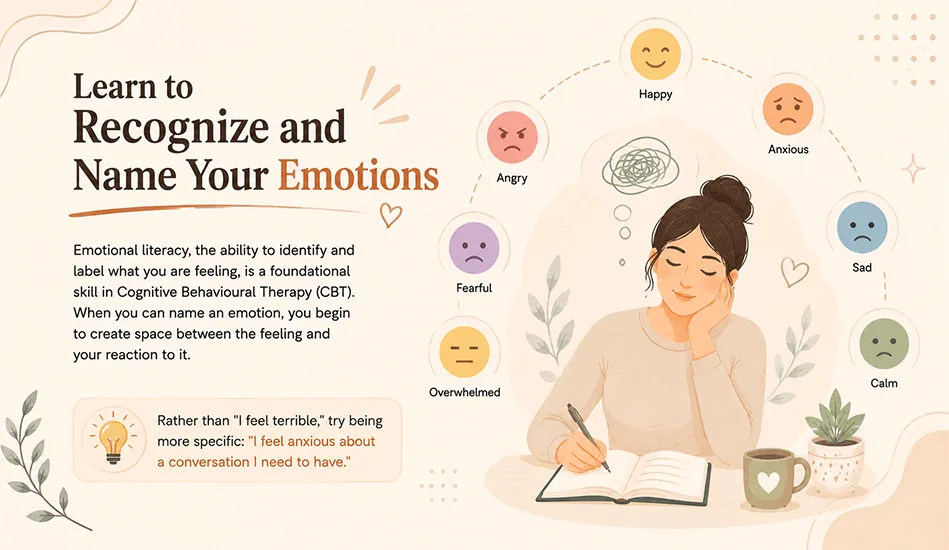
- Name what you feel. Anger often hides something underneath, like hurt or fear. Naming it takes some of its power.
- Use healthy outlets. Exercise, journaling, and creative expression let the pressure out safely.
- Communicate calmly. Try “I feel overwhelmed” instead of reacting in the heat. Plain, honest words land better than sharp ones.
- Learn structured skills. Emotion regulation, which means managing how strong a feeling gets and how you act on it, is a skill you can build, on your own or with a therapist.
When to Seek Professional Help
You do not have to carry this alone. Consider reaching out for support if:
- Your anger feels uncontrollable
- Your relationships are suffering
- You keep getting stuck in the same patterns
Therapy can help you understand the roots of your anger and build steadier responses. Two common, evidence-based approaches are CBT, or cognitive behavioural therapy, which helps you notice and shift the thoughts that fuel anger, and DBT, or dialectical behavioural therapy, which teaches distress tolerance and emotion regulation skills that fit anger especially well. If you want to see what structured support looks like, our overview of anger management in Ontario walks through the options.
If you are in Ontario and looking for anger management therapy in Ontario or anger counselling in Ontario, our clinical team of registered psychotherapists and registered social workers offers online therapy in Ontario that fits into your actual life. Every Canadian’s first therapy session with a Saalvio clinician is free, framed as a way to make care easier to reach, not as a sales pitch. If you are not ready to book, you can message a therapist before you book and ask whatever you need to ask first. Messaging is not therapy by text and not crisis support; it is just a no-pressure way to see if the fit feels right. If you would rather start by understanding your options, here is a plain guide on how to find a therapist.
Therapy with a Saalvio clinician is offered in Ontario today. Across the rest of Canada and North America, the Saalvio app offers self-help tools, mood tracking, journaling, guided practices, and structured self-assessments you can use any time.
A Note for Parents Worried About a Teenager
If the anger you are watching belongs to your teen, not you, please know this guide is written for adults, and Saalvio’s therapy is for adults in Ontario. For a young person, your family doctor, your child’s school, or a youth mental health service can connect you with clinicians who specialize in teens. You can also reach Kids Help Phone any time at 1-800-668-6868, or by texting CONNECT to 686868. It is free and confidential.
Healing Takes Time
There is no quick fix, and there is no cure to chase. But there is progress, and it is made of small things:
- One pause before reacting
- One honest conversation
- One moment of seeing yourself clearly
These moments build, slowly, into change.
Final Thoughts
Anger is not your enemy. It is a signal that something inside needs attention, care, and understanding. If you have been quietly asking, “how to know if you have anger issues,” you have already taken the first step, because awareness is where it begins. You deserve calm. You deserve clarity. You deserve to feel safe inside your own reactions, and you do not have to get there alone.
Frequently Asked Questions
What are common warning signs of suppressed anger?
Suppressed anger often shows up as passive-aggressive behaviour, sarcasm, going emotionally numb, frequent irritation, or sudden outbursts that seem to come from nowhere. It can also bring anxiety, fatigue, and trouble saying how you really feel. Naming it is the first step toward letting it move through you in a healthier way.
Is anger linked to mental health conditions?
Yes. The Canadian Mental Health Association notes that when anger keeps causing problems or shows up alongside other symptoms, it is worth talking to a professional. Anger can be tied to anxiety, depression, and post-traumatic stress, where it sometimes acts as a coping response or a symptom rather than the whole story.
Why do I feel angry without a clear reason?
Anger with no obvious trigger often comes from hidden stress, unresolved hurt, poor sleep, or plain exhaustion. Sometimes softer feelings like sadness, fear, or feeling unsafe surface as anger, because anger can feel easier to show. A short daily check-in on your stress and sleep can reveal the real source.
Do anger issues get worse with age?
Anger issues can get worse if they are left unaddressed, but they can also get better with awareness and steady effort. Learning your triggers, pausing before reacting, and building emotion-regulation skills, on your own or with a therapist, helps most people manage anger better over time.
When should I get help for anger?
Consider support if your anger feels uncontrollable, your relationships are suffering, or you keep getting stuck in the same patterns. In Ontario, our clinical team of registered psychotherapists and registered social workers offers anger-related support, and your first session is free. You can also message us before you book.
If you need help right now
Saalvio is not a crisis service. If you are in immediate danger, please call 911. If you are in mental health crisis, please call 988 (the Suicide Crisis Helpline of Canada) or visit your nearest emergency department.
Clinically reviewed by Usman Khan, RP (CRPO #13456)
Clinically reviewed
Usman Khan, Registered Psychotherapist
Usman Khan is the Clinical Director of Saalvio and a Registered Psychotherapist with the College of Registered Psychotherapists of Ontario (CRPO #13456). He holds an MD, an MPH from Western University, and an MA in Counselling Psychology from Yorkville University. He reviews all clinical content on saalvio.com before publish.
See also across Saalvio
Topics mentioned in this post that have their own page on the site.
Talk to our clinical team
Saalvio offers a free first session with any therapist on the team. There is no card on file. If we are not the right fit, we will say so and help you find one.