Where in Canada are you?

So we can show what is actually live in your province. Live therapy is in Ontario today; other provinces are on the waitlist.

CANADAHEALS: one year of the premium Saalvio app, a free first therapy session, and free pre-booking messaging. Every Canadian. See all three

Therapy basics

What Is a Registered Psychotherapist? Everything Canadians Need to Know

A registered psychotherapist is a regulated mental health professional in Ontario, credentialled by the College of Registered Psychotherapists of Ontario (CRPO). They are trained to assess and treat mental health conditions, emotional difficulties, and life challenges using evidence-based therapies. In Ontario, "Registered Psychotherapist" is a protected title, meaning only individuals who meet strict educational and clinical standards may use it.

Short answer

Sometimes the feeling arrives before the words do. Something is wrong, and you have been carrying it quietly for longer than you have told anyone. You have Googled at midnight. You have scrolled past helplines and closed the tab. You have told yourself you are fine, because that was easier than figuring out who to call.

If that sounds familiar, you are not alone. According to the <a href="https://mentalhealthcommission.ca/">Mental Health Commission of Canada</a>, one in five Canadians lives with a mental health or substance use problem in any given year, and most do not receive care. Not because they do not want it. Because finding the right professional feels overwhelming, and the system does not exactly make it easy.

This guide explains what a registered psychotherapist is, what they do, how they differ from other mental health professionals, and how to find one in Ontario who is right for you. If you have ever wondered whether therapy is right for you, or simply what it would look like to start, this is a good place to begin.

What Is a Registered Psychotherapist?

Psychotherapy is a professional relationship built around talk-based care. It draws on psychological principles and evidence-based methods to help people understand their thoughts, manage their emotions, shift unhelpful patterns, and work through painful experiences. To learn more about the different approaches available, visit our guide to <a href="/resources/types-of-therapy-explained/">what psychotherapy is.</a>

In Ontario, the title "Registered Psychotherapist" is a protected designation under the Psychotherapy Act, 2007. That means it is not a label anyone can give themselves. It signals that the person has met the CRPO's specific requirements for education, supervised clinical experience, and competency. When you see those two words together, you know you are working with someone accountable to a professional regulatory body.

Psychotherapy can help with a broad range of concerns, from anxiety and depression to relationship difficulties, grief, trauma, burnout, and more. It is not reserved for crisis moments. Many people find it useful long before things feel urgent.

What Does a Registered Psychotherapist Do?

A registered psychotherapist begins by listening. Not in the casual way people mean when they say they will listen. In a structured, trained way that involves understanding your history, identifying patterns, and building a picture of what is happening and why it is happening.

From there, the work typically involves:

  • <strong>Assessment:</strong> understanding your current struggles, background, and goals through structured questions and self-reflection tools.
  • <strong>Treatment planning:</strong> collaborating with you to set realistic, meaningful goals and agree on an approach that fits your needs.
  • <strong>Therapeutic interventions:</strong> using evidence-based techniques to help you work through emotional difficulties, shift thought patterns, and build practical coping skills.
  • <strong>Ongoing support:</strong> tracking progress over time, adjusting the approach as needed, and helping you apply what you learn between sessions.

Who Regulates Registered Psychotherapists in Ontario?

The <a href="https://crpo.ca/">College of Registered Psychotherapists of Ontario (CRPO)</a> is the regulatory body that governs the profession. It exists to protect the public, not to serve the interests of therapists. That distinction matters.

The CRPO:

  • Sets and enforces education and competency standards
  • Maintains a public register of every registered psychotherapist in Ontario
  • Reviews complaints and takes disciplinary action when standards are not met
  • Regulates the protected use of the title "Registered Psychotherapist" and "RP"

Qualifications Required to Become a Registered Psychotherapist

Becoming a registered psychotherapist in Ontario is not a short path. It requires a graduate-level education in a recognized counselling or psychotherapy program, a specified number of supervised clinical hours, demonstrated competency across multiple practice areas, and a successful entry-to-practice examination.

The CRPO requires candidates to show competency in areas including:

  • Therapeutic relationship and communication skills
  • Assessment and treatment planning
  • Safe and ethical clinical practice
  • Reflective practice and professional development

Registered Psychotherapist vs Other Mental Health Professionals

The mental health system in Canada involves several different professional designations, and it is genuinely confusing. Knowing who does what helps you choose the right support. For a full comparison, see our resource on <a href="/resources/therapy-vs-counselling-vs-psychology/">therapy vs counselling vs psychology</a>.

What Issues Can a Registered Psychotherapist Help With?

One of the most common things people say after starting therapy is some version of: I wish I had done this sooner. The range of experiences registered psychotherapists work with is wider than most people expect.

Types of Therapy Used by Registered Psychotherapists

Registered psychotherapists are trained in a range of evidence-based modalities. In practice, many therapists are integrative, meaning they draw from several approaches depending on what serves the client best. Below is a brief overview of the most common ones.

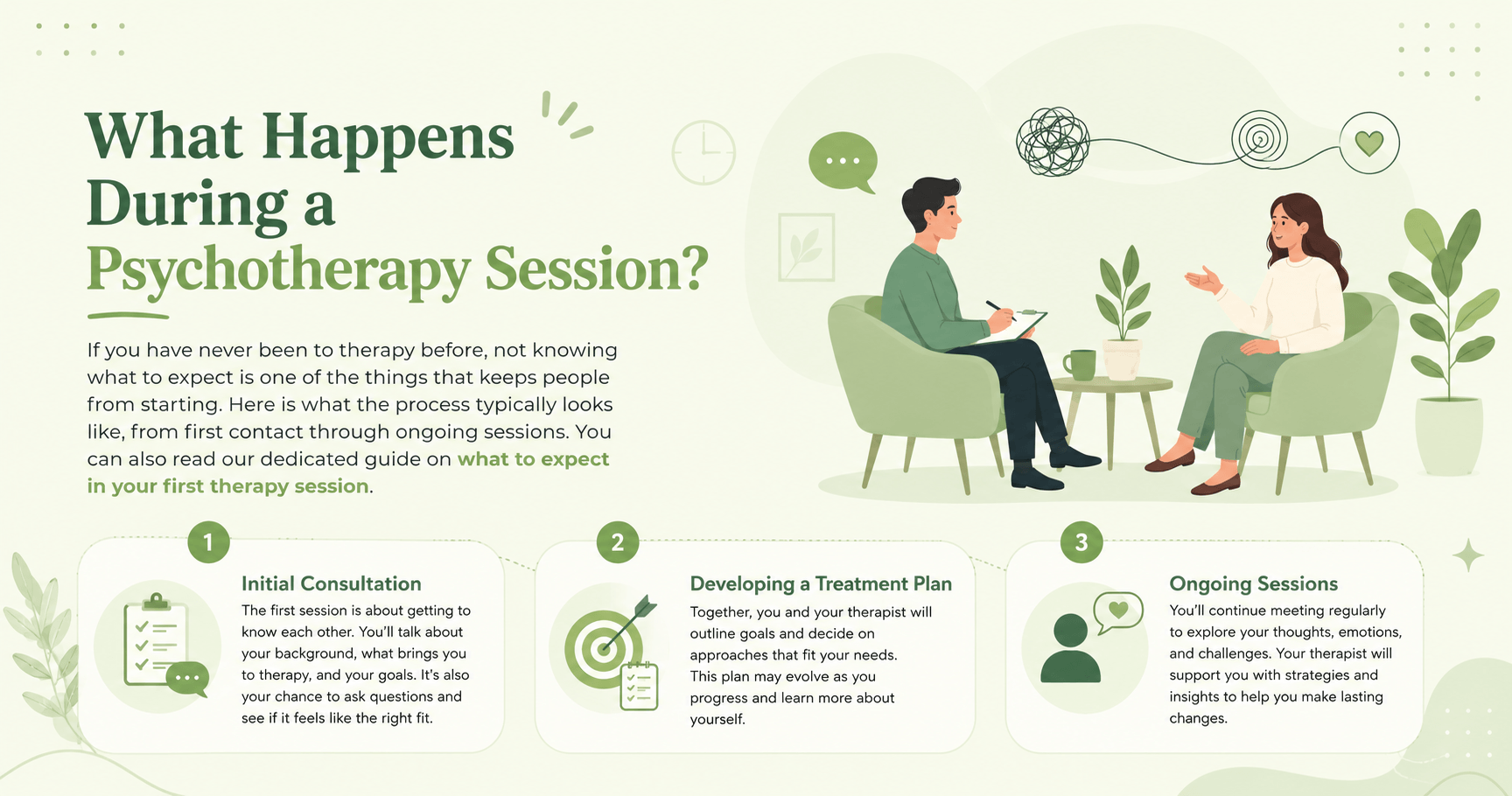
What Happens During a Psychotherapy Session?

If you have never been to therapy before, not knowing what to expect is one of the things that keeps people from starting. Here is what the process typically looks like, from first contact through ongoing sessions. You can also read our dedicated guide on <a href="/resources/what-to-expect-in-your-first-session/">what to expect in your first therapy session</a>.

Can Registered Psychotherapists Diagnose Mental Health Conditions?

Diagnosis in the formal clinical sense falls outside a registered psychotherapist's scope of practice in Ontario. Formal diagnosis is typically made by physicians, psychiatrists, or psychologists.

A registered psychotherapist can conduct structured clinical assessments, discuss your experiences in detail, and help you bring organized, meaningful information to other healthcare providers. Structured self-assessments can help you reflect on your experiences and bring that reflection into the therapeutic relationship. But a formal diagnostic label is not something a registered psychotherapist is authorized to assign.

How Much Does a Registered Psychotherapist Cost in Ontario?

Therapy fees in Ontario vary. Most registered psychotherapists charge between $100 and $200 per session, depending on their experience, specialization, and location. Some community clinics and training clinics offer lower-cost options. For a full breakdown, see our guide on <a href="/resources/how-much-does-therapy-cost-in-ontario/">therapy costs in Ontario</a>.

How to Find a Registered Psychotherapist in Ontario

Knowing you want therapy and actually finding the right person are two different things. Here is a practical framework. For a more detailed guide, see <a href="/resources/how-to-find-a-therapist/">how to find a therapist</a>.

Online Therapy With a Registered Psychotherapist

Virtual therapy with a registered psychotherapist delivers the same clinical care as in-person sessions, conducted over a secure, private video platform. It has the same evidential base, the same regulatory requirements, and the same therapeutic relationship at its core.

For many Canadians, it is also more accessible. No commute. No waiting room. No need to take time off work or arrange childcare. The session is there when you are ready for it, in the space where you already feel most like yourself. For newcomers and individuals from communities where attending a therapy office carries stigma, the privacy of connecting from home can also lower a real barrier. Our guide on <a href="/resources/therapy-for-immigrants-and-newcomers/">therapy for newcomers</a> explores this further.

On Saalvio, every therapist profile shows the languages offered. Sessions are currently available in English, Urdu, Hindi, Punjabi, and Arabic, because the language in which you learned to feel your feelings matters.

When Should You See a Registered Psychotherapist?

There is no threshold of suffering you need to clear before therapy is appropriate. The idea that you have to be in crisis to deserve support is one of the most damaging myths in mental health culture, and it keeps a lot of people waiting longer than they should.

Common questions

Is a registered psychotherapist the same as a therapist?

"Therapist" is not a protected title in Ontario. A registered psychotherapist is a therapist, but not everyone who calls themselves a therapist is a registered psychotherapist. Always look for the protected designation and verify registration with the CRPO.

Can I see a registered psychotherapist without a referral?

Yes. You do not need a physician's referral to access psychotherapy in Ontario. You can book directly.

How long does therapy take?

It depends on what you are working on and what you are hoping to achieve. Some people find meaningful progress in six to twelve sessions. Others benefit from longer-term work. This is worth discussing openly with your therapist during the intake and revisiting as you go.

Is online therapy as effective as in-person therapy?

For most presentations, yes. A substantial and growing body of research supports the effectiveness of virtual therapy. The therapeutic relationship, which is the strongest predictor of outcomes, translates well to video-based sessions.

What if I message a therapist but do not feel ready to book?

That is exactly what messaging is for. On Saalvio, you can send a message to any therapist on the team before you commit to anything. Ask about their approach, whether they have worked with someone in your situation, what language they work in, or anything else that would help you feel safe choosing. There is no cost, no commitment, and no script.

Ready to talk to someone?

The first session at Saalvio is free, with no card on file and no obligation to continue. If you are not sure where to start, our clinical team can help you figure out the right next step.