
Why Do Quiet Homes Feel Heavy?
You close the door behind you. The day is finally over. You are home.
And somehow it feels heavier in here than it did out there.
Nothing is visibly wrong. The house is quiet. Everything is in its place. But there is a weight sitting in the air that you cannot quite name. You feel low, a little empty, maybe anxious, and you do not understand why your home feels depressing when it is supposed to be the one place you can rest.
If you recognise this, you are not imagining it, and you are not alone.
Mental heaviness at home is far more common than people say out loud. It does not mean your home is a bad place. It means your mind is carrying something, and the quiet is making it louder.
This guide walks through the real reasons quiet homes feel heavy, why silence can feel overwhelming, and small things you can do to feel lighter, both around you and inside you.
Why Do Quiet Homes Feel Heavy?
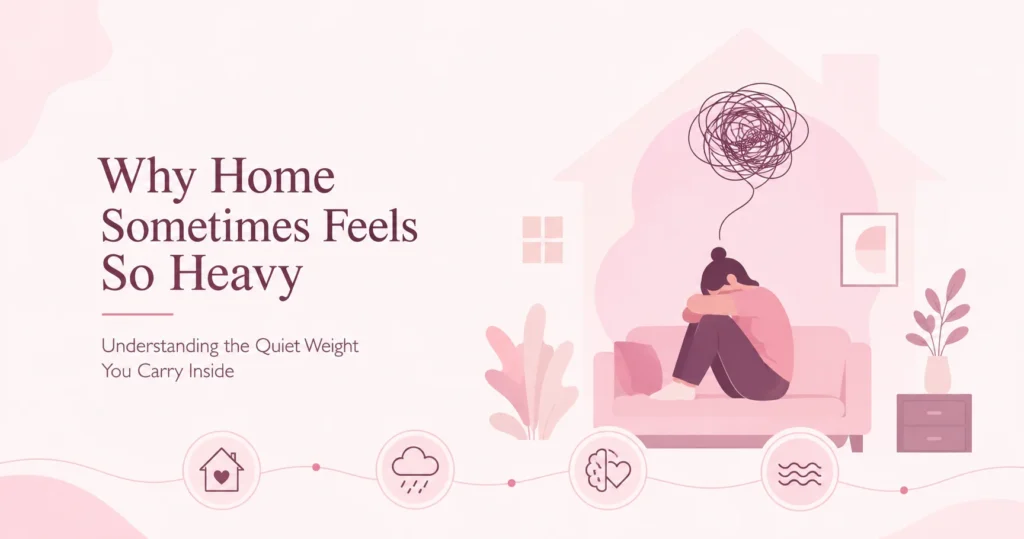
A quiet home can feel heavy because silence removes the distractions that kept hard feelings at bay all day. Your home also collects emotional associations over time, so grief, stress, and loneliness get tied to the space itself. The house has not changed. Your mind is carrying something, and the quiet makes it louder.
That is the short answer. The longer answer is worth sitting with, because once you understand what is happening, the heaviness stops feeling like a verdict on you and starts feeling like information.
Your Home Absorbs More Than You Think
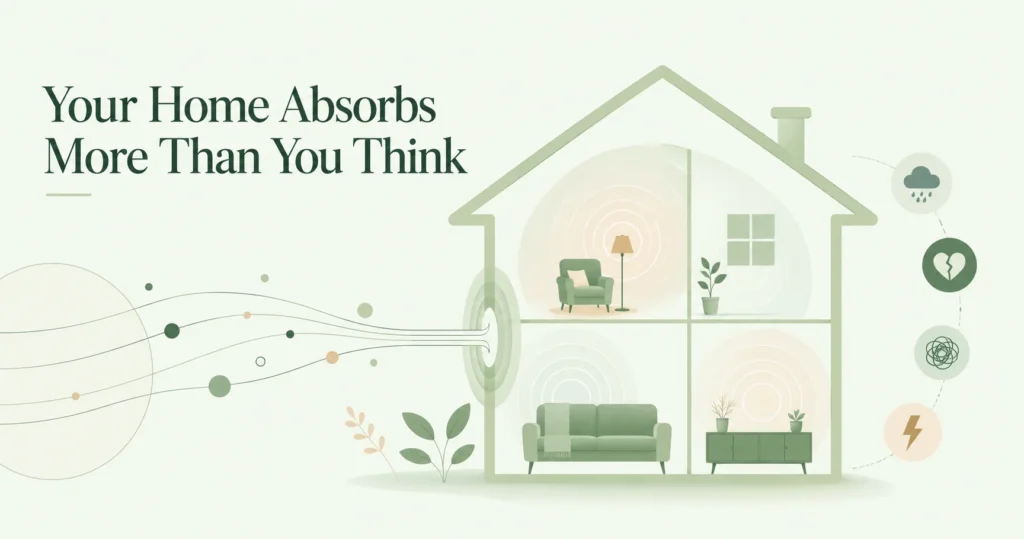
Your home is not only a physical space. It is an emotional one too.
Over time, your home becomes tied to everything that happens inside it. Grief, loneliness, conflict, stress, the long evenings of waiting and worrying. Those experiences do not vanish when the moment passes. They get linked to the place through something psychologists call contextual conditioning, which simply means your brain learns to connect certain spaces with certain feelings.
This is why walking into one particular room can bring up emotions you had not thought about in weeks. Or why the couch where you took a hard phone call still carries a faint echo of that moment months later.
So when you ask why does my house feel emotionally heavy, this is often part of the answer. The house itself has not changed. The feelings you have stored in it have built up quietly, one ordinary day at a time.
Why Does Silence Feel Overwhelming?
In silence there is no task and no noise to occupy your mind, so the thoughts you pushed away during a busy day rise to the surface. Silence is not dangerous. It just removes the buffer between you and your own inner experience. Feeling anxious in a quiet home is common, and it is very human.
For a lot of people, silence is not neutral at all. It is loud in its own way. When there is nothing to do, worries, regrets, and the things you have been avoiding without quite realising it all get more room.
This is why so many people feel anxious in silence at home. It is not the silence that is the problem. It is what the silence lets through.
Research backs this up in a striking way. In a 2014 study published in the journal Science, psychologists at the University of Virginia found that many people, when asked to sit alone with their own thoughts for up to 15 minutes, found it so uncomfortable that some chose to give themselves a mild electric shock rather than keep sitting quietly. They had earlier said they would pay money to avoid that same shock (Wilson et al., 2014, Science).
Read that again, because it takes the shame out of this. If unstructured quiet is hard for you, you are not weak. You are human, and the science says so.
If silence at home is tipping into steady worry, our plain-language guide to anxiety explains what is happening in the body and mind, and what helps.
Reasons Your Home Might Feel Mentally Exhausting
There is rarely just one reason a home starts to feel heavy. Here are the most common ones. See which of these lands for you.
Unresolved Emotions Have Nowhere to Go
When life is busy, feelings get filed away to deal with later. Later often does not come, and those feelings start to pile up. At home, with fewer distractions, they finally have space to surface.
Feeling empty at home is often a signal that there are unprocessed emotions waiting for your attention. Not because something is permanently wrong, but because your mind is finally ready to work through something.
The Home Holds Emotional Memories
If your home has been the setting for hard chapters, an illness, a long stretch of loneliness, a relationship ending, a loss, it can hold the emotional residue of those times. You might not think about them every day, but your nervous system remembers.
This is one of the deeper reasons a house feels heavy and depressing without you being able to point to anything specific.

Isolation and Lack of Social Contact
A home can feel heavy when it is also lonely. This is especially true in Ontario winters, when the cold keeps people indoors and contact with others naturally shrinks. The same walls that feel cozy with people in them can feel suffocating when you are alone in them for too long. If the urge to stay in has crept up on you lately, it can help to understand why you might suddenly dread socialising.
Loneliness is not only an emotional experience. The Canadian Mental Health Association notes that loneliness which persists can be linked to depression, anxiety, and a higher risk of other health problems (CMHA, Coping with Loneliness). That is part of why a too-quiet home can weigh on you over time, not just on a single hard night.
Low Stimulation and Mental Understimulation
Some minds genuinely need more input than a quiet home gives them. If you have a busy, creative, or anxious mind, too little stimulation can actually increase discomfort. The brain starts making its own stimulation, usually in the form of rumination, which is the plain name for worry loops, the same thoughts circling again and again.
This is why feeling mentally drained at home does not always mean you did too much. Sometimes it means your mind is searching for something to engage with and finding only itself.

Unfinished Tasks and Everyday Clutter
This one is quiet but real. A pile of mail you keep walking past, a sink you keep meaning to clear, the to-do list that lives in the corner of every room. All of it creates a low hum of mental effort that researchers call cognitive load, the background work your brain does just to keep track of things. Your brain registers unfinished business even when you are not actively thinking about it.
A home full of small unfinished things can quietly add to the sense of mental heaviness at home.
Seasonal and Light-Related Factors
In Ontario, where winters are long and natural light is scarce for months, the home environment can deepen low mood. Dim rooms, short days, and long stretches indoors all feed into why your home might feel depressing at certain times of year.
For some people this overlaps with seasonal affective disorder, a type of depression that follows the darker months and lifts as the light returns (CAMH, Seasonal Affective Disorder). If feeling low at home in winter in Ontario sounds like your experience, you are describing something with a name and a path forward.
The Connection Between Mental Fatigue and Home Environment
There is a well-known link between your mental state and how you experience the space around you.
When you are mentally exhausted, rooms feel heavier. Sounds feel sharper. Silence feels more oppressive. Things that would normally feel neutral start to feel draining. So if you are already carrying burnout, stress, or long-running fatigue, your home tends to amplify those feelings instead of easing them.
This creates a frustrating loop. You come home to recover, but because you are already depleted, home itself starts to feel like part of the problem. If most of that depletion arrives with you at the end of the workday, our guide on how to stop feeling emotionally exhausted after work offers steady, practical steps. That is when home feels mentally exhausting in a way that is hard to explain to anyone who has not felt it.
How Do I Make My Home Feel Less Heavy?
You do not need to move or redecorate. Name the feeling out loud, change one sensory input such as the light or the air, build a small coming-home ritual, and move your body inside the space. These small interrupts shift the emotional state the room has been reinforcing. Pick one and start there tonight.
The goal is not a perfect home. It is a gentler relationship with the space you are in and the feelings that live in it. Here is how to begin.
Name What You Are Feeling
This sounds too simple to matter, and it works anyway. Psychologists call it affect labelling, which just means naming a feeling. Putting words to an emotion lowers its intensity by engaging the thinking part of your brain and settling the alarm part. When the heaviness lands, try saying quietly, “I notice I feel anxious,” or low, or empty, or heavy. That small act of naming creates just enough room to breathe.
Change the Sensory Environment
You cannot always change your thoughts, but you can change what your senses take in. Open a window. Switch a harsh light for a softer one. Put on music or a podcast at low volume. Make a warm drink and hold it with both hands.
These are not cures. They interrupt the emotional state the room has been reinforcing, and sometimes that interruption is enough to shift the evening.
Create Small Anchors of Comfort
Routine creates a sense of safety. If coming through the door means uncertainty and heaviness, build one small ritual that happens every single time you arrive home. A specific song. A specific drink. A specific chair where you sit for five minutes. These tiny rituals teach your nervous system that home is a place to settle, not just to get through.
Move Your Body Inside Your Home
Movement changes your body chemistry, and you do not have to go outside to get it. Put on one song and move to it. Stretch for ten minutes. Walk from room to room with some intention. Movement breaks the worry loops and shifts you out of the frozen, heavy state that so often comes with emotional weight.
Process What Has Built Up
If your home feels emotionally draining because of grief, loss, loneliness, or ongoing stress, the heaviness will not fully lift until those feelings get some room. Writing things down, talking to someone you trust, or working with a therapist are all ways to start moving through what has gathered.
The Saalvio app, available across North America, includes guided journaling, thought-tracking exercises, and mood check-ins built to help you do this at your own pace. It also includes Thrive, the in-app AI companion, for quiet moments when you want to sort a thought out loud. These are self-help tools, not therapy, and you can use them any time.
Work With a Therapist
Sometimes the heaviness at home is a signal that something deeper is asking for your attention. Therapy is not only for a crisis. It is for exactly these stretches of low-grade, persistent weight that you cannot quite put your finger on.
Saalvio connects people across Ontario with registered psychotherapists and registered social workers who work with anxiety, burnout, grief, and life transitions. You can book a session from anywhere in the province through our therapy portal. Therapy with a Saalvio clinician is offered in Ontario today.
If you are not ready to book, you can message a therapist before you book and ask whatever you need to ask first. It is free, with no pressure and no commitment. Messaging is a gentle way in, not therapy by text, and the real work happens in a booked session.
When to Take It More Seriously
For most people, a home that feels heavy is a manageable, passing state that responds to care and awareness. But sometimes the question why do I feel low at home points to something that benefits from professional support.
Consider speaking with a therapist or another mental health professional if:
- The heaviness has lasted more than two to three weeks.
- You are avoiding going home, or dreading being there.
- The feeling comes with steady low mood, hopelessness, or pulling away from things you care about.
- You are leaning on alcohol, substances, or other avoidance to cope with being alone at home.
These are not signs of failure. They are signs that you deserve more support than any blog can give. If low mood is a steady part of what you are carrying, our guide to depression may help you make sense of it.
A Note on What Your Home Is Telling You
Sometimes a home that feels heavy is not a problem to fix. It is a message to listen to.
The discomfort of the silence, the weight of familiar walls, the low ache of a too-quiet evening. These can be invitations. To slow down. To grieve something you have been pushing past. To reconnect with yourself, or to reach for someone. If the ache is more a sense of distance from the people around you, it can help to read why you might be feeling disconnected from everyone and what starts to close that gap.
Your home is not working against you. And neither is the part of you that is struggling inside it.
You deserve a space, both around you and inside you, that feels like somewhere you can finally rest.
Frequently Asked Questions
Is it normal for a home to feel emotionally heavy?
Yes, and it is far more common than people talk about. Homes hold emotional associations, so when stress, loneliness, or unprocessed feelings build up, the space starts to feel heavier. It does not mean something is permanently wrong. Often it is a signal that some feelings are ready for your attention.
Why do I feel more anxious at home than anywhere else?
At home, the distractions fall away and quieter feelings get room to surface. If anxiety feels stronger in a quiet home, it may be that the lack of tasks and demands gives your mind space to ruminate, which means circle the same worries. This is common, and gentle, structured tools can help interrupt the pattern.
Can my home environment affect my mental health long-term?
Yes. Lighting, clutter, social contact, and routine all shape how your home affects your mood over time. Loneliness that persists is linked to depression and anxiety, and long, dark winters can deepen low mood. Working through the feelings you have tied to your space matters as much as changing the space itself.
What if I live alone and my home feels lonely and heavy?
Living alone can intensify a heavy home. Building small daily routines, keeping up social connection, and reaching for support when you need it all help. The Saalvio app offers self-help tools across North America, and in Ontario you can book virtual therapy with a registered therapist. Every Canadian’s first session with a Saalvio clinician is free, so trying it is not a gamble.
If you need help right now
Saalvio is not a crisis service. If you are in immediate danger, please call 911. If you are in mental health crisis, please call 988 (the Suicide Crisis Helpline of Canada) or visit your nearest emergency department. You can also find more support on our crisis resources page.
Clinically reviewed
Usman Khan, Registered Psychotherapist
Usman Khan is the Clinical Director of Saalvio and a Registered Psychotherapist with the College of Registered Psychotherapists of Ontario (CRPO #13456). He holds an MD, an MPH from Western University, and an MA in Counselling Psychology from Yorkville University. He reviews all clinical content on saalvio.com before publish.
See also across Saalvio
Topics mentioned in this post that have their own page on the site.
Talk to our clinical team
Saalvio offers a free 30-minute consultation with any therapist on the team. There is no card on file. If we are not the right fit, we will say so and help you find one.