
Why Do I Get Irritated by Everyone? (You Are Not a Bad Person)
You snapped at someone you love over a mug left on the counter. You felt a wave of annoyance in a meeting that was not even that bad. A friend said something kind, something ordinary, and all you wanted was to walk out of the room.
Then the guilt arrived. What is wrong with me? Why do I get irritated by everyone?
Nothing is wrong with you. But something is happening under the surface that is worth understanding, because irritability this constant rarely comes from nowhere. It is almost always telling you something about what your nervous system, the body’s network of nerves that manages stress and calm, has been carrying.
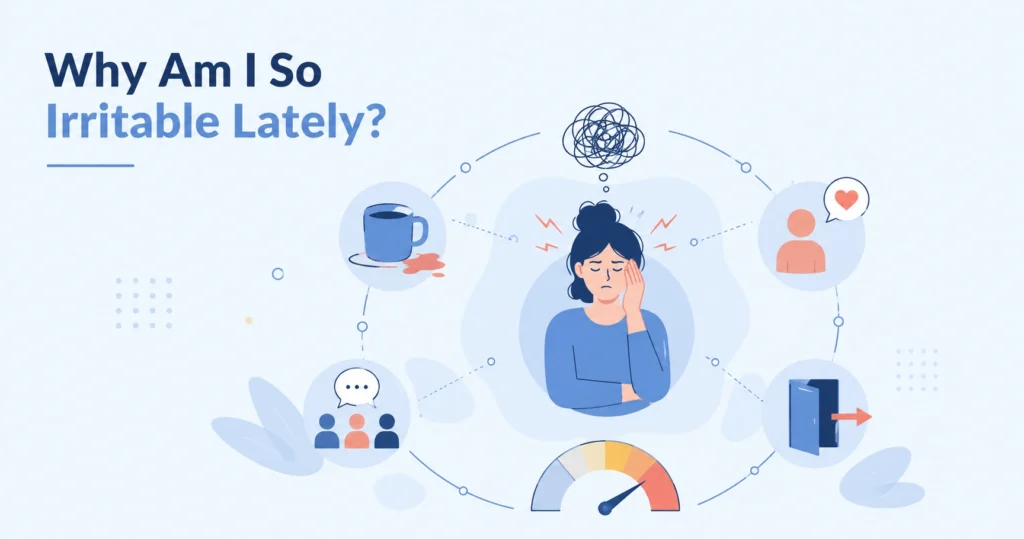
Why Do I Get Irritated by Everyone?
If everyone seems to irritate you, your nervous system is most likely under sustained pressure. Chronic stress, anxiety, poor sleep, or emotional burnout lower your tolerance, so small things feel bigger than they are. Irritability is a signal, not a character flaw. Nothing is wrong with you, but something underneath is worth understanding.
That is the short answer. The longer one is more hopeful, because a signal can be read, and what you can read, you can begin to change.
The Science Behind Sudden Irritability
Irritability is not a personality flaw. It is a signal.
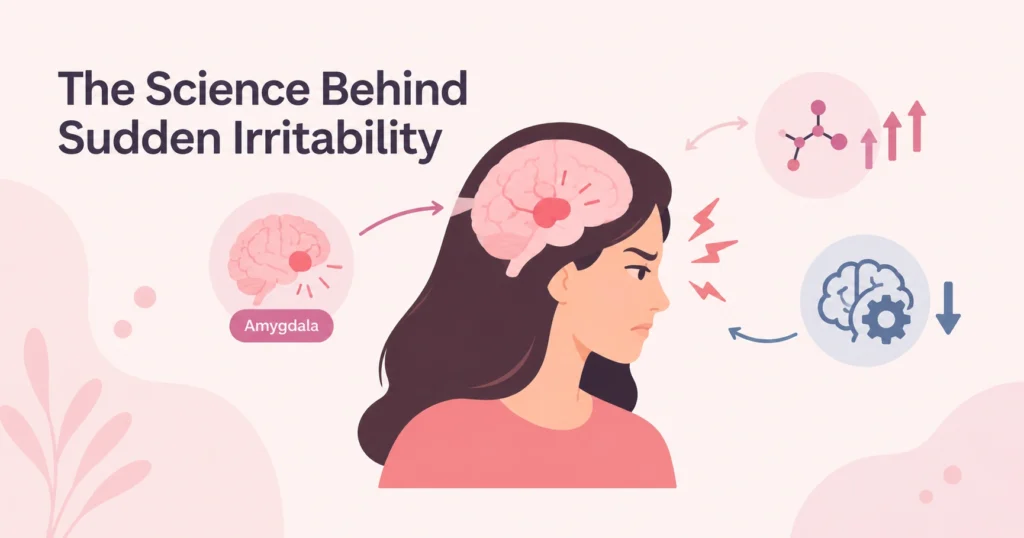
When your brain is under chronic stress, it shifts its resources toward watching for threats. Your amygdala, the brain’s threat-detection part, becomes more active and more sensitive. Small things that would normally roll off you get flagged as bigger than they are. According to the Centre for Addiction and Mental Health (CAMH), stress floods the body with hormones that activate the built-in “fight-or-flight” alarm, and CAMH lists irritability among the emotional signs of stress.
At the same time, your prefrontal cortex, the part that handles patience and self-control, has fewer resources to work with. The result is a brain that is quicker to react and slower to pause.
This is not a character issue. It is a body under pressure doing exactly what bodies do.
Why You Might Be Feeling Irritated for No Reason
Constant irritability that has no obvious trigger usually points to a depleted nervous system rather than the people around you. The most common drivers are stress, anxiety, sleep loss, emotional exhaustion, suppressed feelings, or unmet needs. The useful question is not what is annoying you, but what your body has been carrying and what it needs.
The frustrating part of irritability for no reason is that it often does not feel tied to any one cause. You are just annoyed. Everything grates. You move through the day with your skin pulled a little too tight. Here are the most common reasons underneath, and most of them are things people do not connect to irritability at first.
1. You Are Emotionally or Mentally Exhausted
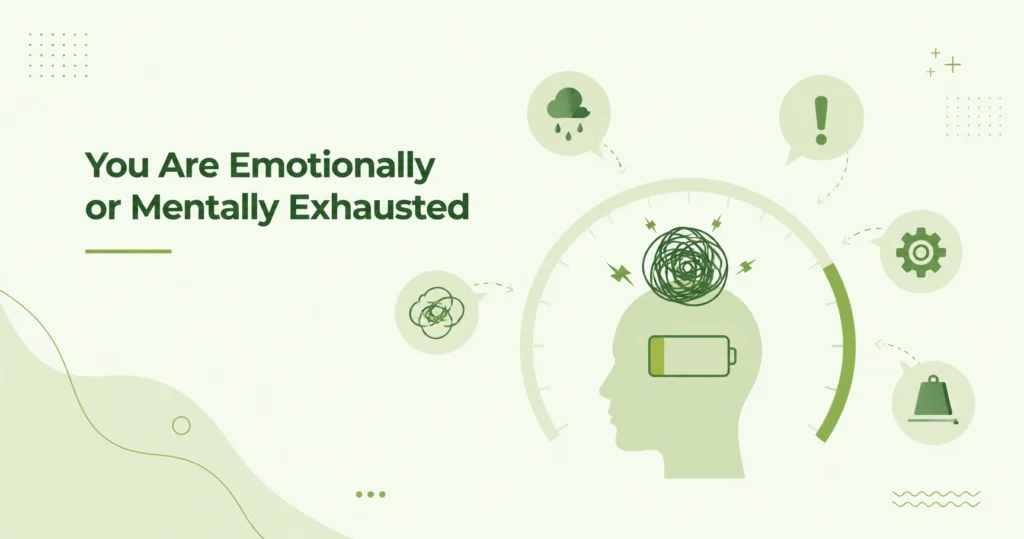
Emotional burnout symptoms do not always look like sadness or tears. Very often the first sign is a sharp, lasting irritability that feels out of proportion to what is happening around you. The World Health Organization defines burnout as a syndrome that comes from chronic stress that has not been managed, and emotional exhaustion is its core.
When your emotional reserves are drained, your tolerance drops. Things you could once brush off now feel genuinely aggravating, because your nervous system has very little buffer left. If you have been carrying high demands at work, strain at home, caregiving, or just the cumulative weight of daily life, this kind of depletion is a very likely cause. This is the link between irritability and burnout, and it is worth taking seriously rather than pushing through.
2. Anxiety and Irritability Are Deeply Connected
This one surprises a lot of people. Most of us picture anxiety as worry, fear, or nervousness. But anxiety and irritability are closely linked, and for many people, irritability is the main way their anxiety shows up. Irritability as an anxiety symptom is real, and it is common.
When your nervous system is stuck in a low, steady state of alertness, which is the hallmark of anxiety, you are already half-braced for a threat. Your tolerance for any extra stress or stimulation is naturally lower. Sounds feel louder. People feel more intrusive. Small frustrations feel bigger. If your irritability spikes during stretches of stress or uncertainty, anxiety may be playing a bigger role than you realize.
3. Sleep Deprivation Has a Dramatic Effect on Mood
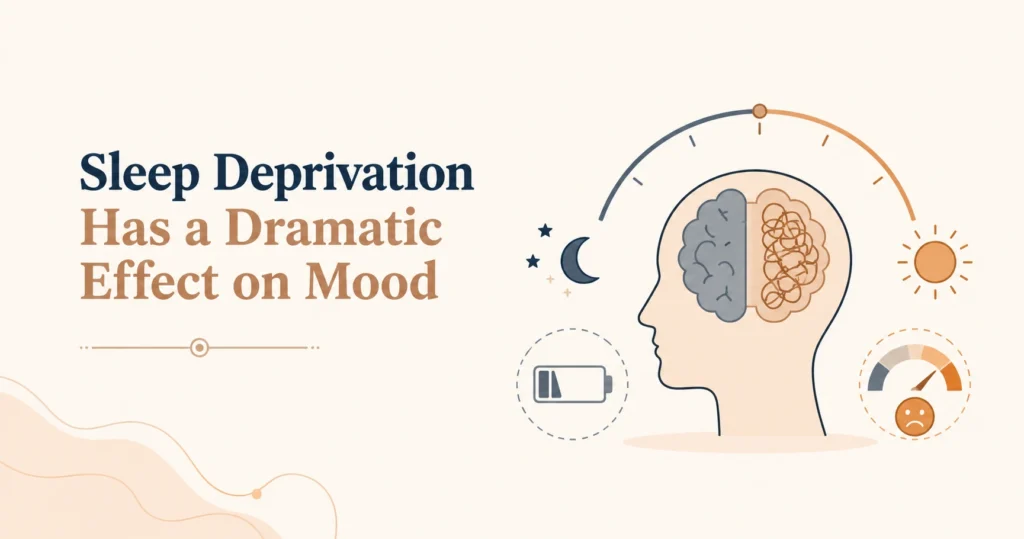
Even one night of poor sleep measurably raises emotional reactivity. In a study from the Walker lab at Berkeley (Yoo and colleagues, 2007), one night without sleep amplified amygdala reactivity to negative images by about 60 percent, and weakened the prefrontal cortex’s calming control over it. In plain terms: tired brains feel more, and steer less.
Sleep loss is common here. Statistics Canada’s 2020 sleep survey found that nearly one in four adults aged 18 to 64 do not meet recommended sleep durations. If you wake up already tired, run the day on caffeine, and lie awake at night despite being exhausted, your irritability may be a direct cost of an under-rested nervous system that simply cannot moderate its own reactions. This is the quiet, real link between sleep deprivation and irritability.
4. Stress and Irritability Symptoms Are Overlapping
Chronic stress switches on the same systems as a real threat. Cortisol, a stress hormone, and adrenaline stay elevated. Muscles hold tension. Your jaw clenches without you noticing. Your breathing stays shallow.
In that state, your body is primed for conflict. Stress and irritability symptoms are not separate things; they share one biological mechanism. Irritability is, very often, a symptom of stress wearing a different face.
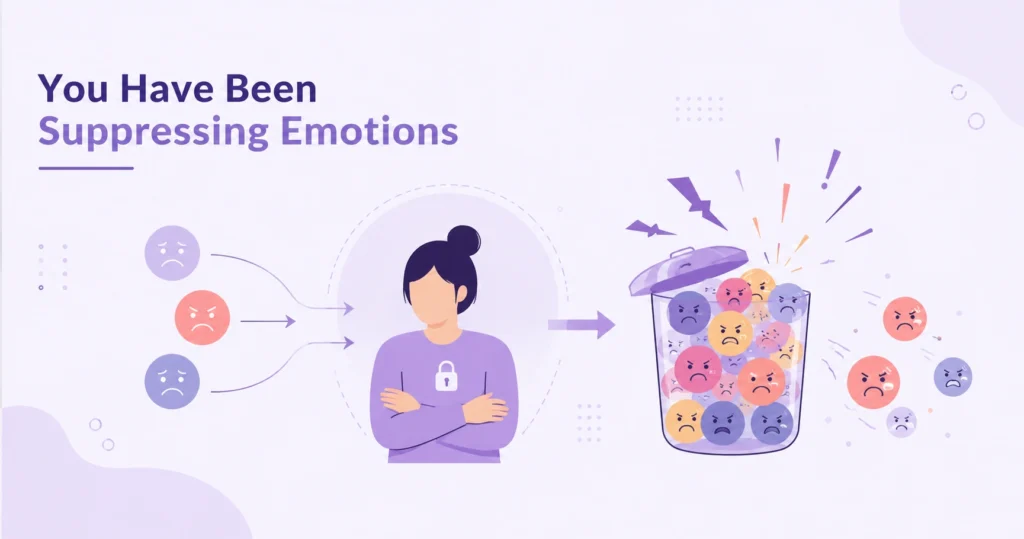
5. You Have Been Suppressing Emotions
There is a pattern in people who describe being easily irritated by everyone: they have been holding things in.
Emotions that are not expressed or processed do not disappear. They build up. And pressed-down feeling has a way of leaking out sideways, as irritability, impatience, or a low-grade anger with no clear target. If you have been “keeping it together” for a long time, the irritability you feel may be all the emotion you have not yet had space to feel.
6. Your Needs Are Not Being Met
This is one of the most overlooked causes of all. When core needs go unmet, whether rest, connection, autonomy, respect, or basic things like food and water, your nervous system reads it as stress.
Irritability is often a direct message from your body that something is missing. The question is not only why am I so easily annoyed lately, but what do I actually need right now that I am not getting?
Why Am I So Easily Annoyed Lately When I Used to Be Calm?
A change in your baseline almost always means something has shifted in your stress load, sleep, or emotional reserves. Common causes are prolonged stress, anxiety, burnout, poor sleep, or needs going unmet. Take the change seriously rather than pushing through; it is information about what has built up, not proof you have become a worse person.
If you are also asking why am I so short tempered lately, it is the same question pointing at the same answer. Your tolerance has narrowed because something is using up the buffer you used to have.
Why Do I Get Angry So Easily?
Quick anger usually means your stress system is already switched on. When cortisol and adrenaline stay elevated, your brain treats small frustrations as threats and your ability to pause shrinks. Anger and irritability are emotional responses with real roots, often fear, exhaustion, or stored-up resentment underneath. Those roots can be understood and worked with.
So if you keep asking why do I get angry so easily, the honest answer is that anger is rarely the first feeling. It is usually the one that surfaces when the others have nowhere to go. If quick anger has become a pattern, our guides on how to control anger issues and how to deal with anger issues offer practical, steady ways to work with it.
When Irritability Is a Sign of Something Bigger
For some people, lasting irritability is a symptom of something that benefits from direct support, including:
- Anxiety, where low, steady nervous system activation keeps reactivity high
- Depression, which for many people shows up not as sadness but as flat mood, low tolerance, and constant irritability rather than tears
- Burnout, where emotional depletion strips away the resources you need to regulate
- Hormonal changes, including thyroid shifts, perimenopause, or other changes that affect mood
If you are wondering is irritability a sign of depression, the honest answer is that it can be. This does not mean something is seriously wrong. It means the irritability is a signal worth taking seriously rather than carrying alone.
If you are in Ontario and wondering whether what you are feeling goes beyond ordinary stress, you do not have to sort it out by yourself. You can message a registered psychotherapist before you book and ask whatever you need to ask. There is no cost and no commitment, and messaging before booking is a quiet way in, not a test. It is not therapy by text; the real work happens in a booked session.
The Guilt Loop That Makes It Worse
Here is something worth naming plainly: one of the most painful parts of constant irritability is the guilt that follows it.
You were sharper than you meant to be. You felt a surge of frustration that surprised even you. And then you felt terrible. That guilt, as understandable as it is, adds its own weight. You start watching yourself constantly. You feel like you are becoming someone you do not like. You may even pull away from people to avoid saying something you will regret.
This cycle, irritability, then guilt, then self-criticism, is exhausting on its own. And the self-criticism tends to raise stress rather than lower it, which feeds straight back into the irritability. One of the most useful things cognitive behavioural therapy, a structured talk therapy that looks at the thoughts driving a feeling, offers is a way to step out of this loop by understanding the patterns underneath it, instead of just criticizing yourself for the result.
How Do I Stop Being So Irritable? What Actually Helps
Start by naming the feeling underneath the irritation, then lower your sensory and social input, use slow exhales and movement to settle your body, and set one boundary you have been avoiding. These do not erase irritability, but they rebuild your buffer. If it is persistent and affecting your relationships, talking to a therapist helps.
Here is each of those, with a little more.
Name the Emotion Underneath the Irritability
Irritability is rarely the first emotion. It usually sits on top of something else: fear, sadness, shame, exhaustion, loneliness. Pausing to ask yourself what is actually underneath this can shift your whole relationship to the feeling. This is not about bypassing the irritability. It is about understanding it, which is the first real step toward managing it.
Lower Your Input Load
When your nervous system is overloaded, every extra signal lands harder. Noise, notifications, social demands, news, screens, all of it adds up. Deliberately reducing input, even briefly, gives your nervous system room to settle. That might be ten minutes of quiet before you check your phone, a walk without headphones, or a few minutes in a room with no background noise.
Use Your Body to Regulate Your Brain
The physical state of irritability, raised cortisol, tense muscles, shallow breathing, can be interrupted through the body. Slow, long exhales activate the parasympathetic nervous system, the body’s calming system, and begin to counter the stress response. Even four or five long, slow breaths can shift your state within minutes. Gentle movement helps discharge built-up tension too. This is not about hard exercise. A walk, a stretch, anything that moves your body and gets your attention out of your head.
Set One Boundary You Have Been Avoiding
Very often, lasting irritability is the cost of boundaries that are not being held. The meeting that ran over. The yes you said when you meant no. The relationship where you give more than you receive. Irritability sometimes works as the pressure valve for stored resentment. Setting one clear, kind boundary, however small, can release a surprising amount of that internal pressure.
Talk to Someone Who Understands Anger and Irritability
If the irritability is persistent, if it is affecting your relationships, your sense of yourself, or your quality of life, it is genuinely worth working through with support. Saalvio offers online therapy in Ontario, delivered by registered psychotherapists and registered social workers who understand that anger and irritability are almost never just “attitude problems.” They are emotional responses with real roots, and those roots can be understood and addressed. For people searching for anger management in Ontario, this is the in-scope path: regulated clinical care, not a quick fix.
Every Canadian’s first therapy session with a Saalvio clinician is free, so deciding to try is not a gamble on whether the fit will be right. If you are not sure where to begin, here is a plain guide on how to find a therapist. You do not have to keep white-knuckling your way through days where everyone and everything feels like too much.
You Are Not the Problem. You Are a Person Under Pressure.
The question why do I get irritated by everyone carries so much hidden weight. It implies you are the problem, that you are difficult, unreasonable, or broken.
You are not. You are a person whose nervous system has been under steady pressure, whose reserves have been drained, and whose reactions are, in a very real sense, what a human body does under those conditions.
Understanding that does not excuse every sharp word. But it does change how you treat yourself, and that shift is usually where real change begins. You deserve more than “just calm down” or “be more patient.” You deserve to understand what is happening and to have practical, grounded tools to feel more like yourself again.
The Saalvio app, available across North America on the App Store and Google Play, carries self-help tools you can use any time: mood tracking, a journal, guided practices, sleep tools, calming music, and structured self-assessments, built for real life. Therapy with a Saalvio clinician is offered in Ontario today, booked through the web client portal or the app. These are two different things, and that distinction matters: the app holds the self-help library, and a booked session with a registered therapist is where therapy happens.
Frequently Asked Questions
Is sudden irritability a sign of depression?
It can be. Depression is often linked with sadness, but for many people it shows up first as irritability, low tolerance, and a flat, drained mood instead of tears. If your irritability has lasted more than a couple of weeks and is affecting daily life, it is worth speaking with a mental health professional to understand what is driving it.
Why am I so easily annoyed lately when I used to be calm?
A shift in your baseline almost always means something has changed in your stress load, sleep, or emotional reserves. Common causes are prolonged stress, anxiety, poor sleep, emotional burnout, or unmet needs. If you are also asking why am I so short tempered lately, it is the same signal. Take the change seriously rather than just pushing through it.
Is irritability a symptom of anxiety?
Yes, very often. For many people, irritability is the main way anxiety shows up, not worry or fear. When the nervous system stays semi-activated, tolerance for noise, demands, and small frustrations drops, so everything feels more intrusive. If your irritability rises during stressful or uncertain stretches, anxiety and irritability may be more connected than you think.
Can lack of sleep make me more irritable?
Yes, measurably. A Berkeley study found that one night of poor sleep amplified the brain’s emotional reactivity by about 60 percent and weakened its calming control. Statistics Canada reports nearly one in four adults aged 18 to 64 fall short of recommended sleep. Sleep deprivation and irritability are tightly linked, so rest is rarely optional when mood is fraying.
How do I stop being so irritable?
Start by naming the feeling underneath the irritation, then lower your sensory and social input. Use slow exhales and gentle movement to settle your body, and set one boundary you have been avoiding. These rebuild the buffer that stress wears down. If irritability is persistent and straining your relationships, working with a therapist can help you find the roots.
Can therapy actually help with anger and irritability?
Yes. CBT in particular has a strong evidence base for helping people understand and manage anger and irritability. Therapy helps you spot the patterns and triggers driving the reactions, understand the emotions underneath, and build practical tools for responding differently. In Ontario, Saalvio’s registered psychotherapists and registered social workers offer this kind of support.
If you need help right now
Saalvio is not a crisis service. If you are in immediate danger, please call 911. If you are in mental health crisis, please call 988 (the Suicide Crisis Helpline of Canada) or visit your nearest emergency department. You can also find more crisis resources here.
Clinically reviewed
Usman Khan, Registered Psychotherapist
Usman Khan is the Clinical Director of Saalvio and a Registered Psychotherapist with the College of Registered Psychotherapists of Ontario (CRPO #13456). He holds an MD, an MPH from Western University, and an MA in Counselling Psychology from Yorkville University. He reviews all clinical content on saalvio.com before publish.
See also across Saalvio
Topics mentioned in this post that have their own page on the site.
Talk to our clinical team
Saalvio offers a free 30-minute consultation with any therapist on the team. There is no card on file. If we are not the right fit, we will say so and help you find one.