
Social Media Mental Health Effects: How It Quietly Impacts Your Mind
You opened the app for five minutes. We have all been there. Then an hour was gone, and instead of feeling rested you felt thinner somehow, comparing your ordinary Tuesday to someone else’s best ten seconds. That tired, uneasy weight in your chest is real. It has a name, and it is worth understanding.
You are not weak for feeling it, and you are not alone in it. Millions of us scroll and tap while our minds quietly carry the cost of constant comparison and online pressure. This guide walks through the social media mental health effects most of us never notice happening, the signs to watch for, what the research actually says, and the small steps that help you take your attention back. If the scrolling has started to wear you down, support is closer than you think.
How Does Social Media Affect Mental Health?
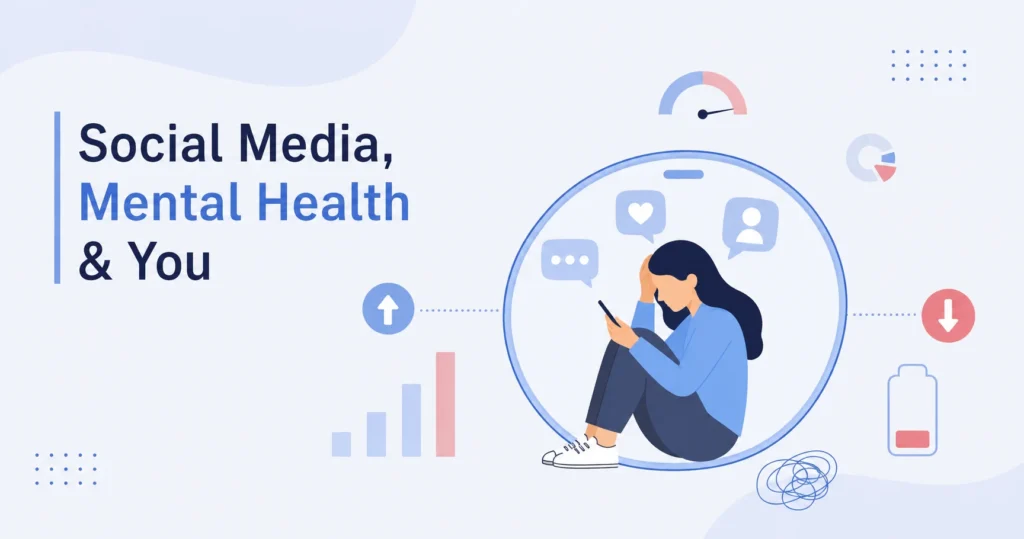
Social media affects mental health through three quiet loops: a dopamine reward cycle that keeps you checking, constant comparison that wears down self-esteem, and FOMO that feeds a low hum of anxiety. Heavy use is linked with more depression, more anxiety, and poorer sleep. It is not all harmful, but the effect builds up over time and is worth managing.
Checking your feed feels harmless. Over time, though, social media taps into deep patterns in the brain that shift your mood, your sense of self, and even your rest. Here is how that actually works.
The Dopamine Reward Loop: Why You Keep Coming Back
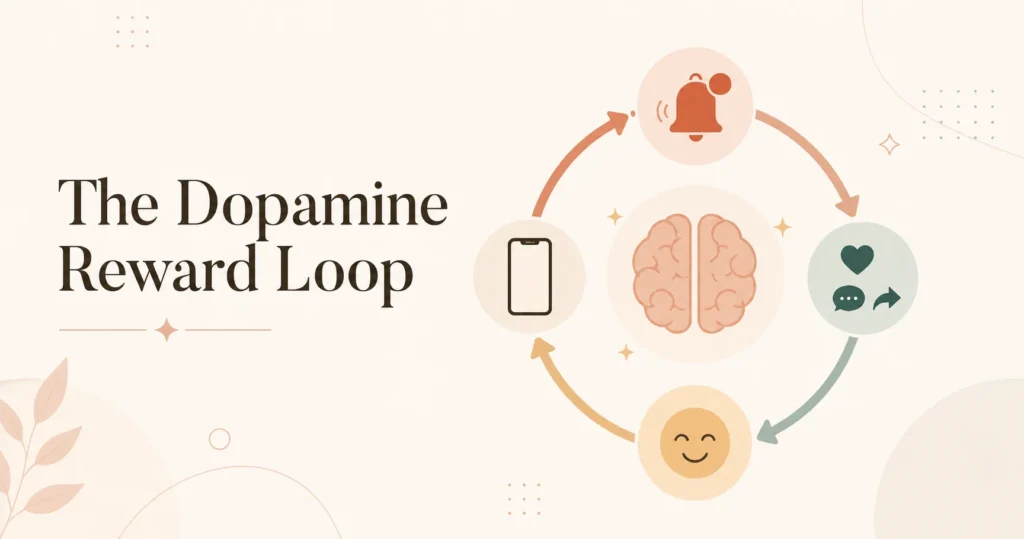
Have you noticed the little lift when a notification appears? That ping triggers a reward system in your brain that releases dopamine, the natural chemical that makes a moment feel good. Likes feel like being seen. Comments feel like approval. Shares feel like belonging.
Over time this can start to mimic a habit you cannot easily put down. You are not only checking for fun anymore. You are checking because your brain has learned to expect the next small hit. That is a very human reaction, not a personal failing, and noticing it is the first step toward taking your attention back. If that endless-scroll pull sounds familiar, our piece on what doomscrolling does to mental health looks at how to break the cycle.
The Comparison Trap: Why You Feel Not Enough
The comparison trap is the habit of measuring your real life against the polished, edited version other people post. You scroll past perfect bodies, dream jobs, and far-away holidays, then compare them to your own behind-the-scenes reality, the dishes and the deadlines and the ordinary day. This quiet measuring chips away at self-esteem and can stir up painful feelings about your body and your worth. The cause and effect of social media on mental health often starts right here, in a single comparison you barely registered.
FOMO: The Quiet Anxiety Trigger
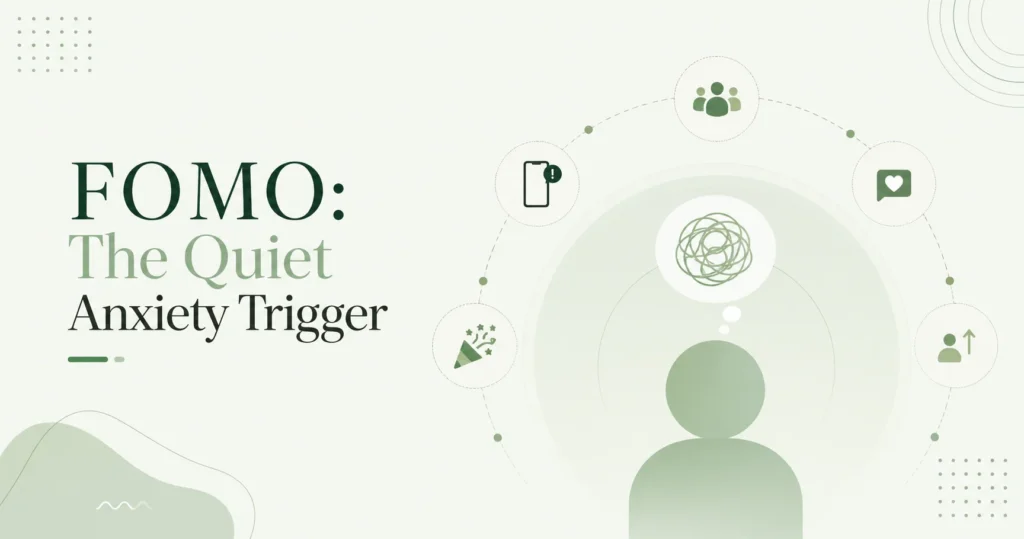
FOMO, or the fear of missing out, is the uneasy sense that something is happening without you. It is one of the clearest links between social media and anxiety. It shows up as a constant, low hum of worry: Am I missing something. Why was I not there. Is everyone else having more fun than me. Even a short scroll can leave your mind restless. Breaking the cycle is not about deleting the internet forever. It is about learning to be present in your own unedited life again.
Social Media and Depression and Anxiety
Heavy social media use is associated with more depression, more anxiety, and sharper mood swings, and the link is strongest among teens and young adults. According to the Public Health Agency of Canada, problematic social media use among Canadian adolescents is connected with lower mental well-being and more emotional and behavioural difficulties. Between the pressure of curated posts and the sting of online conflict, well-being can erode without us noticing.
One honest note matters here. These studies show an association, a pattern that two things tend to appear together. They do not prove that social media alone causes depression or anxiety. Many things shape mental health. Social media is one worth paying attention to, not the whole story. The broader picture of how our devices shape us is something our guide on the impact of screen time on mental health covers in more depth.
Signs Social Media Is Affecting Your Mental Health
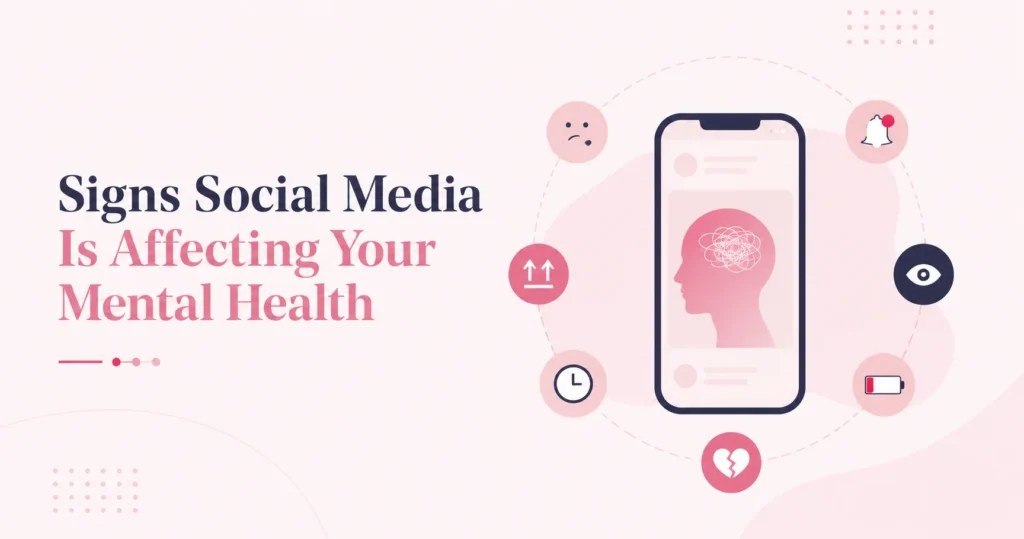
Watch for feeling low, drained, or irritable after scrolling, comparing your real life to other people’s edited posts, reaching for your phone without thinking, losing track of time online, and a nagging sense of low self-worth. If you feel worse after using social media on most days, that is a signal worth listening to, not ignoring.
The negative mental health effects of social media are usually quiet at first. If these patterns feel familiar, it may be time to step back and breathe.
Emotional Signs
- Feeling anxious or low after a scrolling session
- Mood swings or irritability you cannot quite explain
Behavioural Signs
- Reaching for your phone on autopilot, before you have decided to
- Losing whole stretches of time online without meaning to
Mental Signs
- Replaying and overthinking small online interactions
- A steady undertone of low self-worth or self-doubt
A Quick Self-Check
Ask yourself three plain questions. Do I genuinely feel worse after using social media. Am I comparing my real life to someone else’s filtered one. Does reaching for the scroll feel hard to resist. If you answered yes to even one, you are not broken. You are paying attention, and that is where change begins.
What Research Really Says
Here is what the evidence on social media effects on mental health, and the wider research, points to, with sources you can check yourself.
- Daily use adds up. The average person spent about 2 hours and 21 minutes a day on social media in 2025, according to DataReportal’s Digital 2025 report using GWI figures. That is a meaningful slice of every day.
- Heavy use tracks with distress. Mental Health Research Canada reports that extended personal screen time and negative online experiences are associated with higher rates of anxiety, depression, and psychological distress among Canadian youth.
- Late-night screens cost you sleep. The Centre for Addiction and Mental Health, through its youth, smartphones and social media use resource, points to building habits like avoiding screens before bed and keeping devices out of the bedroom, because screen use near bedtime disrupts sleep, and poor sleep makes mental health harder.
- Cyberbullying is common and it hurts. In 2019, Statistics Canada found that one in four youth aged 12 to 17 reported being cyberbullied in the past year. Cybervictimization, the experience of being harmed or harassed online, is closely tied to higher distress, and the weight falls harder on youth who are already more vulnerable.
These are the social media effects on mental health statistics that hold up to a source. We have left out any number we could not trace to a named, current authority, because on a topic this serious, an honest gap beats a confident guess.
How Social Media Affects Sleep
Social media disrupts sleep in two ways. The light from your phone tells your brain it is still daytime, which delays the signal that helps you fall asleep, and the steady pull of new content keeps you scrolling past the point of being tired. Lost sleep then makes anxiety and low mood harder to manage, which is part of why late-night scrolling feels so heavy the next day.
CAMH’s guidance on youth and screen use suggests a simple boundary that helps almost everyone: keep screens out of the bedroom and put the phone down a while before bed. It is a small change with an outsized payoff.
Why This Matters More Today
We live in a world that is always on, and we forget that our minds were never built for constant overdrive. This is part of why mental health matters so much. It is the quiet engine behind how we think, feel, and stay connected to the people who matter. When that inner balance tips, the digital world can turn overwhelming fast.
Algorithm Pressure and Validation Culture
Your feed is not a random scatter of photos. It is built to hold your attention. Over time, every like and share can start to feel like a score for your worth, and that is an exhausting way to live.
Always Online, Never Resting
The pings rarely stop, so the mind rarely gets the deep rest it needs to recover. Even a short break can feel incomplete when part of you is still waiting for the next alert.
The Illusion of Connection
Hundreds of online contacts can still leave you lonely. Digital ties often miss the depth of real emotional support. In the end, face-to-face bonds carry the most weight.
Social Media and Mental Health in Canada
Mental health concerns here in Ontario are rising, especially for young adults moving through a fast-paced world. The good news is that getting support no longer means a long drive and a waiting room.
The Saalvio app self-help tools are available across North America, with mood tracking, journaling, guided practices, sleep tools, and self-assessments you can use any time, anywhere you are. Virtual therapy with a Saalvio clinician is offered in Ontario today, and we are actively working to reach more of Canada. If you are in Ontario and the daily weight has grown heavy, you can explore online therapy in Ontario or online counselling in Mississauga with a real human on the other side of the screen. Sessions are delivered by registered psychotherapists and registered social workers, in a private, unhurried space, without the pressure of a traditional office.
It is care that meets you where you are, so you can put your attention back where it belongs.
How Social Media Affects Teens and Young Adults
Teens are still forming their sense of who they are, so the comparison and the need for likes land harder than they do for adults. Cyberbullying, being left out, and a flood of notifications add stress that can deepen anxiety and low mood. If you are a parent watching this happen, your steady presence matters more than you know, and youth-specific help is available right now. Our guide on whether teens are addicted to social media is written with Ontario parents in mind.
Identity and Self-Esteem
When you are still figuring out who you are, online validation can start to feel like a need rather than a nice extra. The youth mental health effects of social media often show up first as a shaky sense of self-worth.
Cyberbullying
Cyberbullying is being harassed, excluded, or insulted online or by text. The effects of social media on teenage mental health are sharpest here, because this kind of harm follows a young person home and into the night. It can drive real stress, low mood, and isolation.
Focus and School
A constant ping makes homework and study nearly impossible to settle into. Attention gets sliced thin.
Leaning on Likes
When likes are high, spirits lift. When they drop, the low can feel personal and deep. That swing is a lot for a developing mind to carry.
A note for parents reading this. Saalvio’s virtual therapy is for adults in Ontario, so Saalvio is not the booking path for your teen. If your child is struggling, you can reach Kids Help Phone any time at 1-800-668-6868, or by texting CONNECT to 686868, for free, confidential youth support. You can also speak with your family doctor or your child’s school about local youth mental health services. And you do not have to carry the parent’s side of this alone; support exists for you too.
How to Protect Your Mental Health While Using Social Media
- Set healthy boundaries. Use built-in app time limits and make the bedroom a no-phone zone at night.
- Curate your feed. Be honest with yourself. Unfollow accounts that leave you feeling less than, and keep the ones that genuinely steady or inspire you.
- Choose real life often. Trade one scroll for a walk, a hobby, or a coffee with someone you like.
- Use it on purpose. Before you open an app, ask yourself why, right now. That one question quietly breaks the mindless loop.
How to Take a Social Media Break and Reset
Try a simple seven-day reset. Day one and two, just track your time and see where the hours actually go. Day three and four, dial the usage back. Day five and six, swap scroll time for a walk, a book, or a friend. Day seven, reflect on how your head feels. Small, steady changes beat quitting all at once.
A 7-Day Digital Reset
- Day 1 to 2: Track your time. No judgment, just notice it.
- Day 3 to 4: Gently dial the usage down.
- Day 5 to 6: Replace scroll time with a book, a walk, or a hobby.
- Day 7: Reflect. How does your mind feel now, compared to day one.
The benefit of a break is not just less screen time. It is the return of attention, sleep, and a little more room to breathe. Beyond the screen, healing often looks ordinary: writing down what you feel, talking honestly with someone you trust, and reaching for real support when self-help is not enough.
When Should You Seek Professional Help?
If you are noticing constant anxiety, deepening depression, or a sense of being cut off from the world around you, reaching out is not weakness. It is one of the bravest things a person can do. A registered therapist can help you work through the anxiety underneath the scrolling, often using practical, evidence-based approaches like CBT, which helps you notice and shift the thoughts that keep worry going.
If you are in Ontario and unsure whether therapy is right for you, you do not have to decide tonight. You can message a therapist before you book and ask whatever you need to ask, at no cost and with no commitment. Messaging is a no-pressure way to start, not therapy by text and not crisis support; the real work happens in a booked session. And every Canadian’s first therapy session with a Saalvio clinician is free, so trying therapy is not a gamble on whether the fit feels right.
If things feel urgent, please reach for immediate help. You can also find crisis resources any time.
Frequently Asked Questions
How can social media affect your mental health?
Social media is a double-edged tool. It helps you stay connected, but it can also train your brain to chase likes to feel okay, and pull you into comparing your real life to everyone’s highlight reel. Used heavily, that mix can leave you drained, anxious, or low. The effect is cumulative, so how you use it matters.
Does social media cause anxiety and depression?
Research shows a strong association, not proof of cause. Studies, including work cited by the Public Health Agency of Canada, link heavy or problematic social media use with more anxiety and depression, especially in youth. Many factors shape mental health, so social media is one important piece to manage, not the single cause of how you feel.
What are two ways social media can be harmful?
Two of the biggest are the comparison trap and cyberbullying. The comparison trap quietly wears down self-esteem as you measure your life against filtered posts. Cyberbullying, being harassed or excluded online, can cause real emotional stress and isolation, and it hits youth especially hard because the harm follows them home.
What are the signs of compulsive social media use?
Watch for checking your phone on autopilot, struggling to cut back even when you want to, losing track of time online, and feeling worse after scrolling yet returning anyway. These are habit patterns, not a clinical diagnosis. If they are disrupting your sleep, mood, or relationships, that is a clear signal to set firmer boundaries or reach out for support.
What is a healthy social media limit?
There is no magic number. Many people find that keeping scroll time to under an hour a day, and putting the phone down a while before bed, helps them feel balanced. A healthy limit is less about the minutes and more about being intentional, so your digital life does not crowd out sleep, movement, and real connection.
How do I take a social media break?
Try a gentle seven-day reset. Track your time for two days, dial it back for two, swap scroll time for offline activities for two, then reflect on day seven. Easing off works better than quitting cold turkey, and the payoff is usually better sleep, steadier focus, and a calmer mind.
You are not your feed. You are not the number of likes on your last post. What matters is how you feel when the screen goes dark. Social media is not all bad. The harm comes from how it is used, and the good news is that how it is used can change. With a few boundaries, more mindful scrolling, and support when you need it, you can keep the connection without carrying the weight.
Clinically reviewed
Usman Khan, Registered Psychotherapist
Usman Khan is the Clinical Director of Saalvio and a Registered Psychotherapist with the College of Registered Psychotherapists of Ontario (CRPO #13456). He holds an MD, an MPH from Western University, and an MA in Counselling Psychology from Yorkville University. He reviews all clinical content on saalvio.com before publish.
See also across Saalvio
Topics mentioned in this post that have their own page on the site.
Talk to our clinical team
Saalvio offers a free 30-minute consultation with any therapist on the team. There is no card on file. If we are not the right fit, we will say so and help you find one.