
How to Reduce Anxiety: A Complete Guide for Ontario
Anxiety is not always the panic you see in movies. Sometimes it is quieter than that. It is the heart that will not slow down at a red light. It is the email you read four times and still cannot send. It is lying in the dark at 2 a.m. while your mind runs through every version of tomorrow that could go wrong. If you have been quietly asking how to reduce anxiety, you have probably been carrying this for longer than you have told anyone.
Here is the part anxiety does not want you to know. It can change. Not all at once, and not by force, but in small, repeatable steps that your body learns over time. This guide walks through what anxiety is, the daily habits that lower it, how to settle a spike fast, and when it is worth bringing in a registered psychotherapist. If you want a companion piece with more everyday tools, our guide on how to get rid of anxiety covers them too. We will go gently, and we will go one step at a time.
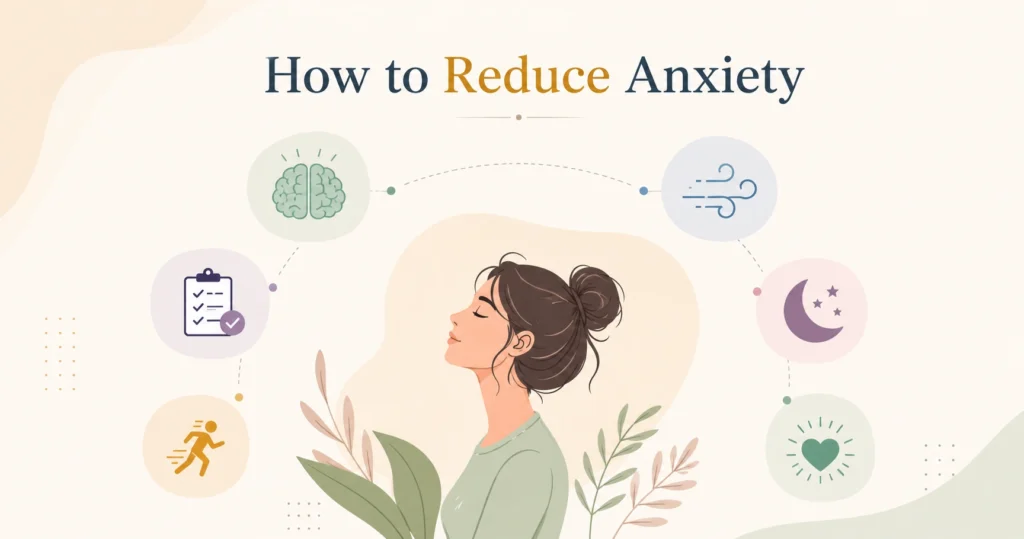
How Do You Reduce Anxiety?
You reduce anxiety by calming the body and changing the thinking that feeds it. Slow your breathing, move a little every day, keep a steady routine, and ease off caffeine. When worry runs the day, a registered psychotherapist can teach skills that last. Most people use a mix of self-help and professional support, not one or the other.
That is the short answer. The longer answer is that there is no single trick that works for everyone, and anyone who promises a quick cure is not being honest with you. What follows are the approaches that have the most evidence behind them, written plainly, so you can start with whichever one feels possible tonight.
Understanding Anxiety: Why It Happens
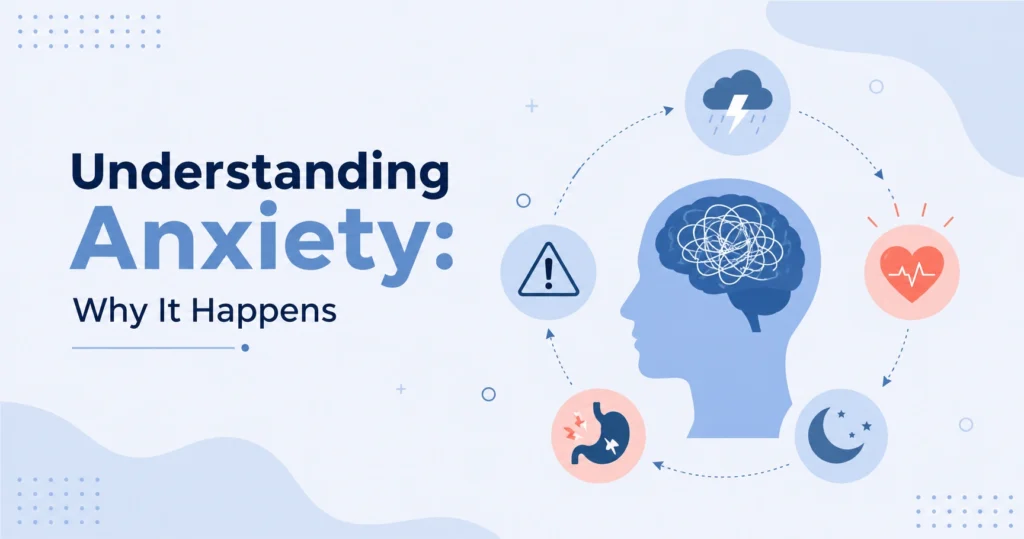
Anxiety is your body’s built-in alarm system. It is meant to warn you about danger, but sometimes the alarm gets stuck in the “on” position, ringing when there is nothing actually wrong. This is the cause anxiety loop: your mind reads a small worry as a threat, your body floods with stress signals, and those signals make the worry feel even more real.
You might notice some of these signs:
- A constant, nagging sense of worry that never quite switches off.
- A racing heart, or chest tightness that comes out of nowhere.
- Tossing and turning at night because your brain will not be quiet.
- Feeling restless, irritable, or just “on edge.”
When people ask how to reduce anxiety, the answer usually starts with noticing the triggers. Life in Ontario can be demanding. Work pressure, money, caregiving, and the pace of a place like Toronto are common causes of anxiety, and they keep our nervous systems running hot. Naming what sets your alarm off is not weakness. It is the first foothold.
This is not a rare or shameful thing to live with. According to Statistics Canada, the share of Canadians aged 15 and older living with generalized anxiety disorder doubled between 2012 and 2022, rising from 2.6 percent to 5.2 percent. CAMH notes that anxiety disorders are among the most common mental health conditions, and that about one in three adults will experience one in their lifetime. If this is you, you are in very large company.
Daily Habits to Reduce Anxiety Naturally
If you are wondering how do you reduce anxiety at home, remember that small, consistent shifts usually do more than one big change. These are some of the most reliable ways to reduce anxiety naturally, and they cost nothing to start. Our roundup of natural remedies for anxiety gathers a few more you can try.
Breathing Exercises for Anxiety
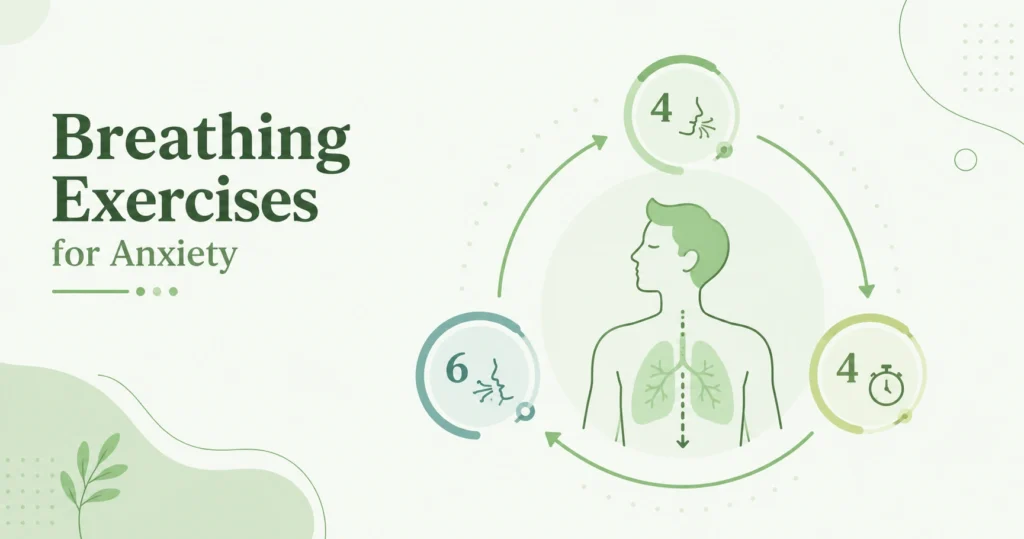
When anxiety spikes, your breathing goes shallow and fast, which tells your body the danger is real. Slowing your exhale sends the opposite message. Try the 4-4-6 method: breathe in through your nose for 4 seconds, hold for 4 seconds, then breathe out slowly for 6 seconds. Repeat for a minute or two. A longer exhale is one of the quickest, simplest anxiety reducing techniques you have, and you can do it anywhere, on the bus, at your desk, in a parked car.
Gentle Physical Movement
Movement is one of nature’s own mood stabilizers. You do not need a gym or a hard workout. A 20-minute walk through a park near you, or some light stretching in your living room, helps burn off the extra nervous energy anxiety creates. With anxiety, a little movement is a lot.
A Structured Routine
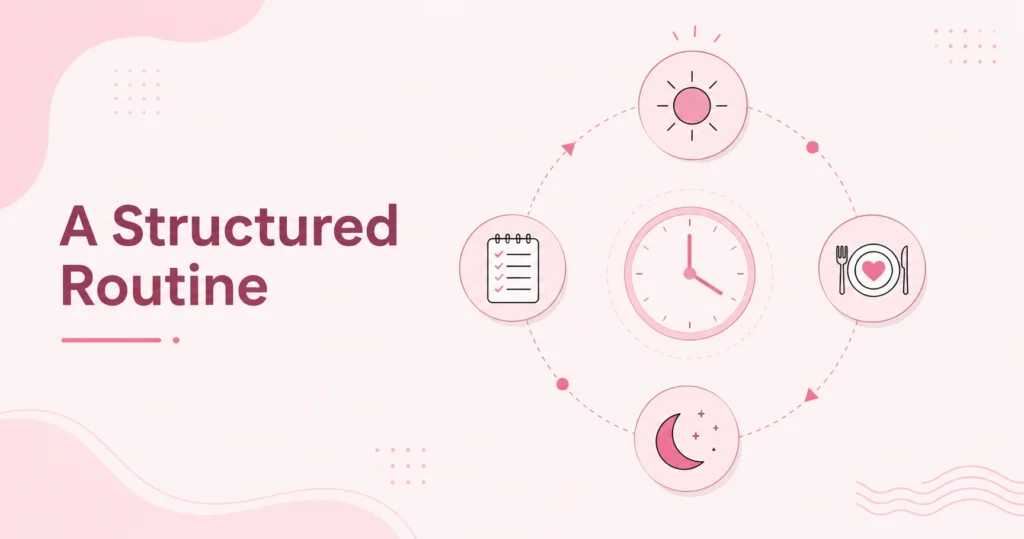
Anxiety feeds on the unknown. By building a simple daily rhythm, consistent wake-up times, regular meals, a wind-down before bed, you give your nervous system something predictable to lean on. This is one of the steadier ways to reduce anxiety over time, because it lowers the number of unknowns your alarm system has to react to.
Journaling for Emotional Clarity
Getting the what-if thoughts out of your head and onto paper can stop the mental spin. Writing down a worry often shrinks it, because a fear that felt enormous in your mind looks smaller once it is sitting in a sentence. Journaling is a quiet but genuine part of anxiety reducing techniques, and it gives your mind permission to set the worry down for a while.
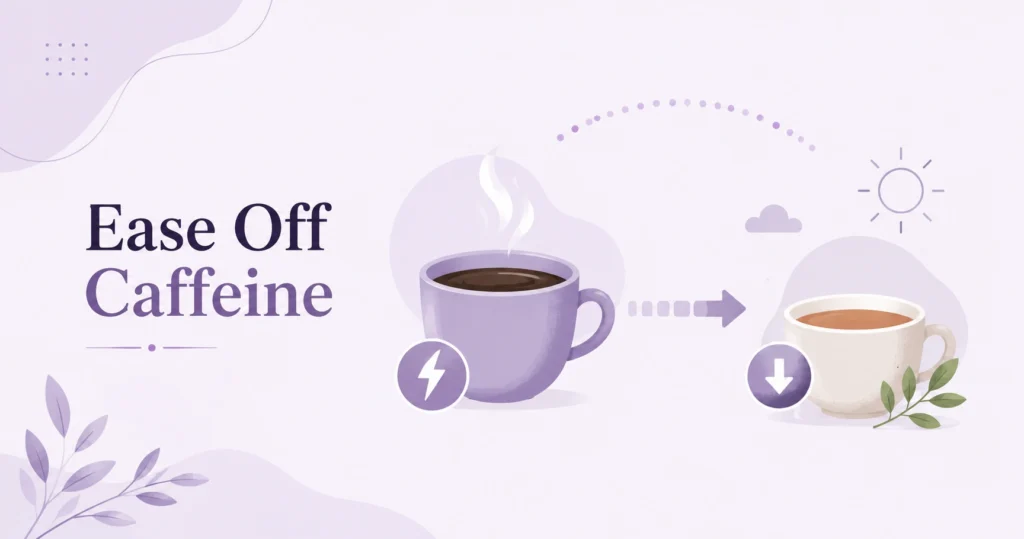
Ease Off Caffeine
Caffeine speeds up the same body signals anxiety already uses, so a strong coffee can turn a low hum of worry into a loud one. You do not have to quit, but cutting back, especially in the afternoon, is one of the simplest tips to reduce anxiety that people overlook.
How to Stop Overthinking and Anxiety
Overthinking is worry stuck on a loop, replaying the same thought without ever reaching an answer. You slow it by giving the worry a container instead of fighting it all day. Try a short “worry window,” a set 15 minutes when you let yourself think it through, then gently return to the present when the time is up.
The reason this works is that overthinking thrives on the belief that if you just think hard enough, you will solve the fear. Most anxious worries are not problems waiting to be solved; they are feelings waiting to be felt. Naming a thought as “this is my anxiety talking, not a fact” is a small skill that, with practice, takes some of the power out of the spin.
What Reduces Anxiety Fast?
The fastest way to settle anxiety is to slow your exhale and ground your senses. Breathe in for 4 seconds, hold for 4, and breathe out for 6. Then name 5 things you can see and 4 things you can touch. This tells your body it is safe and lowers the alarm. It will not erase the worry, but it can take the edge off in a couple of minutes.
When you need to learn how to reduce anxiety instantly, or how to quickly reduce anxiety in the middle of a hard moment, these are the fast-acting resets:
Grounding Techniques for Anxiety
Grounding means using your senses to come back to the present, away from the what-ifs. The most common one is the 5-4-3-2-1 exercise: name 5 things you see, 4 things you can touch, 3 things you hear, 2 things you can smell, and 1 thing you can taste. It works because it gives your busy mind a simple, concrete job, which interrupts the worry loop.
Controlled Breathing
Come back to that long, slow exhale. Breathing out for longer than you breathe in is one of the few things that can directly tell your nervous system to stand down.
A Quick Physical Reset
Anxiety lives in the body too. Roll your shoulders, unclench your jaw, shake out your hands, or stretch your arms over your head. Releasing the physical tension often shifts the feeling that goes with it.
How to Reduce Chest Tightness Due to Anxiety
Chest tightness during anxiety usually comes from shallow, rapid breathing, not from your heart. Lengthening your exhale helps. Breathe in slowly for 4 seconds, then out for 6, and let your shoulders drop away from your ears. One honest caution: if chest pain is sudden, severe, or new to you, do not assume it is anxiety. Treat it as a medical emergency and call 911 to rule out a heart problem first.
How to Calm Anxiety at Night
To calm anxiety at night, slow your body down before bed and give racing thoughts somewhere to go. Keep your room cool and dark, put your phone away an hour before sleep, and try the 4-4-6 breath as you lie down. If worries keep surfacing, jot them on a notepad beside the bed so your mind can let them go until morning.
Night-time is when anxiety often gets loudest, because the day’s distractions are gone and there is nothing left between you and your own thoughts. A consistent wind-down routine, the same steps in the same order each night, teaches your body that this is the time to stand down. If poor sleep and anxiety have been feeding each other for weeks, that is worth raising with a professional, because the two are closely linked.
How to Manage Anxiety at Work
Manage anxiety at work by handling one task at a time, taking real breaks away from your screen, and using a quick breathing reset before stressful moments like a meeting or a hard email. Naming the pressure to yourself helps too. If work anxiety is constant rather than occasional, that is a sign it is worth bringing to a therapist.
Work and school are often the front lines of stress, and they are where many people first ask how can I reduce stress and anxiety in a way that actually fits a busy life. For students, the same logic applies: break the mountain into molehills, take short mindfulness breaks between study blocks, and protect your sleep before a deadline rather than trading it away. You cannot think your way out of anxiety while running on no rest.
Techniques and Methods to Reduce Anxiety
When you go looking for the best methods to reduce anxiety, it helps to know which clinical tools you can borrow for yourself, and which ones work best with a trained therapist alongside you.
The most studied of these is cognitive behavioural therapy, usually shortened to CBT. CBT is a structured talk therapy that helps you notice the anxious thoughts driving the fear, check them against what is actually true, and slowly face the situations you have been avoiding. CMHA Ontario lists CBT as a first-line treatment for anxiety disorders, meaning it is one of the approaches with the strongest evidence behind it. Many of the self-help habits above, like challenging what-if thoughts and reducing avoidance, come straight from CBT.
Mindfulness is another. It is the practice of staying anchored in the present moment instead of being pulled into worry about how a situation might turn out. For people who struggle with social anxiety, mindfulness can help you stay with the conversation in front of you rather than monitoring how others might be judging you. A related approach, which our post on ACT therapy for anxiety explains, teaches you to make room for anxious feelings instead of wrestling them.
The Saalvio app, available across Canada and North America on the Apple App Store and Google Play, carries CBT-based exercises, mood tracking, guided mindfulness practices, and a private journal, so you can use these tools whenever you need them, on either iPhone or Android. You can see the full set of Saalvio app self-help tools if you want to explore what it includes. The app also includes Thrive, an AI companion built to listen when no one else is awake. Thrive is not a clinician and not a substitute for therapy; it is a self-help companion. Therapy with a registered psychotherapist happens in booked sessions.
When to Seek Professional Support for Anxiety
There comes a point where self-help is not enough, and that is completely okay. Reaching out for professional help is not a failure; it is one of the bravest, most practical things a person can do. Professional therapy is often the most direct path to lasting change, because it gives you skills built for your specific situation, not generic advice.
It may be time to talk to someone if worry has lasted most days for weeks, if it is interfering with your sleep, work, or relationships, or if the self-help tools just are not touching it. This is also where you learn how to reduce nervousness and anxiety in a way that holds up under real pressure, with a plan made for your life.
Statistics Canada found that among Canadians who met the criteria for a mood, anxiety, or substance use disorder, fewer than half had talked to a health professional about it in the past year. The barrier is rarely the wanting. It is the cost, the wait, and the fear of not knowing whether a stranger will understand you. The Mental Health Commission of Canada publishes ongoing work on closing exactly these gaps in access to care.
Where Can I Get Anxiety Therapy in Ontario?
Saalvio offers virtual anxiety therapy across Ontario, delivered by our clinical team of registered psychotherapists and registered social workers. Whether you are looking for anxiety therapy in Ontario province-wide or anxiety counselling in Toronto, care is available without the commute or the waiting room. For anxiety treatment Ontario residents can reach from home, online sessions remove a lot of the dread of a first visit.
Sessions are pay-per-session, and every Canadian’s first session with a Saalvio clinician is free, so deciding to try therapy is never a gamble on whether the fit will be right. Saalvio does not bill insurers directly, but sessions with registered psychotherapists and registered social workers are typically reimbursable under many extended health benefit plans, and you receive a detailed receipt to submit to your insurer. Coverage varies by plan, so it is worth checking your own benefits.
Before you book anything, you can message a registered psychotherapist before you book and ask whatever you need to ask: whether they have worked with someone like you, whether their approach fits, whether they will understand the life you come from. There is no cost and no commitment. Messaging is for questions and brief clarifications, not therapy by text, and it is not crisis support. It is simply the conversation you used to wish you could have before trusting someone.
The Saalvio app and its self-help tools are available across Canada and North America. Therapy with a Saalvio clinician is offered in Ontario today, with active expansion underway. If you are not sure where to begin, how to find a therapist walks through the steps.
A Note for Parents and Teens
If the person struggling with anxiety is your child, the support above is written for you as the parent. Saalvio’s virtual therapy is for adults in Ontario, so for direct help for a teen, Kids Help Phone is free, confidential, and available across Canada at 1-800-668-6868, or by texting CONNECT to 686868. Your family doctor and your child’s school can also connect you with clinicians who specialize in children and youth.
Take the First Step
Learning how to reduce anxiety is rarely one big change. It is a handful of small ones, repeated on the days you have the energy and forgiven on the days you do not. Whether you start with one slow exhale tonight, a short walk tomorrow, or a message to a therapist when you are ready, you do not have to walk this path alone, and you do not have to do it perfectly. You can reach for help tired and unsure. We will be here.
If you need help right now
Saalvio is not a crisis service. If you are in immediate danger, please call 911. If you are in mental health crisis, please call 988 (the Suicide Crisis Helpline of Canada) or visit your nearest emergency department.
Frequently Asked Questions
What reduces anxiety fast?
The fastest relief comes from slowing your exhale and grounding your senses. Breathe in for 4 seconds, hold for 4, and breathe out for 6. Then name 5 things you see and 4 things you can touch. This tells your nervous system you are safe. It softens a spike in a couple of minutes, though it does not replace longer-term support.
How do I control anxiety at home?
The best at-home toolkit is built from steady habits: a regular routine, daily movement, balanced meals, less caffeine, and protected sleep. Add slow breathing and grounding for the harder moments, and journaling to clear a racing mind. These shifts build a calmer baseline over weeks, and they pair well with professional support if worry stays high.
What is a constant state of anxiety?
A constant state of worry that lasts most days, with no single clear trigger, is often called generalized anxiety. It can show up as restlessness, a racing mind, trouble sleeping, and feeling on edge. If this sounds like your day-to-day life, talking with a registered psychotherapist is a reasonable and helpful next step.
How can I reduce anxiety naturally?
Natural approaches include regular gentle movement, steady sleep and wake times, balanced meals, less caffeine, time outdoors, and journaling to offload worried thoughts. These take consistency, and many people find them genuinely helpful for building a calmer baseline. They work best alongside professional guidance, not instead of it, especially when worry is heavy.
How do I calm anxiety at night?
To calm anxiety at night, slow your body before bed and give racing thoughts an exit. Keep your room cool and dark, put your phone away an hour before sleep, and use the 4-4-6 breath as you lie down. Keep a notepad nearby to write down worries so your mind can release them until morning.
Where can I get anxiety therapy in Ontario?
Saalvio offers virtual anxiety therapy across Ontario with registered psychotherapists and registered social workers. Sessions are pay-per-session, and your first session is free. Sessions are typically reimbursable through many extended health plans, and you receive a detailed receipt to submit. You can message a registered psychotherapist before you book to ask whatever you need.
Clinically reviewed
Usman Khan, Registered Psychotherapist
Usman Khan is the Clinical Director of Saalvio and a Registered Psychotherapist with the College of Registered Psychotherapists of Ontario (CRPO #13456). He holds an MD, an MPH from Western University, and an MA in Counselling Psychology from Yorkville University. He reviews all clinical content on saalvio.com before publish.
See also across Saalvio
Topics mentioned in this post that have their own page on the site.
Talk to our clinical team
Saalvio offers a free 30-minute consultation with any therapist on the team. There is no card on file. If we are not the right fit, we will say so and help you find one.