
Depression Therapy in Brampton: When to Seek Professional Support
Book a Free 30-Minute Consultation
Depression therapy in Brampton starts when you decide the heaviness has gone on long enough. You do not need a diagnosis or a crisis to ask for help. You need a registered clinician who listens, and a plan you can follow on the days when getting out of bed feels like too much. Saalvio offers virtual sessions across Ontario, so that first step can happen from your own home.
How do you know when low mood is more than a rough patch?
Everyone has bad weeks. Depression can feel different because of how long it lasts and how much it affects daily life. According to CAMH, symptoms may:
- Be present most of the day, most days.
- Last for more than two weeks.
- Affect your ability to function at work, school, or in relationships.
- Include sadness or loss of interest in things you once enjoyed.
- Cause low energy or trouble concentrating.
- Bring feelings of worthlessness.
- Lead to sleeping or eating much more or much less than usual.
- Show up as irritability rather than sadness for some people.
- In some cases, cause headaches or unexplained aches.
- Appear through small changes, such as stopping replies to friends, finding work heavier, or struggling with tasks that once felt easy.
Only a qualified clinician can diagnose depression. These signs are not a diagnosis, but if they sound familiar, speaking with a professional can be a helpful next step.
How common is depression in Canada?
More common than most people say out loud. According to Statistics Canada, the share of Canadians aged 15 and older who had a major depressive episode in the past year rose from 4.7% in 2012 to 7.6% in 2022. Among young women aged 15 to 24, it doubled, from 9.0% to 18.4%.
The same report found that among Canadians with a mood, anxiety, or substance use disorder, only 43.8% received any counselling or psychotherapy. Many people want to talk to someone and cannot easily get to one.
What does depression counselling in Brampton involve?
Depression counselling in Brampton usually begins with a conversation, not a form. Your therapist asks what brought you in, what has changed, and how sleep, energy, and motivation have been. Together you set goals that feel doable, such as showering before noon, answering one message a day, or eating a proper meal.
Depression treatment in Brampton can take more than one form. CAMH lists counselling, individual and group therapy, and medication, along with habits like physical activity and good sleep. Saalvio provides psychotherapy, and your family doctor is the person to ask about medication.
From there, therapy for depression in Brampton mixes understanding with small, steady steps. No therapist can promise a specific result, and progress is rarely a straight line. Many clients find that having a regular hour where someone takes their low mood seriously is a relief in itself.
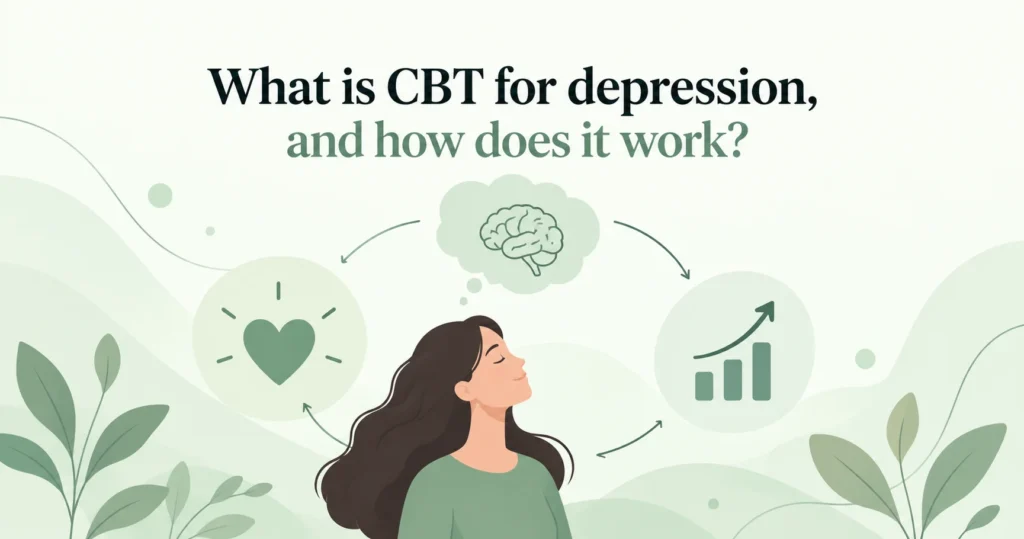
What is CBT for depression, and how does it work?
CBT (cognitive behavioural therapy) looks at the links between what you think, how you feel, and what you do. CAMH describes it as a structured, goal-oriented treatment that focuses on the “here and now” rather than the past, and uses it in group treatment for major depressive disorder as well as several anxiety conditions.
With CBT for depression in Brampton, you might notice the harsh thoughts that arrive when mood drops, then test them gently. You might also plan small activities, because pulling away from life often makes low mood deeper. If you are exploring other approaches, online DBT therapy in Brampton may also be worth considering, particularly when emotional regulation or relationship difficulties are part of what you are experiencing.
Depression rarely travels alone. For some people it follows a loss or a frightening event, and a trauma therapist in Brampton can help sort out what belongs to which. Others find that PTSD counselling in Brampton sits alongside their work on mood.
Is there support for adults, teens, and young adults?
Depression can look different at each stage of life, so therapy may focus on different needs:
- Adults: Depression therapy may need to fit around work, parenting, or caring for relatives. Some adults also feel guilty about struggling because they think others “have it worse.”
- Young adults: Therapy may focus on major life changes, such as leaving home, starting a first job, finishing school, or feeling unsure about the future.
- Teens: Depression therapy usually gives teenagers more space to speak for themselves and discuss what they are experiencing.
- Children: Younger children may find it difficult to explain their feelings. If you are looking for therapy for childhood depression in Brampton, start by speaking with your family doctor or a children’s mental health service.
- Saalvio: If you want to know whether a Saalvio therapist works with a specific age group, you can message them before booking.
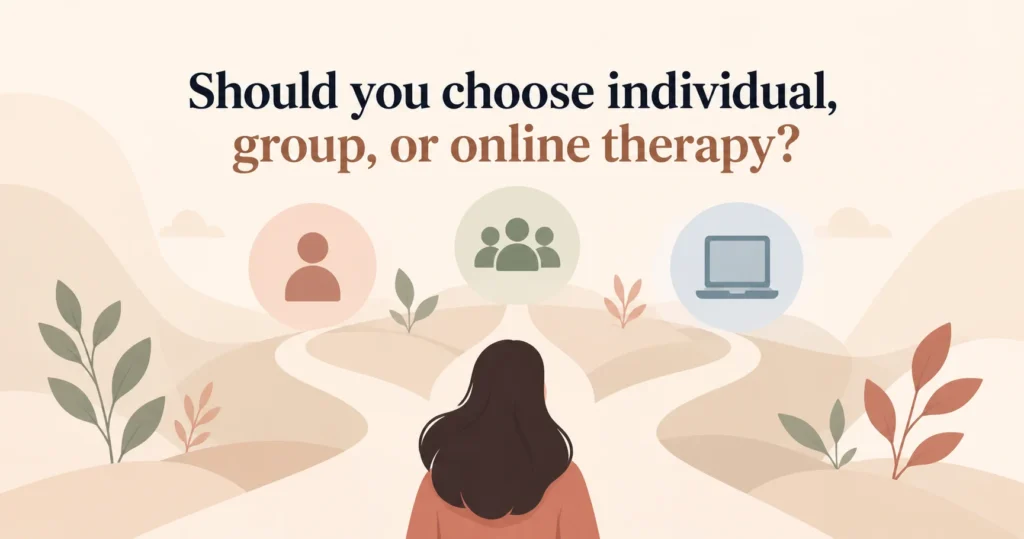
Should you choose individual, group, or online therapy?
Individual therapy for depression in Brampton gives you one-on-one time at a pace that suits you, which many people prefer when the subject feels private or is tied to family, culture, or faith. Saalvio sessions are individual.
Group therapy for depression in Brampton is usually offered through hospital and community programs. CMHA Peel Dufferin, based on Hurontario Street in Brampton, lists counselling and group programs for Peel residents, and your family doctor can also refer you. Groups can be reassuring because you hear others describe feelings you thought were yours alone.
Online therapy for depression in Brampton removes the commute and the waiting room, which matters when energy is low. Saalvio provides virtual psychotherapy serving Brampton and the rest of Ontario, and you can read how it works on our Ontario therapy.
How do you find the right depression therapist in Brampton?
Fit matters as much as technique. When you choose a depression therapist in Brampton, ask about their approach, check their registration with their college, and notice whether you feel at ease. Our guide on how to find a therapist walks through the steps, and what a Registered Psychotherapist is explains the credentials you will see.
At Saalvio, you can message a therapist before you book to ask about their approach or whether they speak your first language: English, Urdu, Hindi, Punjabi, or Arabic. Messaging is for questions and brief clarifications. It is not therapy by text.
Every new client can also book a Free 30-Minute Consultation with a registered clinician. You meet, share what brought you here, and decide together whether it feels right. It is not a full therapy session, and there is no charge and no obligation to book further.
What does it cost, and can you claim it?
Full therapy sessions are 50 minutes, with a collaborative fee of $100 to $150 CAD agreed between you and your therapist. Current details are on our pricing page.
Saalvio does not bill insurers directly. You pay at the time of service and receive a detailed receipt naming your clinician, their college, and registration number. Sessions are typically reimbursable under most extended health benefit plans, though coverage varies, so confirm your own benefits. The steps are on our insurance page.
Frequently Asked Questions
Can depression therapy help if I do not have a diagnosis?
Yes. You do not need a formal depression diagnosis to talk to a therapist. You can seek support if low mood, low energy, loss of interest, or other changes are making everyday life harder. A registered clinician can listen to what you are experiencing and help you decide what support may be appropriate.
What should I talk about in my first depression therapy session?
You can talk about what has been happening recently and how it is affecting your everyday life. This may include changes in your mood, sleep, energy, relationships, work, studies, or motivation. You do not need to prepare a perfect explanation. Your therapist can guide the conversation and help you identify therapy goals
Can depression therapy help with relationship or work problems?
Yes. Depression can affect how you communicate, work, study, and connect with other people. Therapy can help you understand how low mood affects these areas and develop practical ways to manage difficult thoughts, emotions, and situations. Your therapist can also help you explore specific problems that may be contributing to your distress.
What happens if depression therapy is not helping?
Tell your therapist if you feel you are not making progress or the approach does not feel right. You can discuss your goals, what has changed, and whether a different strategy may be more suitable. If your symptoms become severe or you have thoughts of suicide, seek urgent support rather than waiting for your next therapy appointment.
Clinically reviewed
Usman Khan, Registered Psychotherapist
Usman Khan is the Clinical Director of Saalvio and a Registered Psychotherapist with the College of Registered Psychotherapists of Ontario (CRPO #13456). He holds an MD, an MPH from Western University, and an MA in Counselling Psychology from Yorkville University. He reviews all clinical content on saalvio.com before publish.
See also across Saalvio
Topics mentioned in this post that have their own page on the site.
Talk to our clinical team
Saalvio offers a free 30-minute consultation with any therapist on the team. There is no card on file. If we are not the right fit, we will say so and help you find one.