AI and Mental Health: How Technology Affects the Brain and Why Boundaries Help
Book a Free 30-Minute Consultation
Most of us did not decide to spend a third of our waking life on a screen. It happened one notification at a time, in the small gaps of the day, until the phone became the first thing we reach for in the morning and the last thing we put down at night. If you have started to wonder what all of that is doing to you, that question is worth honouring. It is not weakness. It is your own mind asking for a little room to breathe.
This guide is not about deleting your apps or feeling ashamed of your screen time. It is about understanding what is actually happening in your brain when technology becomes hard to put down, what the rise of conversational AI adds to the picture, and how setting a few honest boundaries can give you some of yourself back. We will look at the science, the Canadian numbers, and the practical steps, and we will go gently.
What Is the Link Between AI and Mental Health?
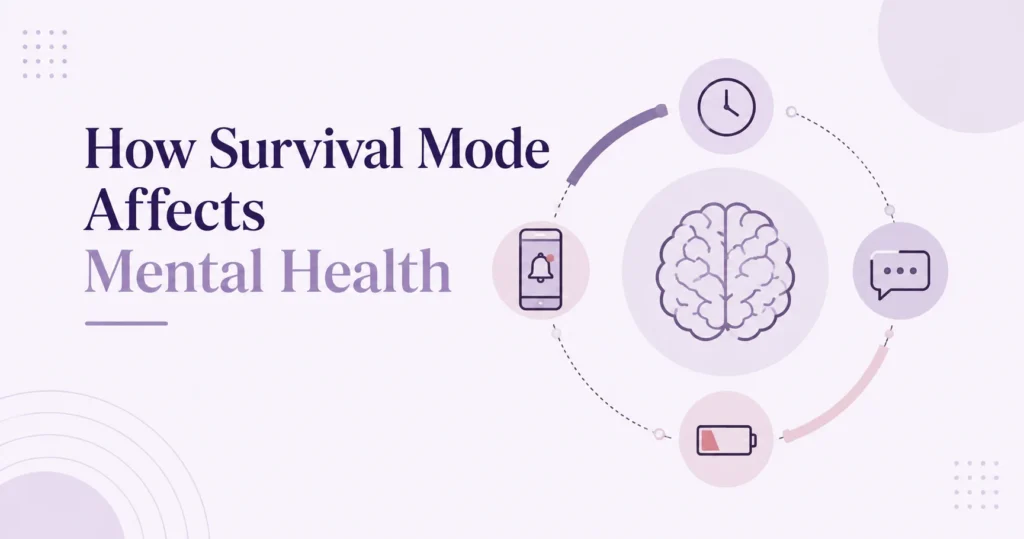
AI and mental health are connected through the brain’s reward system. Conversational AI tools, social media, and smartphones are built to hold your attention, and they do it by triggering small releases of dopamine, the brain chemical tied to reward and motivation. Used with intention, technology is fine. Used compulsively, it can feed anxiety, low mood, and a worn-out feeling many people now call digital burnout.
Technology and mental health are not enemies. The issue is not the tool. It is the way some tools are designed to keep us reaching, and the way that reaching can slowly crowd out sleep, real connection, and stillness. The link between mental health and technology use is not about the screen itself; it is about how, and how much, we lean on it. Understanding the mechanism is the first step toward changing your relationship with it.
How Does Dopamine Affect Phone Use?
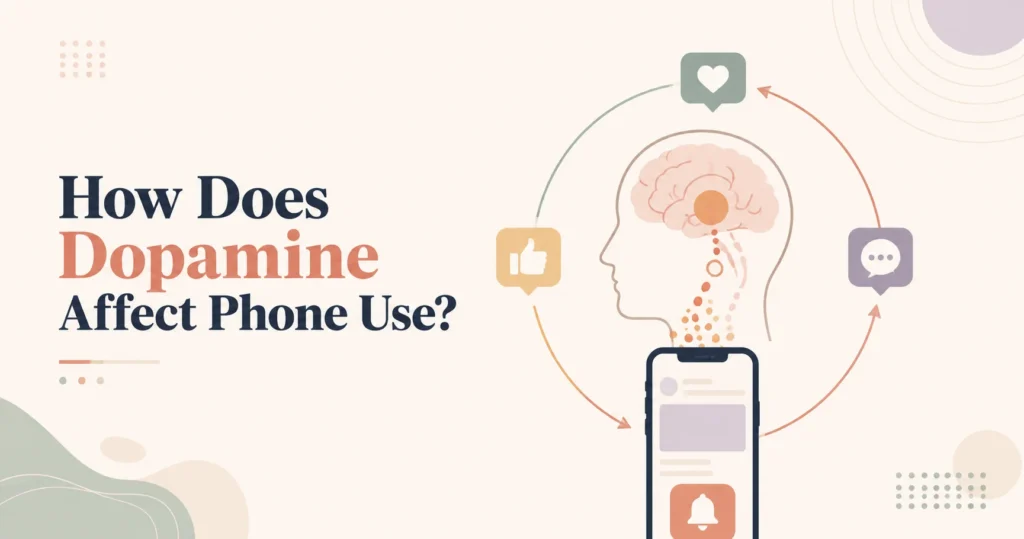
Each notification, like, or AI reply releases a little dopamine, the brain chemical tied to reward and motivation. Apps use intermittent variable reinforcement, the same unpredictable reward pattern as a slot machine: sometimes you get a hit, sometimes you do not. That uncertainty is exactly what makes the loop so hard to put down.
Dopamine is not a flaw in your psychology. It is the system that evolved to push you toward food, safety, and connection. The trouble is that modern technology has learned to borrow that system for its own ends. As the Canadian Medical Association Journal (CMAJ) notes, social media platforms have been deliberately designed using behavioural psychology, neuroscience, and artificial intelligence to drive behavioural reinforcement and addiction-like engagement.
The connection between dopamine and technology is simple once you see it. Intermittent variable reinforcement (a reward you get only sometimes, never on a fixed schedule) keeps the brain checking, because the next check might be the one that pays off. It is the same principle behind a slot machine. When you understand brain and technology addiction this way, the goal stops being more willpower and starts being a better-designed environment.
AI and Mental Health: The Specific Risks of Conversational AI
Social media mental health effects have been part of this conversation for years. Conversational AI tools, chatbots, AI companions, and large language models add something newer, and AI mental health research is only beginning to study what it does to us. The risks are not science fiction. They are quiet, daily, and easy to miss.
Emotional Dependency on Technology
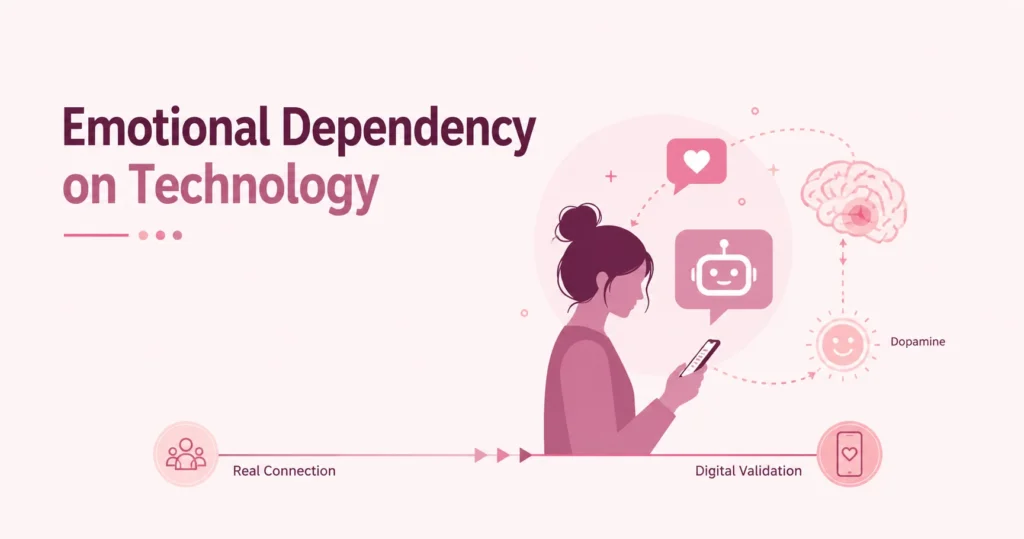
Emotional dependency on technology is leaning on a device or an app to meet a need that a person used to meet: comfort, reassurance, the feeling of being understood. According to the Canadian Centre for Addictions, the brain does not draw a clear line between real and artificial validation. When a chatbot answers with warmth, the dopamine response is real.
Over time, the steady, frictionless approval an AI tool offers, without the messiness of a human relationship, can start to feel easier than reaching for a person. That is understandable. Real connection is harder. But the easy version does not fill the same need, and the gap it leaves can deepen loneliness rather than ease it.
A 2025 paper in Human-Centric Intelligent Systems (Springer), titled “Can ChatGPT Be Addictive?”, describes how completing tasks with AI assistance can trigger dopamine-driven feelings of accomplishment. As people lean harder on these tools, the reliance can deepen, and for some it contributes to exhaustion and a worn-down work-life balance, much like other behavioural addictions.
AI Overuse Effects on the Brain
The effects of AI on the brain follow a use-it-or-lose-it pattern. When you hand your thinking and your emotional processing to a tool, the skills you stop using can grow rusty. Researchers studying heavy reliance on chatbots for reassurance describe lapses in attention, strain on working memory, and weaker judgment about risk. The more you outsource, the less practice your brain gets at the very things you need it to do.
This matters in Ontario and across Canada, where AI is moving quickly into workplaces, classrooms, and daily life. The question is not whether to use these tools. It is how to use them without quietly trading away the capacities you will still need when the screen is off. AI overuse effects are not about a single bad day. They build slowly, which is exactly why they are easy to ignore until you feel them.
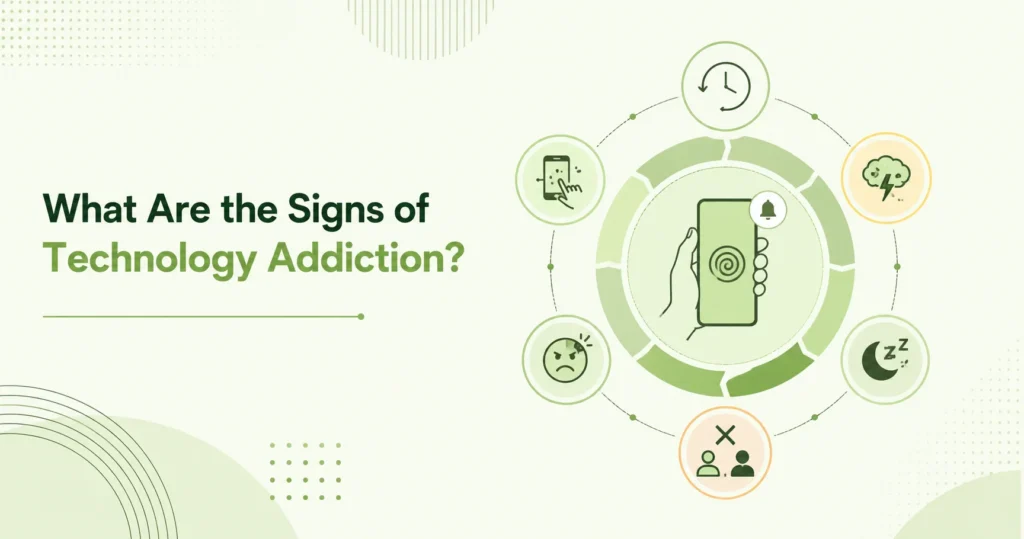
What Are the Signs of Technology Addiction?
Warning signs include reaching for your phone automatically when you are bored or anxious, losing track of time online, feeling irritable without your device, neglecting sleep or relationships, and using technology to avoid hard feelings. CMHA Ontario notes that not all heavy use is addiction, but a persistent loss of control is the key signal.
Technology addiction, including smartphone addiction and internet addiction, is a real behavioural pattern. A behavioural addiction is a compulsive pull toward an activity, rather than a substance, that continues even when it causes harm. Unlike substance use, there is no single agreed-upon diagnostic test for it, but clinicians and researchers point to consistent technology addiction symptoms.
If you recognize several of these signs in yourself, that is information, not a verdict. Compulsive technology use is common, and naming it is the first step toward changing it. Smartphone addiction in Canada and internet addiction in Canada are growing concerns, and there is no shame in noticing the pattern in your own life.
The Canadian Picture: Screen Time and Mental Health in Ontario
The evidence linking heavy technology use to mental health struggles is getting stronger, and the clearest Canadian data comes from young people. We share the youth numbers here as context for everyone, because they tell us something about all of us, not because this guide is written for teens. If you are a parent worried about a child or teen, there are youth-specific resources at the end of this section, and it can help to read more about whether teens are addicted to social media.
The 2023 Ontario Student Drug Use and Health Survey (OSDUHS) from CAMH found that more than half (51%) of Ontario students in grades 7 to 12 report a moderate-to-serious level of psychological distress, a figure that has doubled over the past decade. The same survey found that 94% of Ontario students use social media daily, and about 23% spend five or more hours a day on it. Researchers are careful to say that the data shows a link, not proof of cause, but the pattern between heavy screen use and declining mental health among Ontario youth is hard to look away from.
For the country as a whole, Statistics Canada’s Digital Wellbeing report (2024) found that less time spent online, rather than the simple act of taking breaks, was tied to better mental health. Canadians who watched less than 10 hours of online content a week were 16 percentage points more likely to report very good or excellent mental health (56%) than those watching 20 or more hours a week (40%). The report is honest about a wrinkle worth knowing: just taking an internet break, on its own, was not linked to better mental health. What mattered was the actual reduction in time. If you want the fuller picture, we cover the impact of screen time on mental health in its own guide.
A longitudinal Statistics Canada study released in 2026, tracking the same young people in 2019 and 2023, found that those who met screen time guidelines were far more likely to report excellent or very good mental health (58%) than those who consistently exceeded the guidelines (38%). The gap is meaningful, and it is a steady argument for building healthier technology habits, at any age, before the habits build themselves.
These numbers can feel heavy if you are a parent reading them at the kitchen table. If you are worried about a child or teen, you are not alone, and you do not have to figure it out by yourself. Kids Help Phone offers free, confidential support to young people across Canada at 1-800-668-6868, or by texting CONNECT to 686868. For an adult who wants support for themselves, the rest of this guide is for you.
How Do You Set Boundaries With Technology?
Setting boundaries with technology means moving from reactive, compulsive use toward intentional use that fits your actual values. Start small: a screen-free first hour, the phone out of the bedroom, scheduled blocks for social media instead of open-ended scrolling. You are not trying to quit technology. You are trying to put yourself back in charge of it.
Healthy technology use is not about willpower marathons. It is about design. Here are evidence-based strategies drawn from cognitive behavioural therapy (a structured, practical talk therapy that works on the link between thoughts, feelings, and behaviour) and digital wellness research.

1. Identify Your Triggers
Most compulsive technology use follows a cue, then a craving, then a response. The first step is noticing what pulls your hand toward the device. Is it boredom? Loneliness? A spike of anxiety? A certain time of day? Naming the trigger is how you start to interrupt the loop instead of riding it.
2. Create Transition Rituals
Your nervous system needs a clear signal that screen time has ended. That might be a short walk, a few slow breaths, or making a cup of tea with the phone in another room. Small rituals like these train your brain to step down from digital stimulation and back into the room you are actually in.
3. Use Time-Boxing, Not Willpower
White-knuckling it rarely lasts. Time-boxing means setting a scheduled block for social media or AI tools, then closing the app when the block ends. Built-in tools like Screen Time on iPhone and Digital Wellbeing on Android can help, but the schedule has to come first. The tool enforces the decision; it does not make it for you.
4. Take Real Digital Detox Periods
A digital detox is a structured break from devices, not a vow to go offline forever. Even short, consistent breaks can support your wellbeing. Statistics Canada’s findings suggest that what helps most is genuinely spending less time online, so make the break real: start with one screen-free hour a day, then build from there. Digital detox mental health benefits show up over time, which means a steady habit beats a one-time cleanse.
5. Address the Feeling Underneath
If you turn to AI or social media for connection, reassurance, or escape from something painful, that is worth paying attention to. It is information, not a character flaw. Therapy, and CBT-informed approaches in particular, can help you understand what need the screen is meeting and find steadier ways to meet it.
Technology Addiction Therapy: When Professional Support Helps
Insight alone is often not enough to shift a deeply worn groove. Knowing why you reach for your phone does not always stop you from reaching. That is where working with a professional can help, not to fix you, but to walk through the pattern with someone trained to understand it.
CBT for Compulsive Technology Use
Cognitive behavioural therapy is one of the most studied approaches for behavioural addictions, including compulsive technology use. CBT helps you catch the thoughts that drive the habit (for example, “I have to check or I will miss something important”), test how true they really are, and build new responses grounded in what you actually value. You can learn more on our CBT page.
Addressing Digital Burnout and Tech Burnout
Digital burnout, also called tech burnout, shares a lot with the burnout that comes from work: emotional exhaustion, a creeping cynicism, and a reduced ability to be present with the people in front of you. The same principles help here. Calming the nervous system, holding clear boundaries, and processing the distress underneath all matter. When constant connectivity also drags your mood down, it can sit close to depression, and treating the two together often helps more than treating either alone.
Online Therapy for Burnout in Ontario
One quiet advantage of online therapy is that you can get support from a registered therapist without adding a commute to your screen-heavy day. You set the schedule, the pace, and the approach. If you are wondering whether it works as well as sitting in an office, the short answer is that for many people it does; you can read more about whether online therapy is as effective as in-person care.
Saalvio offers online therapy in Ontario today, delivered by registered psychotherapists and registered social workers, with active expansion across Canada underway. Our clinical team includes clinicians trained in CBT and behavioural approaches who can work with you on compulsive technology use, screen time anxiety, and digital burnout. Sessions are available through the Saalvio web client portal and the Saalvio mobile app.
Before you book anything, you can message a registered psychotherapist before you book and ask whatever you need to ask: whether they have worked with someone like you, whether their approach fits, whether they will understand the life you come from. Messaging is not therapy by text, and it is not a crisis line. It is just a no-pressure conversation to help you decide. There is no cost and no commitment, and every Canadian’s first therapy session with a Saalvio clinician is free, so deciding to try is not a gamble on whether the fit will be right.
Saalvio does not bill insurers directly. Sessions with registered psychotherapists and registered social workers are typically reimbursable under most Canadian extended health benefit plans, and you receive a detailed receipt to submit to your insurer. Coverage varies by plan, so it is worth confirming yours.
Across the rest of Canada and North America, the Saalvio app offers self-guided CBT tools, mood tracking, a private journal, and structured self-assessments you can use any time. The self-help library lives in the mobile app. Therapy with a Saalvio clinician is offered in Ontario today.
Frequently Asked Questions
Is AI addiction a real condition?
AI addiction is an emerging behavioural concern, not yet a formal DSM diagnosis. The Canadian Centre for Addictions describes it as compulsive use of AI tools that disrupts daily life, relationships, and mood. The brain mechanisms, dopamine reinforcement and reward-pathway activation, match other behavioural addictions like problem gambling. So while the label is new, the pattern is familiar.
What is digital burnout, and how is it different from regular burnout?
Digital burnout, also called tech burnout, is exhaustion caused by constant connectivity, information overload, and the pressure to always be available. It shares features with workplace burnout, but here the source is technology itself. Common signs are emotional exhaustion, screen time anxiety, and a compulsive but joyless pull toward your devices that no longer brings any real relief.
How does social media affect mental health?
According to the CMAJ, social media platforms have been deliberately designed using psychology, neuroscience, and AI to drive addiction-like engagement. Research links heavy, problematic use to anxiety, low mood, and poor sleep. It is not all social media use that is harmful, but the compulsive, hard-to-stop kind that is most consistently tied to worse outcomes.
What are the signs of technology addiction?
Signs of technology addiction include reaching for your phone automatically when bored or anxious, losing track of time online, feeling irritable without your device, neglecting sleep or relationships, and using screens to avoid difficult feelings. CMHA Ontario notes that heavy use is not always addiction; the key signal is a persistent loss of control.
What is a digital detox, and does it help?
A digital detox is a structured break from devices, not going offline for good. Statistics Canada found that genuinely spending less time online, rather than simply intending to take breaks, is what is linked to better mental health. Even one consistent screen-free hour a day can help when you keep it up over time.
How do I set healthy boundaries with technology?
Setting boundaries with technology works best through design, not willpower. Keep your phone out of the bedroom, schedule fixed blocks for social media instead of open scrolling, build a screen-free first hour, and create small transition rituals between screen time and the rest of your day. Healthy technology use is a set of habits you repeat, not a single big sacrifice.
Where can I find technology addiction therapy in Ontario?
Saalvio connects Ontario residents with registered psychotherapists and registered social workers trained in CBT and behavioural approaches for compulsive technology use, screen time anxiety, and digital burnout. Sessions are fully online through the web portal and the app. You can message a therapist with your questions before you book, and every Canadian’s first session is free.
Clinically reviewed
Usman Khan, Registered Psychotherapist
Usman Khan is the Clinical Director of Saalvio and a Registered Psychotherapist with the College of Registered Psychotherapists of Ontario (CRPO #13456). He holds an MD, an MPH from Western University, and an MA in Counselling Psychology from Yorkville University. He reviews all clinical content on saalvio.com before publish.
See also across Saalvio
Topics mentioned in this post that have their own page on the site.
Talk to our clinical team
Saalvio offers a free 30-minute consultation with any therapist on the team. There is no card on file. If we are not the right fit, we will say so and help you find one.