
Mind Body Therapy in Ontario: How Mindfulness-Based Approaches Help
If you have been searching “mind body therapy near me,” you are probably past the point of wanting one more article that tells you to breathe deeply and think positive thoughts. You want something that holds up. Something with evidence behind it. Something that meets you where you actually are, which is tired, and still looking.
That is a fair thing to want, and it is the right place to start.
There is a real and growing body of research behind approaches that work with the link between how your body feels and how your mind thinks. One of the most studied is Mindfulness-Based Cognitive Therapy, or MBCT. This guide explains what mind body therapy is, how MBCT works, who it tends to help, what the early sessions look like, and how to reach a registered therapist in Ontario when you are ready. We will go in plain language, and we will go in small steps.
What Is Mind Body Therapy?
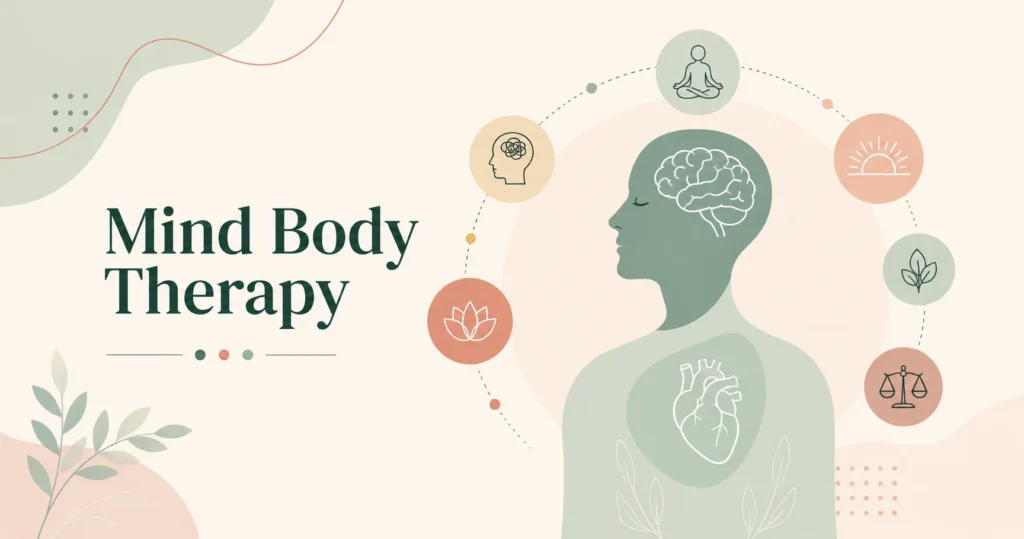
Mind body therapy is talk therapy that works with the link between physical sensations and your thoughts and feelings, treating both together instead of one alone. It is not alternative medicine, and it is not about ignoring hard feelings. The most studied form is Mindfulness-Based Cognitive Therapy, or MBCT, which pairs the structure of cognitive behavioural therapy with mindfulness, meaning gentle present-moment attention.
The idea underneath mind body connection therapy is simple, even if living it is not: your body holds stress, worry, and old emotional patterns, and the chest that tightens before a hard conversation is part of the same system as the thought that says you cannot handle it. Working with both at once tends to help more than working with either one alone.
MBCT was developed by psychologists Zindel Segal, Mark Williams, and John Teasdale. It blends the practical methods of cognitive behavioural therapy, often shortened to CBT, with mindfulness practices like breathing and body-based attention. If simple meditation is where you would rather begin, our guide to meditation for mental health covers the basics. The goal is not to erase difficult thoughts or feelings. It is to help you relate to them differently, so they have less pull on your day.
How Does MBCT Work?
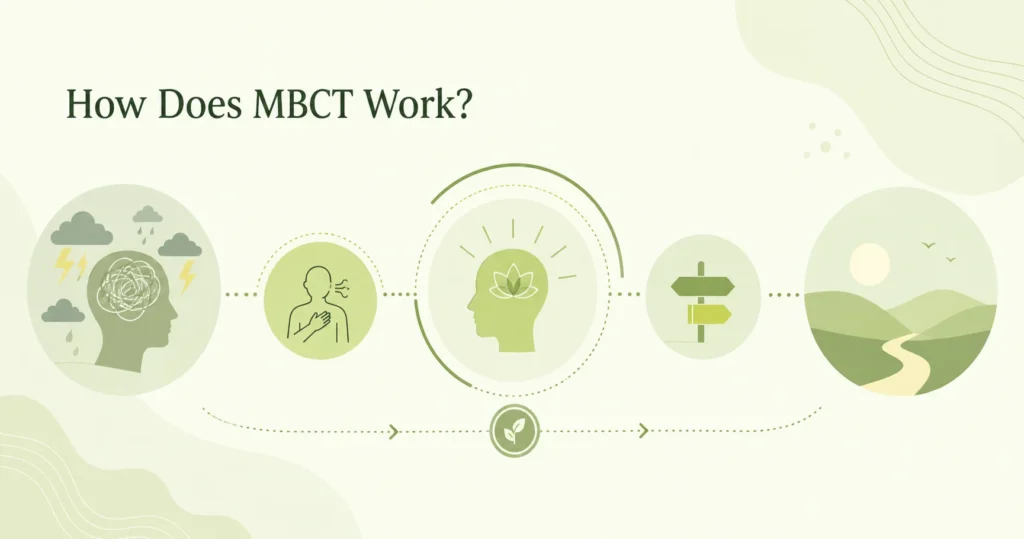
MBCT blends cognitive behavioural therapy with mindfulness practices like breathing and body-based attention. The aim is not to push hard thoughts away. It is to help you notice them earlier and respond to them with a little more room, so they have less power over your day. You build the skills in session, and you practise them between sessions, which is where most of the change settles in.
Here is what that looks like in practice. A low thought arrives, the kind that used to drag the whole afternoon down with it. Instead of arguing with it or believing it whole, you learn to notice it the way you would notice weather: this is a thought, it is here right now, and it does not have to decide everything. That small gap, between the thought arriving and you reacting, is the work. It sounds modest. It changes a great deal.
This is also how MBCT helps interrupt the spiral that pulls low mood lower. Catching the pattern early, before it gathers speed, is one of the things the approach is best at.
Who Is MBCT For?
MBCT was first built to help people who had several past episodes of depression. It also helps with generalized anxiety and worry, ongoing stress, burnout, and the feeling of being disconnected from your own daily life. You do not need a diagnosis to benefit. Many people start simply because they feel stuck or overwhelmed and want a steadier way to carry it.
People often find mindfulness-based therapy useful for:
- Generalized anxiety and worry that drifts from one thing to the next
- Burnout and emotional exhaustion
- Chronic stress that feels impossible to shake
- Trouble being present, even in moments that are supposed to be good
- Low mood that comes and goes without a clear reason
Mindfulness based therapy for stress is one of the most common reasons people reach out. If you have been running on empty for so long that you have stopped noticing it, that is reason enough. You do not have to wait until things get worse to deserve support. MBCT is also used across a wider range of challenges than many people expect, which our guide to how MBCT is applied to different life challenges explains in more depth.
This guide is written for adults. If you are a parent looking for help for a teen, that matters too, and there is a note further down about where to turn.
Is Mindfulness Therapy Effective?
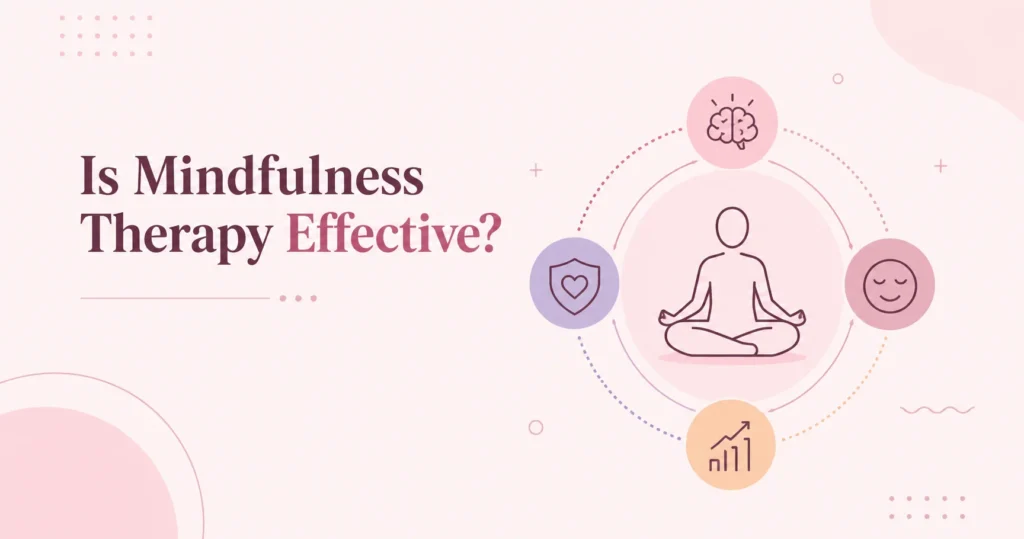
Yes. A large systematic review of 87 peer-reviewed studies found that MBCT consistently reduces symptoms of depression, anxiety, and stress, and also supports emotional regulation, meaning the ability to handle strong feelings without being swept away by them. Canadian clinical guidelines name MBCT a first-line maintenance therapy for depression, which means it is well supported for helping prevent a relapse. Results build with practice; this is not a quick fix.
That research review is published in PubMed Central, and it looked at how MBCT affects mood, thinking, and emotional steadiness across many different groups of people. The Canadian guideline positioning comes from the CANMAT 2016 depression guidelines, the national clinical standards used by Canadian clinicians, which give MBCT their strongest level of evidence for relapse prevention, meaning keeping depression from returning after it has lifted.
We want to be honest about what that does and does not mean. It does not mean MBCT works the same way for everyone, or on a fixed timeline. It means there is real, peer-reviewed reason to believe this approach can help, which is more than most things promising the same can say.
What Is the Difference Between MBCT and CBT?
CBT helps you test and reshape anxious or low-mood thoughts. MBCT keeps that CBT structure but adds mindfulness, learning to observe thoughts and body sensations without reacting to them right away. Put simply, CBT works on changing the thought; MBCT works on changing your relationship to it. Many people find that mbct vs cbt is not really a contest, and that the two work well together.
If you have tried CBT before and found the thought-by-thought work helpful but wanted something that also settled your body, MBCT may be a natural next step. Body-focused approaches like somatic therapy for trauma and stress work in a related way, through the nervous system rather than through thoughts alone. If you have never tried any of them, that is fine too. A therapist can help you find the approach that fits what you are actually carrying, and you can ask about them before you commit to anything. You can read more on our MBCT page, and on how the same skills apply to anxiety and depression.
What to Expect in Your First Few Sessions
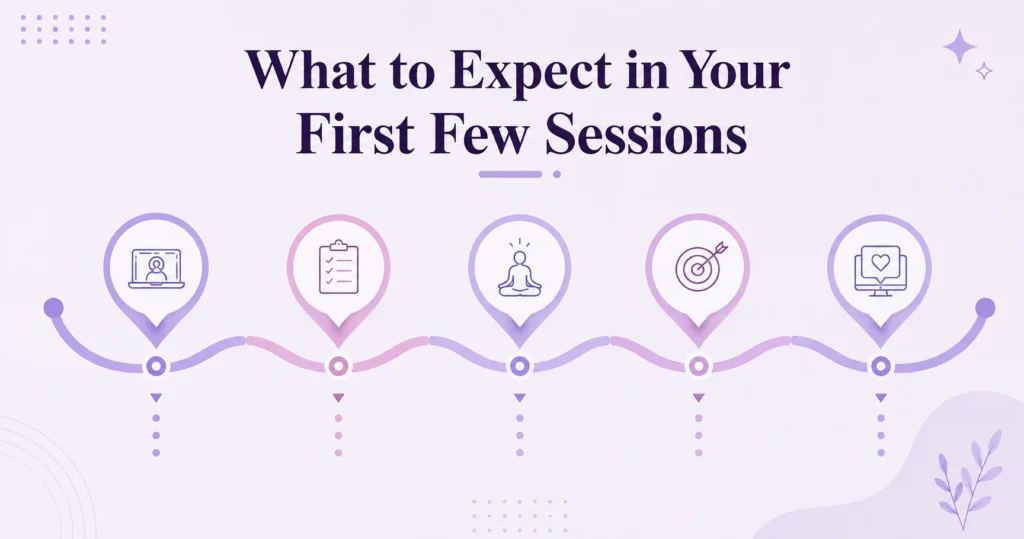
Starting therapy can feel uncertain, especially if you have never done it before. Here is a realistic picture of what the early sessions of mindfulness-based therapy often involve. Every therapist and every person is different, so treat this as a map, not a schedule.
Sessions 1 to 2: Getting to Know You
Your therapist learns your history, what has been hard, and what you are hoping for. You will likely be introduced to basic mindfulness practices and to what MBCT involves. There is no pressure to have the right words. Showing up is the part that counts.
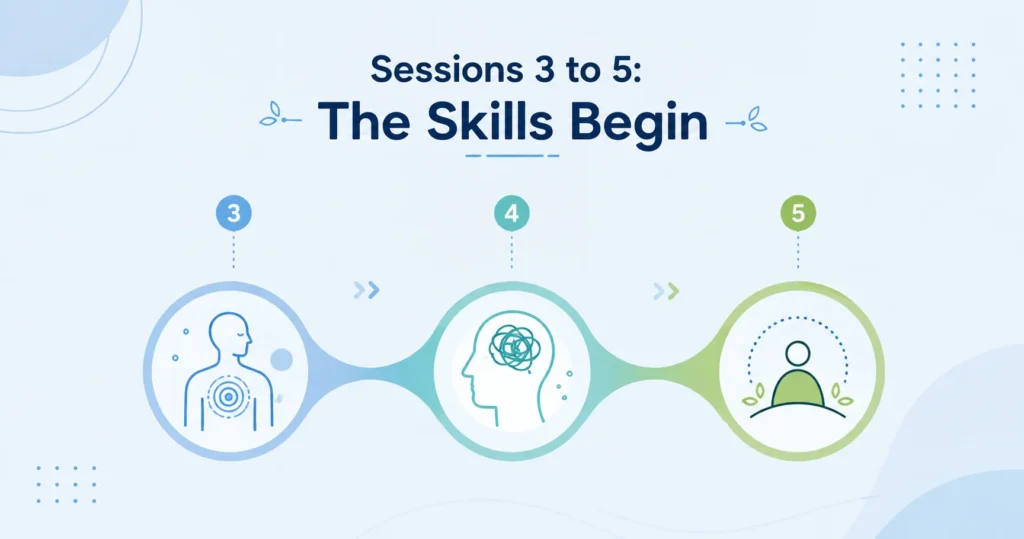
Sessions 3 to 5: The Skills Begin
You start working with specific exercises: paying attention to body sensations, noticing thought patterns, and learning to observe rather than react. This is where the mind body connection stops being an idea and starts to feel concrete.
Sessions 6 to 8: A Plan You Can Keep
You build a personal plan for holding on to what you have learned. The focus shifts toward what to do when a hard stretch returns, because life does not stop being hard. The point is that you will have more to meet it with.
Many people notice a shift in how they respond to stress within the first few weeks. For others, the benefits build more slowly. Both are normal. There is no behind, and no falling behind, in this.
How Do I Get Mindfulness Therapy in Ontario?
In Ontario you can connect with our clinical team of registered psychotherapists and registered social workers online, with no referral and no long waitlist. You can message a therapist for free before you book, to ask whether a mindfulness-based approach fits what you are going through. Every Canadian’s first session with a Saalvio clinician is free, so deciding to try is not a financial gamble.
Online mindfulness therapy in Ontario has made it far easier to reach qualified support without the commute, the waiting room, or a months-long wait. Not everyone can take an afternoon off to drive across town. Online sessions offer structured, evidence-based care from wherever you already are. If you are weighing it up, here is an honest look at whether online therapy is as effective as in-person care.
Mindfulness based cognitive therapy in Ontario through Saalvio is available across the province, whether you are in a large city or a small town. People searching for a mindfulness therapist near them often start in the bigger centres, including therapy in Toronto, Mississauga, Hamilton, and Ottawa, but online care means geography is not the reason anyone goes without support. Therapy with a Saalvio clinician is offered in Ontario today. The Saalvio self-help app is available across Canada and North America.
You do not have to figure this out alone, and you do not have to decide everything tonight. Before you book anything, you can message a registered psychotherapist before you book and ask whatever you need to ask: whether they have worked with someone like you, whether their approach fits, whether they will understand the life you come from. There is no cost and no commitment. It is a conversation, not a sales call.
How to Find the Right Therapist for You
When you are looking for mind, body, or mindfulness-based therapy, a few things are worth holding in mind.
Look for specific training. A therapist who has completed formal MBCT training is different from one who occasionally uses a mindfulness exercise. It is completely reasonable to ask directly about their background with this approach.
Pay attention to fit. You can find the most qualified therapist in the province and still not make progress if the relationship does not feel safe. It is okay to try more than one person before something clicks.
Think about the format. In-person and online both work. The best one is the one you will actually show up for, week after week.
Try not to wait for a crisis. Mind body therapy tends to work best as a steady practice, not a last resort. The earlier you start, the more it usually has to give.
A Note for Parents Looking for Help for a Teen
Saalvio’s virtual therapy is for adults in Ontario. If you are a parent or caregiver worried about a teen, that worry is its own kind of love, and it deserves the right support. For young people, Kids Help Phone offers free, confidential help any time at 1-800-668-6868, or by texting CONNECT to 686868. Your family doctor and your teen’s school can also connect you with clinicians who specialize in children and youth. You are allowed to ask for help on their behalf.
Want to Start With Self-Guided Tools First?
Not everyone is ready to begin therapy right away, and that is completely okay. The Saalvio app self-help tools, on the App Store and Google Play, include CBT-informed practices you can use at your own pace: mindfulness-based exercises, mood tracking, a private journal, and structured practices built on the same evidence-based principles as MBCT. The full self-help library lives in the mobile app. The app is available across Canada and North America.
These tools are not therapy, and they are not crisis support. They are a gentle place to begin, on a night when booking a session feels like too much. When you are ready for a human conversation, the therapist is there too.
Frequently Asked Questions
What is mind body therapy?
Mind body therapy is talk therapy that works with the connection between physical sensations and your thoughts and feelings, treating both together instead of one alone. The most studied form is Mindfulness-Based Cognitive Therapy, or MBCT, which pairs the structure of cognitive behavioural therapy with mindfulness, meaning gentle present-moment attention to your body and mind.
Is mindfulness therapy effective for depression and anxiety?
Yes. A large systematic review of 87 peer-reviewed studies found MBCT consistently lowers symptoms of depression, anxiety, and stress. Canadian clinical guidelines name MBCT a first-line maintenance therapy for depression, meaning it is well supported for helping prevent relapse. Benefits build with regular practice, so it works best over time rather than overnight.
How is MBCT different from CBT?
CBT helps you test and reshape anxious or low-mood thoughts. MBCT keeps that structure and adds mindfulness, learning to observe thoughts and body sensations without reacting to them right away. In short, CBT changes the thought; MBCT changes your relationship to it. Many people find the two approaches work well together rather than as either-or choices.
Who should consider MBCT?
MBCT was first developed for people who had several past episodes of depression, and its strongest evidence is in preventing relapse. It also helps with generalized anxiety, ongoing stress, burnout, and feeling disconnected from daily life. You do not need a diagnosis to benefit. Many people start simply because they feel stuck, overwhelmed, or worn down.
How many MBCT sessions will I need?
There is no fixed number, but structured mindfulness-based therapy often runs across about eight sessions: a couple to get to know you, a few to build the core skills, and the last few to make a plan you can keep. Some people notice a shift within weeks; for others the benefits build more slowly. Both are normal.
Can I do mindfulness therapy online in Ontario?
Yes. You can connect with our clinical team of registered psychotherapists and registered social workers online from anywhere in Ontario, with no referral and no long waitlist. Online mindfulness therapy offers the same structured, evidence-based care without the commute. You can message a therapist for free before you book, and your first session is free.
Clinically reviewed
Usman Khan, Registered Psychotherapist
Usman Khan is the Clinical Director of Saalvio and a Registered Psychotherapist with the College of Registered Psychotherapists of Ontario (CRPO #13456). He holds an MD, an MPH from Western University, and an MA in Counselling Psychology from Yorkville University. He reviews all clinical content on saalvio.com before publish.
See also across Saalvio
Topics mentioned in this post that have their own page on the site.
Talk to our clinical team
Saalvio offers a free 30-minute consultation with any therapist on the team. There is no card on file. If we are not the right fit, we will say so and help you find one.