
The 8 C’s of self in IFS therapy: A simple guide to your core self
Book a Free 30-Minute Consultation
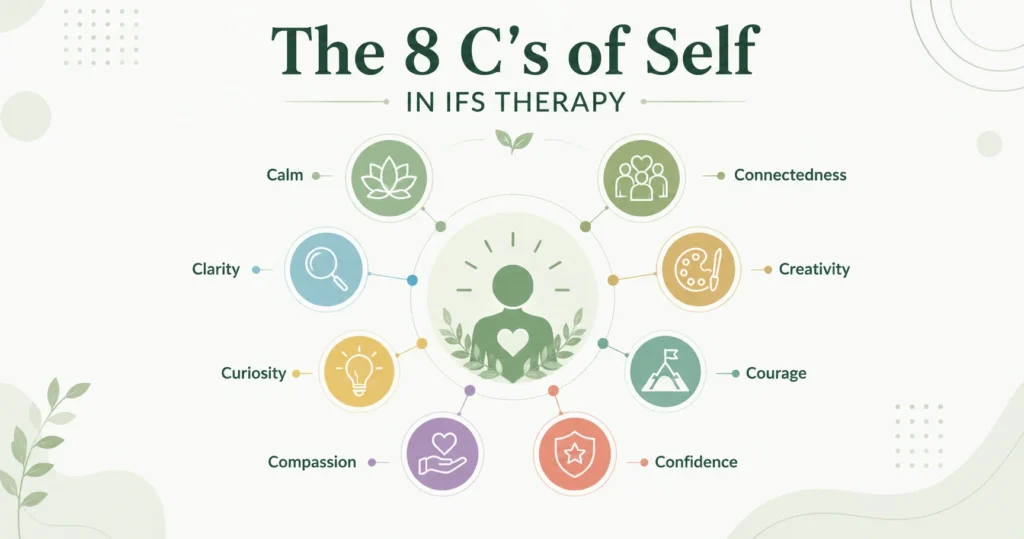
You have a part of you that stays steady even on your hardest days. IFS (Internal Family Systems) therapy calls this your core Self, and it describes it using eight qualities known as the 8 C’s of Self in IFS therapy: calm, clarity, curiosity, compassion, confidence, courage, creativity, and connectedness. Getting to know these qualities can help you feel more like yourself again, even after years of carrying too much alone.
What is IFS therapy?
Internal Family Systems, or IFS, is a form of therapy built on one gentle idea. Your mind is not just one voice. It is made up of different parts, and each part is trying to protect you in its own way, even when it does not feel that way. If you want the full picture of how this approach works, what IFS therapy is is a good place to start.
What is the core self in IFS?
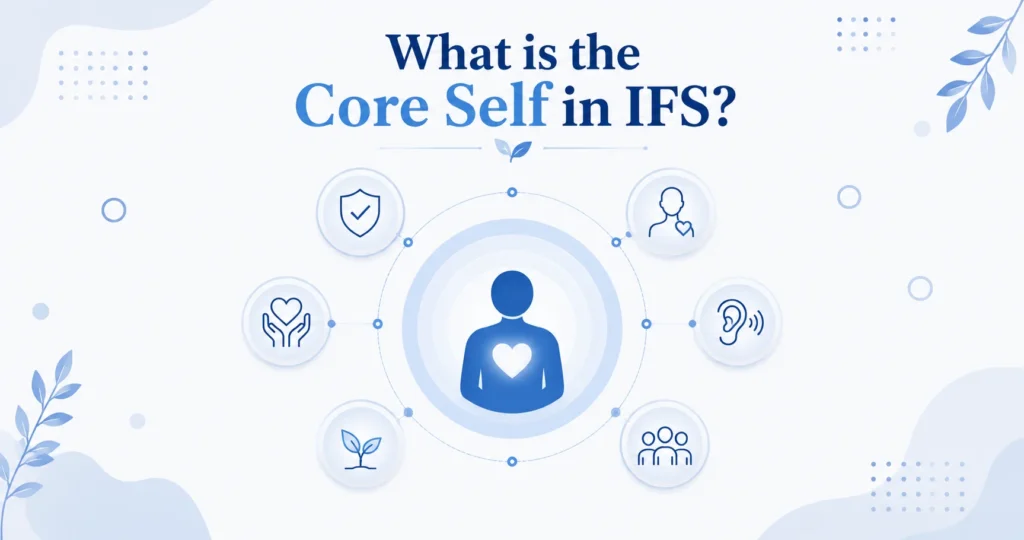
Underneath every part is something IFS calls the Self. Not a part. Not a role you play. The Self is the steady centre of you that was there before the hard things happened, and it is still there now. It does not need to be built or earned. It only needs room to lead again. When your Self is in charge, your parts do not have to fight so hard to be heard, because someone trustworthy is finally listening.
The 8 C’s of self in IFS therapy
The 8 C’s of IFS are the qualities that show up when your core Self is present. They are not a personality you have to perform. They are what tends to surface naturally once your parts feel safe enough to step back.
- Calm. A steadiness in your body and mind, even when the moment around you is not calm at all.
- Clarity. The ability to see a situation for what it actually is, without a scared or angry part clouding the picture.
- Curiosity. A real interest in your own parts and other people, instead of judgment.
- Compassion. Warmth toward yourself and others, including the parts of you that are hardest to like.
- Confidence. A quiet trust that you can handle what comes, without needing to prove it.
- Courage. The willingness to face something difficult because it matters, not because fear has gone away.
- Creativity. New ways of seeing a problem, once old habits and old fears loosen their grip.
- Connectedness. A felt sense of belonging, to yourself first, and then to the people around you.
Together, these are the IFS core self qualities that therapists watch for as a sign that Self, not a wounded or protective part, is doing the leading. Some therapists describe this list slightly differently depending on training, but the internal family systems 8 C’s of Self remain the anchor of the model.
How self-leadership works in IFS
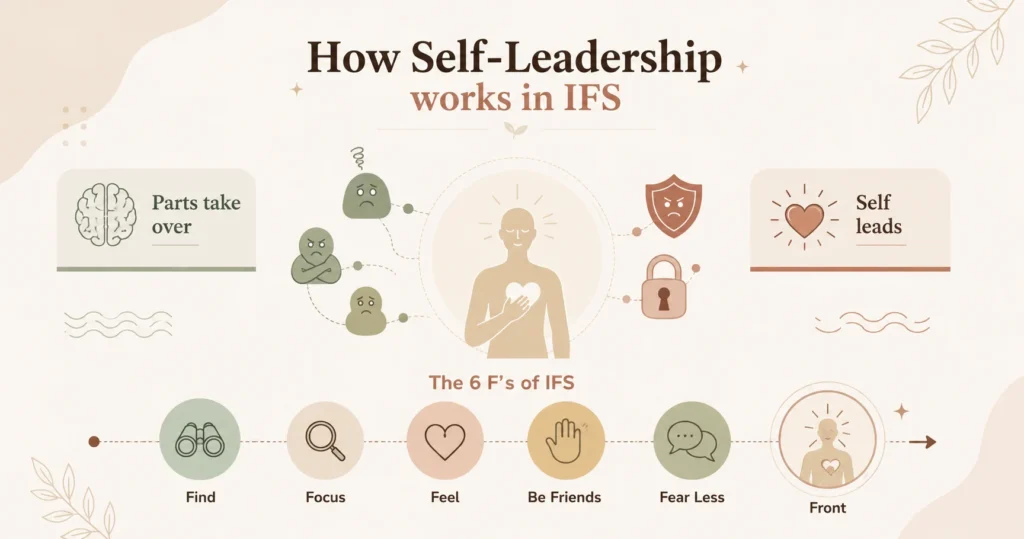
Self-leadership in IFS is what happens when your Self, not your most frightened or most protective part, is steering. This does not mean the hard parts disappear. It means they finally get to rest, because they trust that Self can handle things now.
Getting there usually takes guidance. Many IFS therapists use a structured process, often called the 6 F’s of IFS, to help a part step back so your Self can come forward. This is one of several IFS therapy techniques a registered clinician may use, always paced to what feels safe for you, session by session.
Why the 8 C’s matter for healing
A peer-reviewed scoping review published in 2025 in the journal Advances in Mental Health looked across the current research on IFS and found early but real support for the approach, particularly for depression, post-traumatic stress, chronic pain, and building self-compassion, while noting that larger studies are still needed to confirm how well it works for every condition. This lines up with what many clients describe. Once a part carrying old pain feels less alone, the 8 C’s of Self in IFS therapy tend to surface on their own, calm returning first, often followed by clarity.
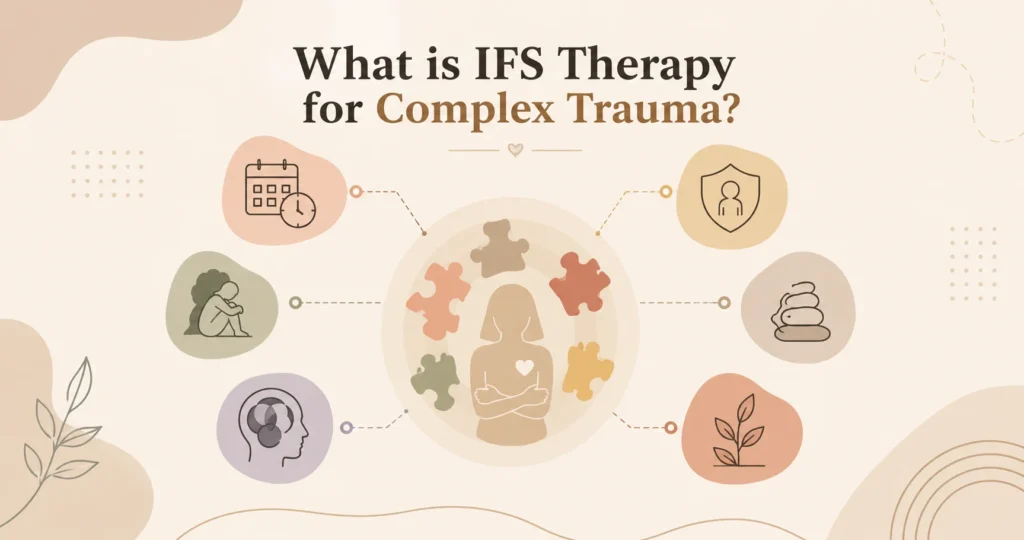
This is part of why IFS is used in IFS therapy for trauma. Trauma often leaves a part of you stuck in the moment it happened, still trying to protect a younger version of you the only way it knows how. Self-leadership does not erase that memory. It gives that part company it never had before.
The 8 C’s and your relationships
The 8 C’s of Self do not stay inside you. They shape how you show up for the people you love. A partner met with curiosity instead of a defensive part’s quick judgment. A child met with calm instead of an exhausted part’s short temper. This is a common focus in IFS therapy for relationships, where clients learn to notice which part is speaking before it speaks for them.
Can you practice the 8 C’s on your own?
Some people begin exploring IFS self therapy on their own, through journaling or simply pausing to ask which part of them is reacting in a hard moment. This kind of noticing can be a real first step. For deeper work, especially around trauma or parts that carry a lot of pain, going through it with a trained clinician tends to feel safer and steadier, because someone else is holding space while your Self learns to lead.
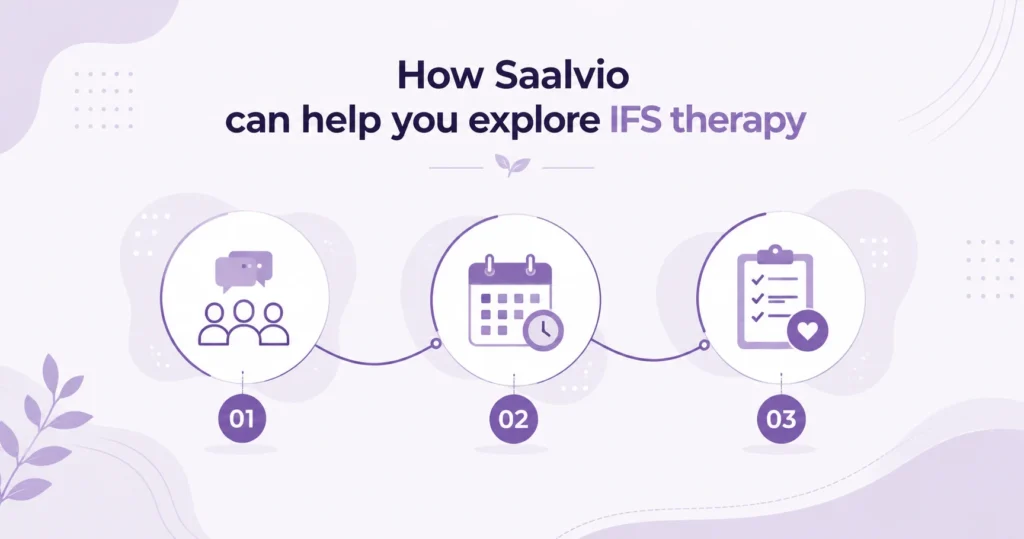
How Saalvio can help you explore IFS therapy
Saalvio’s highly-experienced clinical team of registered psychotherapists and registered social workers includes clinicians trained in IFS. Not ready to book a full session? You can message a therapist trained in IFS with your questions first. There is no cost and no commitment, just a conversation about whether this approach feels right for you.
Every new client can also start with a free 30-minute consultation, a chance to meet your therapist and ask what you need to know before deciding whether IFS feels right for you. It is not a full therapy session. A fuller assessment and treatment plan comes once therapy begins, and there is no charge or obligation either way.
Frequently Asked Questions
Is the core Self the same as your personality?
No. In IFS, the Self is described as separate from any single part or personality trait. It is the steady centre underneath your parts, present even when a part is temporarily leading the way you think, feel, or act.
How many parts does a person have in IFS?
IFS does not set a fixed number. Everyone’s system of parts is different, and a therapist trained in IFS helps you get to know yours at a pace that feels safe, without rushing to label or fix anything.
Can IFS help with anxiety or depression?
Some research points to IFS as a promising approach for depression and related symptoms, though the evidence base is still growing. A registered clinician can help you decide whether IFS fits what you are carrying, alongside or instead of other approaches.
Do I need therapy to access my core Self?
Not always. Many people notice moments of calm or clarity on their own. Working with a trained therapist can help when a part feels too big, too painful, or too stuck to approach alone.
Does Saalvio offer online IFS therapy in Ontario?
Yes. Saalvio offers online therapy in Ontario, delivered by registered psychotherapists and registered social workers, with expansion underway across Canada. You can message a therapist trained in IFS before booking, or start with a free 30-minute consultation to see if it feels right for you.
Clinically reviewed
Usman Khan, Registered Psychotherapist
Usman Khan is the Clinical Director of Saalvio and a Registered Psychotherapist with the College of Registered Psychotherapists of Ontario (CRPO #13456). He holds an MD, an MPH from Western University, and an MA in Counselling Psychology from Yorkville University. He reviews all clinical content on saalvio.com before publish.
See also across Saalvio
Topics mentioned in this post that have their own page on the site.
Talk to our clinical team
Saalvio offers a free 30-minute consultation with any therapist on the team. There is no card on file. If we are not the right fit, we will say so and help you find one.