
Understanding parts work: exiles, managers & firefighters
Book a Free 30-Minute Consultation
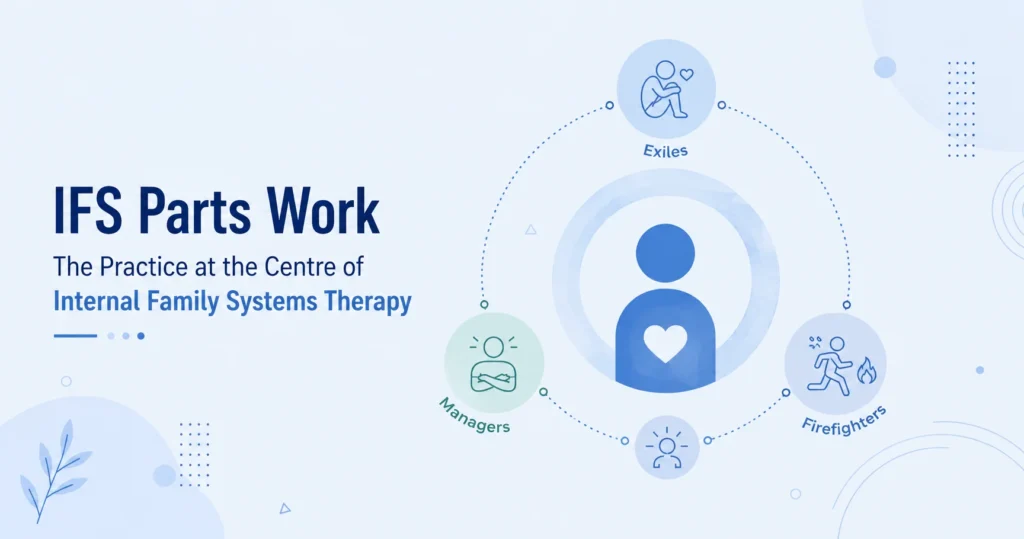
IFS parts work is the practice at the centre of Internal Family Systems therapy. It means getting to know the different parts that make up your inner world, often grouped into three roles: exiles, managers, and firefighters.
This kind of work can also be part of virtual therapy in Saalvio, helping you understand your parts and build a better relationship with them, guided by your calm inner Self.
What is parts work therapy?
Parts work therapy is any approach that treats the mind as made up of distinct inner parts rather than one single voice. A few therapy models use some version of it, but Internal Family Systems (IFS), developed by Richard Schwartz, is the most fully mapped-out framework for doing it.
Instead of treating a harsh inner critic or a sudden urge to shut down as a flaw to fix, parts work treats them as parts of you with their own point of view. The goal is not to silence them. It is to understand what each one is trying to do for you, and why.
What are IFS parts?
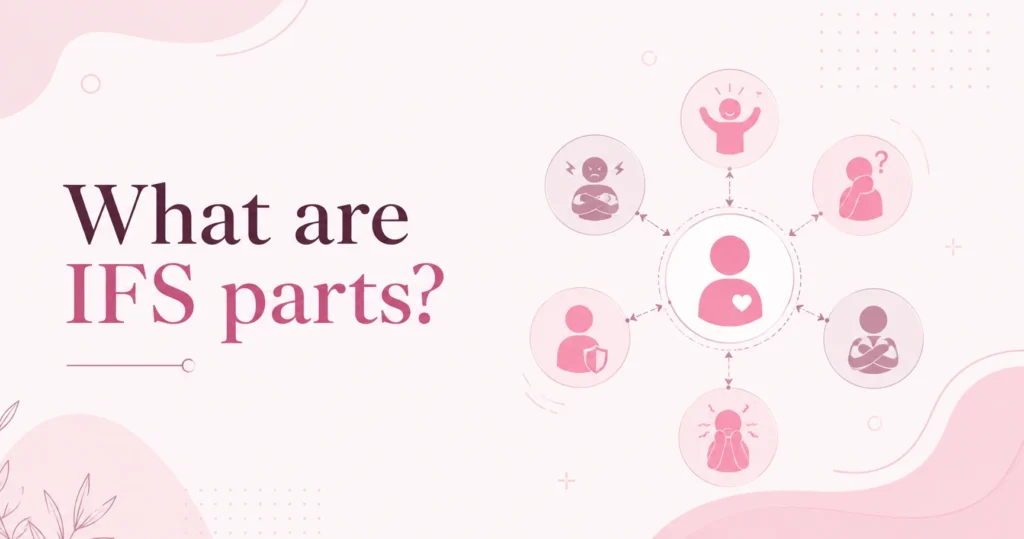
IFS parts are the sub-personalities IFS believes everyone carries. Having internal family systems parts is not a sign that something is wrong with you. IFS treats this multiplicity as ordinary.
Most people can already recognize it: the part that wants to speak up in a meeting and the part that wants to stay quiet, the part that wants dessert and the part that wants to skip it. IFS parts have their own feelings, memories, and beliefs, and they can be in conflict with each other, much like members of an actual family.
The three IFS therapy roles
IFS therapy roles fall into three broad groups: exiles, managers, and firefighters. Exiles carry pain, usually from something difficult that happened earlier in life. Managers and firefighters are both protectors, and their shared job is to keep that pain from taking over.
The difference is timing. Managers work ahead of time, before pain has a chance to surface. Firefighters act after it already has. Together, these roles make up what IFS calls your internal system.
Protectors and exiles: how the system organizes itself
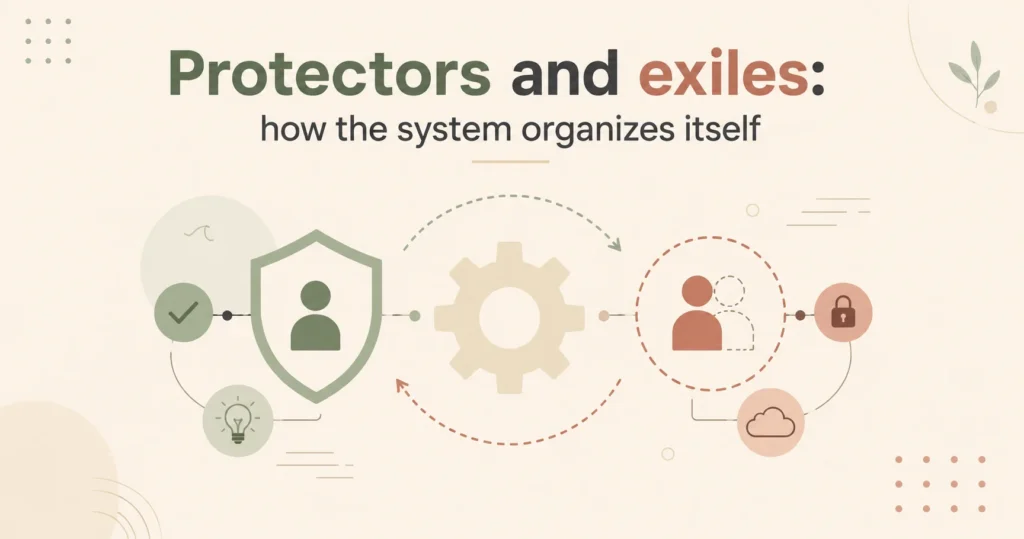
The relationship between protectors and exiles is the engine behind most of what parts work addresses. Protectors, whether managers or firefighters, exist because exiles exist. A protector’s whole purpose is to stop an exile’s pain from being felt again.
This can look protective in the truest sense: a manager that pushes you to over-prepare for a presentation so you never feel caught off guard the way you once did as a kid. It can also look messy, like a firefighter that pulls you into a night of doom-scrolling the moment an old wound gets touched. Neither one is the enemy. Both are doing a job they were assigned a long time ago.
What are exiles in IFS therapy?
So, what are exiles in IFS therapy, specifically? Exiles are the youngest, most vulnerable parts of the system. They hold onto memories and feelings that once felt like too much: shame, fear, grief, or the belief that you were not good enough or not safe.
Because these feelings were overwhelming at the time, other parts learned to push them out of everyday awareness, which is why IFS calls them exiles. They are not gone. They are waiting, often frozen at the age they were when the pain first happened, for a chance to finally be heard.
IFS therapy managers and firefighters: the two kinds of protectors
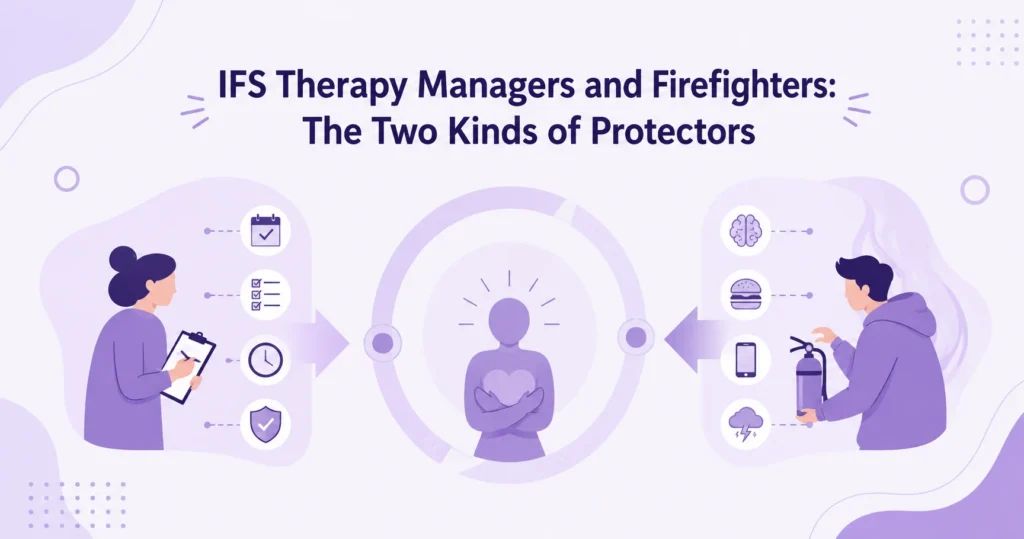
IFS therapy managers and firefighters share a goal but not a style. Managers are proactive. They plan, control, and organize their life to keep old pain from ever getting close to the surface. A manager might show up as perfectionism, people-pleasing, constant busyness, or a running list of everything that could go wrong. Firefighters are reactive.
They step in only once an exile’s pain has already broken through, and their strategies tend to be fast and urgent rather than careful: numbing out, overeating, scrolling, snapping at someone, or reaching for anything that makes the feeling stop right now. Managers try to prevent the fire. Firefighters try to put it out once it has already started.
IFS therapy exiles, managers, and firefighters working together
In practice, IFS therapy exiles, managers, and firefighters rarely operate one at a time. A common pattern looks something like this: a tight deadline stirs up an old exile who once felt like a disappointment. A perfectionist manager jumps in first, pushing you to redo the work three more times.
If that is not enough to hold the feeling back, a firefighter takes over, and suddenly it is midnight, and you are three episodes into a show you do not even like, unsure how you got there. None of these parts are working against you on purpose. They are working the only way they know how, often based on something that made sense a long time ago and has not been updated since.
Not ready to book? You can message a Saalvio therapist who works with parts before you commit to anything. There is no cost, no commitment, and no pressure to explain everything at once.
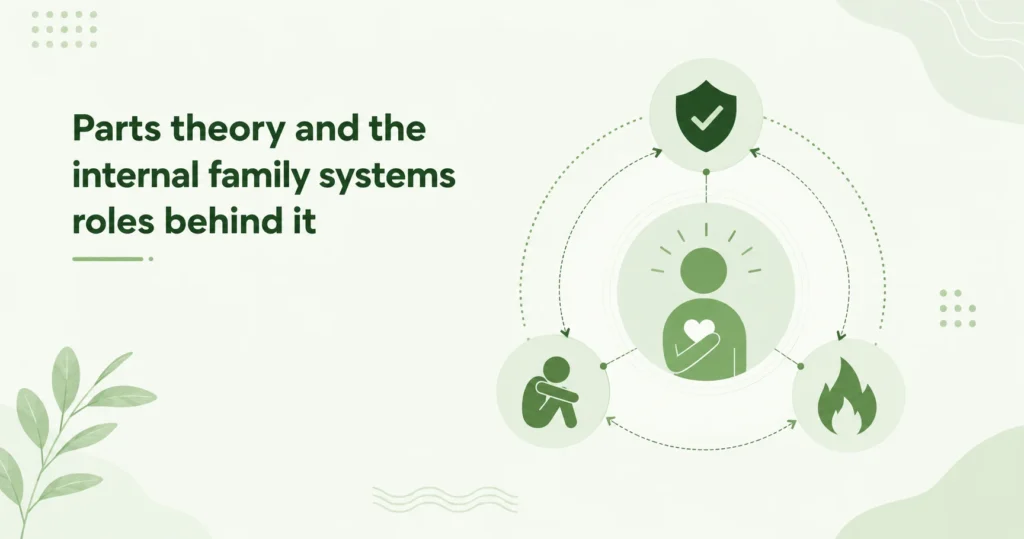
Parts theory and the internal family systems roles behind it
Parts theory rests on a small number of ideas that hold the whole model together. Everyone has parts, and having them is normal, not a diagnosis. Every part is trying to help, even when its method causes problems.
And underneath all the internal family systems roles sits the Self: a calm, curious, compassionate centre that IFS believes is never damaged, no matter what a person has lived through.
In IFS therapy, this Self is often understood through the 8 C’s of Self in IFS Therapy, which describe qualities such as curiosity, compassion, calmness, and confidence that help guide the relationship between Self and different parts.
Parts work is less about eliminating exiles, managers, and firefighters, and more about helping the Self step back into a leadership role, so protectors do not have to work so hard and exiles do not have to carry their pain alone.
Exiles, protectors, managers, and firefighters in daily life
Once you know what to look for, IFS therapy exiles, protectors, managers, and firefighters show up in ordinary moments, not just in a therapy room. The manager rehearses an apology text fifteen times before sending it.
The firefighter that opens the fridge at 11 p.m. for reasons that have nothing to do with hunger. The exile that gets touched, just briefly, when a friend does not reply to a message right away. None of this means something is broken. It usually means an old part is still doing a job nobody has told it that it can finally put down.
Doing parts work with a therapist
Parts work with a trained clinician moves slowly and stays led by you. A therapist will not ask you to relive painful memories head-on. Instead, they help you build a relationship with the parts involved: getting curious about what a manager is afraid would happen if it stepped back, or what a firefighter is trying to protect you from.
Evidence for this approach is still growing. Psychology Today Canada notes that IFS was recognized as an evidence-based practice in 2015 and that early research shows promise for conditions such as PTSD and depression, alongside a call for more large studies. As with any therapy, results depend on your own history and pace, not a guarantee.
How to start parts work at Saalvio
Saalvio’s clinical team includes therapists trained in IFS and other trauma-informed approaches to parts work. Every new client can start with a free 30-minute consultation with a registered clinician, a low-pressure way to ask questions before anything is booked. If you want the fuller picture of the model first, our earlier piece on IFS therapy walks through where it comes from and what a session can look like, and our guide on finding a therapist covers what to ask before you choose one.
Frequently Asked Questions
Do parts work the same as having multiple personalities?
No. Parts work describes the normal multiplicity every person has, such as a part that wants to rest and a part that wants to keep working. It is not a diagnosis, and it does not replace an assessment by a qualified clinician.
Are managers and firefighters bad parts?
No. IFS treats every part, including managers and firefighters, as trying to help in the only way it has learned how. The goal of parts work is understanding, not getting rid of any part of you.
Do exiles ever go away?
Parts work does not aim to erase exiles. It aims to help them feel less alone by building a relationship between them and your Self, often with support from managers and firefighters who no longer need to work as hard.
Can I do parts work online in Ontario?
Yes. Saalvio offers virtual psychotherapy in Ontario, and you can message a therapist who works with parts before booking to ask about their approach and experience.
Clinically reviewed
Usman Khan, Registered Psychotherapist
Usman Khan is the Clinical Director of Saalvio and a Registered Psychotherapist with the College of Registered Psychotherapists of Ontario (CRPO #13456). He holds an MD, an MPH from Western University, and an MA in Counselling Psychology from Yorkville University. He reviews all clinical content on saalvio.com before publish.
See also across Saalvio
Topics mentioned in this post that have their own page on the site.
Talk to our clinical team
Saalvio offers a free 30-minute consultation with any therapist on the team. There is no card on file. If we are not the right fit, we will say so and help you find one.