
Anger Management: How to Find Calm in a High-Pressure Ontario World
Anger does not always announce itself. Sometimes it is the jaw you did not notice you were clenching on the 401. Sometimes it is the short answer you gave someone you love, and the quiet that followed it. Sometimes it is the heat that rises before you have decided anything, in a life that has been asking too much of you for too long.
If your fuse feels shorter than it used to, you are not a bad person. You are a person carrying more than you have told anyone. Anger is a normal human emotion, and it can be worked with. This guide explains what anger really is, the styles it takes, how to calm the moment, and where to find anger management support in Ontario when you are ready. We will go in small steps.
What Causes Anger? The Iceberg Underneath
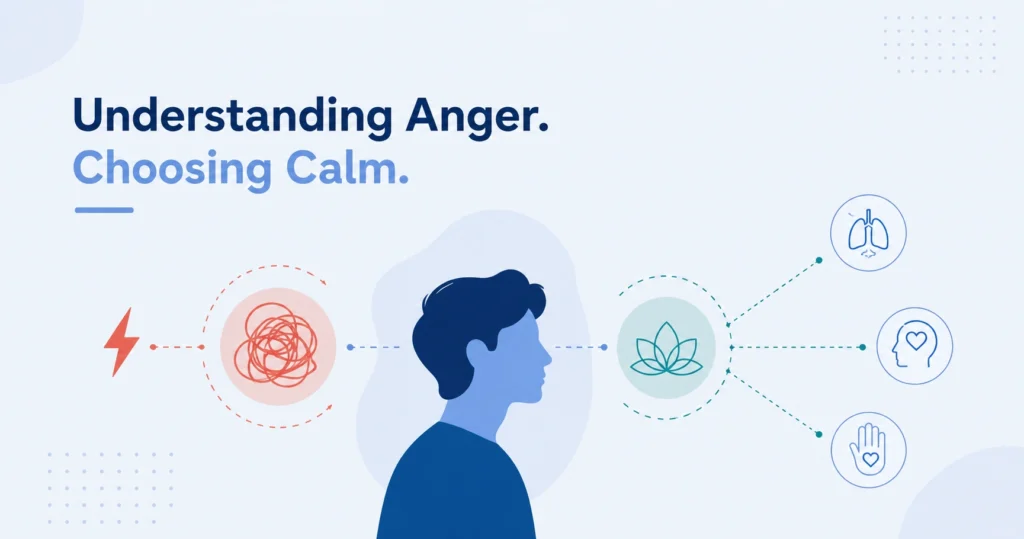
Anger is often a secondary emotion, the part you can see above the water. Underneath it usually sits something heavier: hurt, fear, burnout, or grief. For many people, anger feels safer than admitting they feel overwhelmed or ignored. Understanding the feeling beneath the anger is the first step to managing it.
Picture an iceberg. The anger is the jagged peak. The larger mass below is made of the primary feelings that are harder to say out loud. For a lot of people carrying a high-pressure life, anger becomes a kind of shield. It feels stronger to be furious than to admit you are exhausted, frightened, or unseen. None of that makes the anger wrong. It makes it information. When you can name what is underneath, you stop fighting the wrong thing.
The Canadian Mental Health Association (CMHA) Ontario describes anger as a normal emotion that becomes a concern when it shows up too often, too strongly, or in ways that hurt you or the people around you.
The Physical Toll of Unchecked Anger
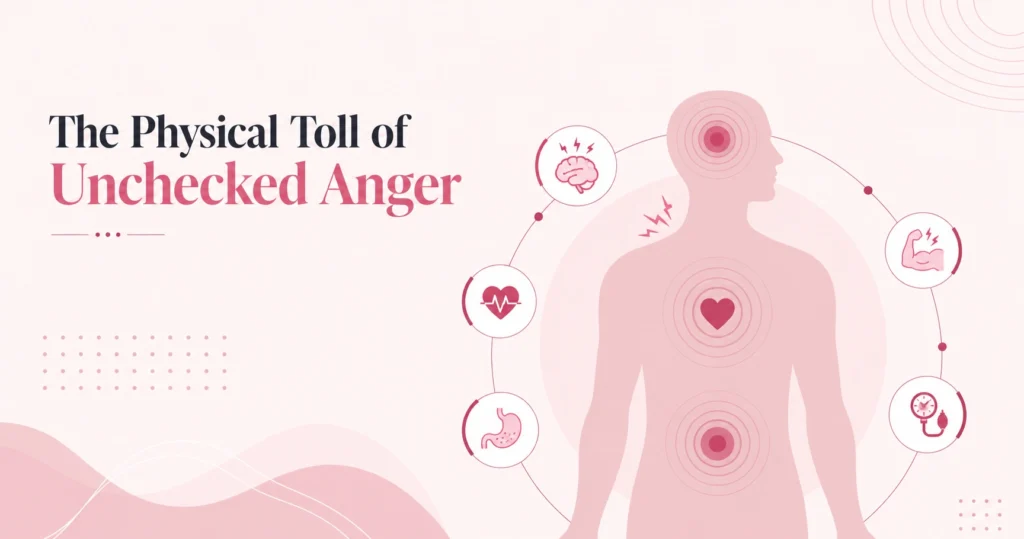
Anger is not only a mood. It is a full-body event. When anger spikes, your body flips into the fight-or-flight response, the built-in alarm system that prepares you to react to a threat. Stress hormones like adrenaline and cortisol move through your system, your heart rate climbs, and your blood vessels tighten.
Held too long, this takes a real toll. According to CAMH (the Centre for Addiction and Mental Health), long-term stress is linked to headaches, muscle tension, rapid heart rate, high blood pressure, and added strain on the cardiovascular system. Chronic anger keeps that alarm running when there is no real emergency, and the body pays for it over time through tension, poor sleep, and rising anxiety.
What Are the Different Anger Styles?
There are four common patterns: passive-aggressive anger (sarcasm, silence, “accidental” mistakes), volatile anger (sudden loud outbursts), chronic anger (a constant background of resentment and irritability), and self-imposed anger (turning the heat inward as harsh self-criticism). Naming your main anger style is the first step to changing it.
Not everyone shows anger by shouting. Identifying which of these anger styles fits you most days makes the rest of the work clearer.
- Passive-aggressive anger. You avoid the open fight, but the frustration leaks out sideways: a cutting joke, a long cold silence, a task left undone on purpose.
- Volatile anger. The sudden, loud reactions that feel like they come from nowhere, and leave the people around you walking on eggshells.
- Chronic anger. A low, constant resentment. Less an explosion than a grey fog of irritability that sits over everything.
- Self-imposed anger. All the heat turned inward, showing up as brutal self-criticism and a quiet sense that you are not worth much.
What Are the Signs of Anger Issues?
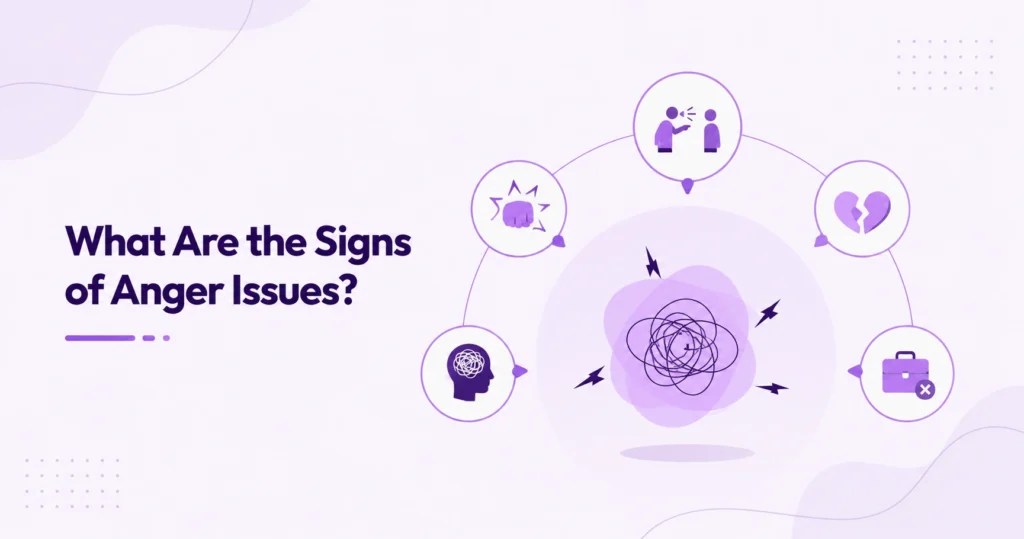
It may be more than everyday frustration if your anger leads to physical fights, frightens the people you love, damages your work or relationships, or you cannot fully remember what you said afterward. Frequent regret, a fuse that keeps getting shorter, and people growing careful around you are all signals that it is worth getting support.
Do I Have Anger Issues? A Gentle Self-Check
This is reflection, not a diagnosis. If several of these sound familiar over recent weeks, anger may be worth talking through with someone:
- People close to you seem nervous about your reactions.
- You often feel regret or shame after you have lost your temper.
- Small things set off a response that feels far bigger than the moment.
- Your anger is affecting your relationships, your work, or your health.
- You have felt out of control during an argument.
Noticing these is not a failure. It is the start of doing something about it. The CMHA Ontario anger resource offers further tools for recognizing when anger has become a problem.
How Do You Control Anger in the Moment?
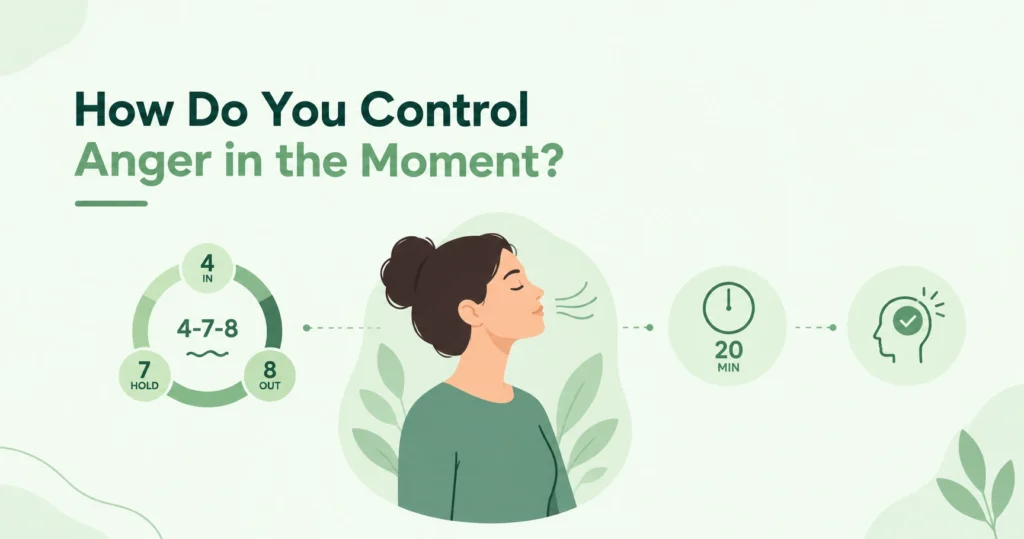
When anger spikes, slow your body first. Try 4-7-8 breathing: breathe in for four seconds, hold for seven, breathe out for eight. Then take a time-out, twenty minutes away before you finish the conversation. Calming the body buys back the few seconds you need to choose your response instead of reacting.
These are practical anger management techniques you can use the next time the heat rises. They are also some of the most reliable anger management strategies for the long run, because the more you practise them, the faster your body learns them.
The 4-7-8 Breathing Technique
This is one of the simplest ways to learn how to calm down when angry. Breathe in through your nose for four seconds, hold for seven, then breathe out slowly through your mouth for eight. The long exhale signals your nervous system that you are safe, which slows your heart and loosens the grip of the moment. Using 4-7-8 breathing for anger a few times a day, not only during a flare-up, makes it work better when you actually need it.
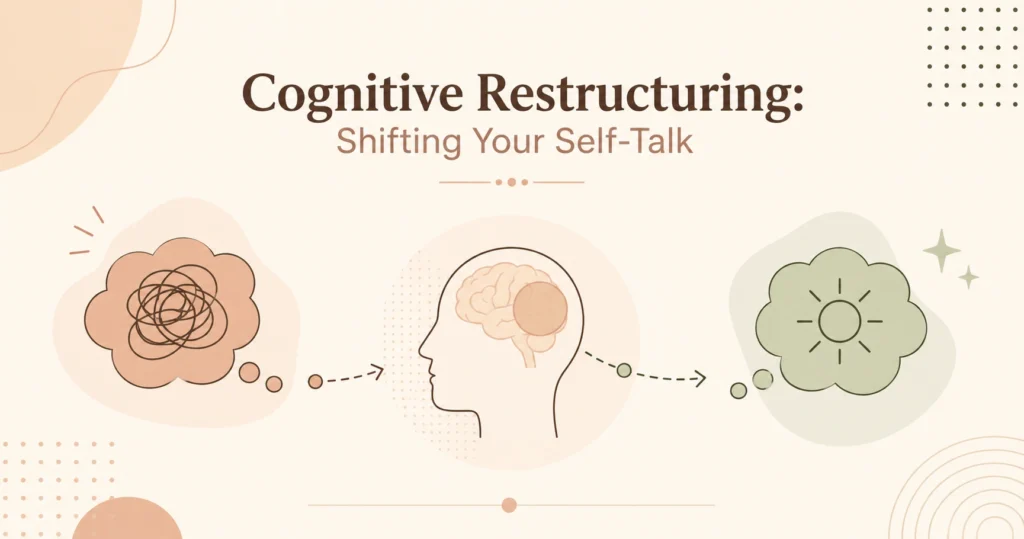
Cognitive Restructuring: Shifting Your Self-Talk
Cognitive restructuring means catching a thought and checking how true and how helpful it really is. Instead of “this person is trying to ruin my day,” you try “this is frustrating, and I can handle it.” That small shift lowers the emotional temperature before things boil over. It takes practice, and it is one of the core skills a therapist can help you build.
The Time-Out Rule
There is no rule that says an argument has to be settled this second. If you feel your thinking slipping under the anger, say so plainly: “I am too worked up to talk well right now. I need twenty minutes, and then we can finish this.” A time-out is not avoidance. It is how you come back able to actually hear each other.
How Do I Stop Being Angry All the Time?
Constant anger is usually chronic resentment sitting on top of an unmet need. Short-term tools like slowed breathing and time-outs help you cope in the moment, but lasting change comes from finding and working on the cause. Talking with a registered psychotherapist or registered social worker gives that work a structured, private space.
Trying to white-knuckle your way through anger on your own is exhausting, and it rarely holds. That is not a weakness. Anger that has built up over years does not usually undo itself in a quiet weekend. Professional support gives you a safe place to look at the “why” underneath, not just the moments it spills over. If you want more practical footing while you decide, we have a plain guide on how to deal with anger issues and a companion piece on how to control anger issues day to day.
Does CBT Help with Anger?
Yes. Cognitive behavioural therapy (CBT), a structured talk therapy, helps you spot the triggers and thought traps that set off outbursts, then catch the anger earlier, before it passes the point of no return. Dialectical behaviour therapy (DBT) adds distress tolerance, learning to feel a strong emotion without acting on it. Both are used by our clinical team in Ontario.
CBT for Anger
CBT for anger works by helping you pin down your specific triggers and the thought traps that feed them, such as overgeneralizing (“this always happens to me”) or rigid “should” statements about how other people ought to act. As you learn to notice these patterns earlier, you get a wider gap between the spark and the reaction, and more room to choose what you do with it.
DBT and Somatic Approaches
Sometimes anger lives so much in the body that you have to start there. DBT builds distress tolerance, the skill of riding out a strong emotion without acting on it. Somatic approaches, which work with the body and stored physical tension, can help release the charge that talking alone does not reach. Anger and anxiety often travel together, and these approaches can ease both.
Anger Management Across Ontario
One of the biggest triggers for anger is stress, and few things are more stressful than fighting traffic to a clinic and worrying about who might see you in the waiting room. Online therapy in Ontario removes that friction. You get clinical support from your own home, in private, on your own schedule.
Online therapy in Ontario makes anger management therapy in Ontario reachable whether you are in a major city or a smaller town. Online anger management in Ontario through Saalvio is delivered by registered psychotherapists and registered social workers who use evidence-based approaches to help you understand your anger and build steadier habits over time.
Local Support in Your Community
- Peel Region: therapy in Mississauga gives you a private, secure way to work on conflict at home or work without the commute. Anger management in Mississauga is available online so you can start from where you are.
- The Tri-Cities: if a high-pressure career is wearing on you, therapy in Waterloo connects you with support that fits a demanding week. Anger management in Waterloo is offered online across the region.
- Central Ontario: for Simcoe County, therapy in Barrie puts support on your screen no matter the weather or the drive. Anger management in Barrie is available online for people across the area.
How Saalvio Supports You
Managing your feelings should not be one more exhausting chore on the list. Our clinical team of registered psychotherapists and registered social workers offers a non-judgmental space to understand what is underneath the anger and to build practical skills you can use in real life. Reaching out earlier, before anger patterns harden, generally makes the work shorter and easier.
Not ready to book? You can message a registered psychotherapist before you book and ask whatever you need to ask: whether they have worked with someone like you, whether their approach fits, whether they will understand the life you come from. There is no cost and no commitment. Messaging is not therapy by text and not crisis support; it is simply a way to ask your questions first. Every Canadian’s first therapy session with a Saalvio clinician is free, so deciding to try is not a financial gamble on whether the fit will be right.
Saalvio virtual therapy is offered in Ontario today. The Saalvio self-help app, with mood tracking, guided practices, and structured self-assessments, is available across Canada and North America, so you can start working with these tools wherever you are. When you are ready for a human conversation, you can see what to expect in your first session.
A Note on Anger in Teens
If the anger you are worried about belongs to a teenager in your home, support for parents is part of what therapy can offer; understanding and responding to a young person’s anger is real work, and you do not have to figure it out alone. It can help to read our guide to anger management strategies for teens first. Saalvio’s virtual therapy is for adults in Ontario, so for a teen who needs to talk to someone directly, Kids Help Phone is available any time at 1-800-668-6868, or by texting CONNECT to 686868.
Frequently Asked Questions
Is anger always a bad thing?
Not at all. Anger is a signal. It often tells you when a boundary has been crossed or when something is genuinely unfair. The goal is not to get rid of anger; it is to learn to listen to what it is pointing at, and to talk it through instead of lashing out. Anger becomes a problem mainly in how it is expressed.
How do I know if I need anger management?
It may be time for support if your anger frightens the people you love, leads to physical fights, harms your relationships or work, or leaves you with frequent regret afterward. Reaching out is a way of protecting your future and your family. The CMHA Ontario anger resource can help you recognize the signs.
How do I calm down fast when I am angry?
Start with your body. Try 4-7-8 breathing: in for four seconds, hold for seven, out for eight, which slows your heart and settles the alarm. Then step away for twenty minutes before continuing a difficult conversation. Calming the body first gives your thinking time to catch up, so you respond instead of react.
Does CBT help with anger?
Yes. Cognitive behavioural therapy, a structured talk therapy, helps you identify the triggers and thought traps behind outbursts and catch anger earlier. DBT adds distress tolerance, the skill of feeling a strong emotion without acting on it. Both are evidence-based and are used by Saalvio’s registered psychotherapists and registered social workers in Ontario.
Can I get online anger management in Ontario?
Yes. Saalvio offers online anger management in Ontario through registered psychotherapists and registered social workers, available from home anywhere in the province, including Mississauga, Waterloo, and Barrie. You can message a therapist with your questions before you book, at no cost and no commitment, and every Canadian’s first session is free.
Are anger therapy sessions reimbursable?
Saalvio does not bill insurers directly. Sessions with our registered psychotherapists and registered social workers are typically reimbursable under most extended health plans. We give you a detailed receipt showing the clinician’s college and registration number to submit for reimbursement. Coverage varies by plan, so confirm your own benefit. See how insurance reimbursement works.
Clinically reviewed
Usman Khan, Registered Psychotherapist
Usman Khan is the Clinical Director of Saalvio and a Registered Psychotherapist with the College of Registered Psychotherapists of Ontario (CRPO #13456). He holds an MD, an MPH from Western University, and an MA in Counselling Psychology from Yorkville University. He reviews all clinical content on saalvio.com before publish.
See also across Saalvio
Topics mentioned in this post that have their own page on the site.
Talk to our clinical team
Saalvio offers a free 30-minute consultation with any therapist on the team. There is no card on file. If we are not the right fit, we will say so and help you find one.