
Trauma Therapy in Brampton: Understanding Treatment and Recovery
Book a Free 30-Minute Consultation
Trauma therapy in Brampton helps people work through the lasting effects of frightening, harmful, or overwhelming experiences. Registered clinicians use evidence-based approaches such as EMDR (eye movement desensitization and reprocessing), trauma-focused CBT (cognitive behavioural therapy), and body-based methods. Saalvio offers virtual sessions across Ontario, so Brampton residents can get care from home.
What does trauma look like in everyday life?
Trauma is not only what happened. It is also what your mind and body kept doing afterward. Some people think about the event constantly. Others feel nothing at all. Many carry it quietly for years, because everything looked fine from the outside.
Common signs include:
- Flashbacks, nightmares, or sudden memories that feel like they are happening now
- Jumpiness, trouble sleeping, or feeling on guard in safe places
- Avoiding people, places, or conversations that bring it back
- Feeling numb, detached, or far away from the people you love
- Shame, guilt, or the belief that it was somehow your fault
If this list sounds familiar, it does not mean something is wrong with you. It means something happened to you. Saalvio does not diagnose, but you can bring what you notice to a clinician, who can help you make sense of it.
What does trauma treatment look like?
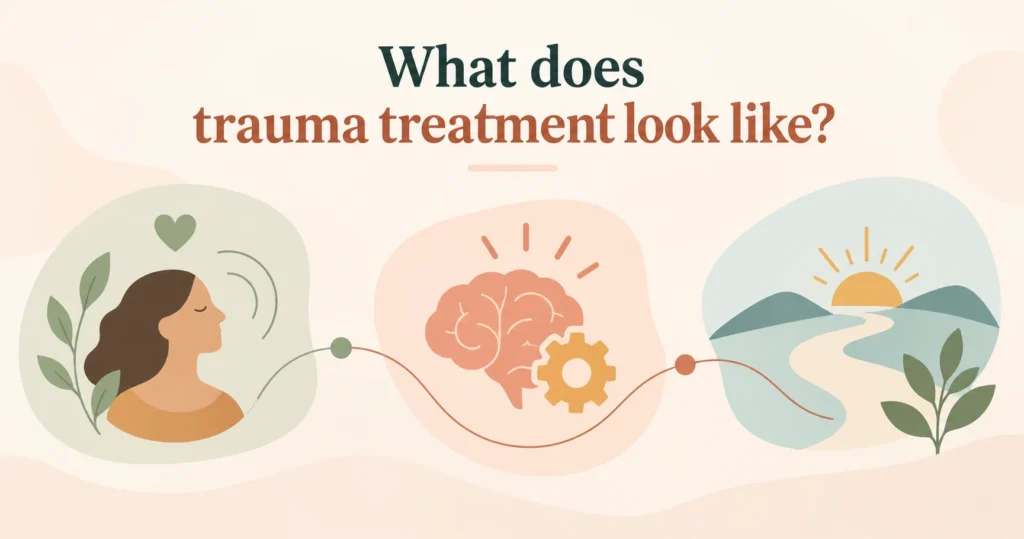
Good care rarely starts with the hardest memory. Most clinicians move in stages, and the pace is set by you. Trauma treatment in Brampton, as in the rest of Ontario, usually follows this shape:
- Safety and stability. You build ways to calm your body, sleep better, and feel steadier day to day.
- Processing. When you are ready, you work through the experience in a structured way that does not overwhelm you.
- Reconnection. You rebuild trust, relationships, and routines that trauma may have shrunk.
Many clients find the first stage is worth taking slowly. Nobody should be asked to tell the whole story in the first hour.
Which approaches do therapists use?
The World Health Organization recommends trauma-focused CBT and EMDR for post-traumatic stress, and the Centre for Addiction and Mental Health (CAMH) describes trauma-informed care as a core principle of good practice. Different approaches suit different people.
EMDR. People often ask about EMDR for trauma in Brampton because it can feel different from talk therapy. A therapist guides you to recall a memory in small, manageable pieces while using bilateral stimulation, such as guided eye movements. The goal is to help the brain store the memory so it feels less raw. You do not have to describe every detail out loud.
Trauma-focused CBT. This approach looks at how the event changed your thoughts, such as “I am never safe,” and gently tests whether they still fit your life today. Clients who want a practical, structured style often like it, and it is the kind of work people look for when they search for CBT counselling in Brampton.
Somatic work. Trauma lives in the body too: a racing heart, a tight chest, a startle response that will not settle. Somatic therapy for trauma in Brampton focuses on those physical signals, using breathing, grounding, and body awareness so the nervous system can learn it is safe again.
Your clinician may combine these. The right mix depends on you, not on a template.
Who can trauma therapy help?
Trauma does not look the same in every kitchen, every prayer room, or every family. Therapy can be shaped around different experiences:
- Adults. Trauma therapy for adults in Brampton often involves work, parenting, or migration stress layered on top of old wounds.
- Teens. Trauma therapy for teens in Brampton pays close attention to school, friendships, and how much a young person wants parents involved.
- Children. Trauma therapy for children in Brampton is usually play-based and involves caregivers closely. Check each clinician’s profile for the ages they work with.
- Childhood experiences carried into adulthood. Childhood trauma therapy in Brampton helps adults make sense of what they lived through at home, long after it ended.
- Repeated or long-term harm. Complex trauma therapy in Brampton goes slower and puts more weight on safety and trust, because the harm happened over time.
- Abuse survivors. Trauma therapy for abuse survivors in Brampton is built around choice and control, which abuse often took away.
- Domestic violence survivors. Trauma therapy for domestic violence survivors in Brampton includes safety planning alongside healing. If you are not safe where you are, call 911 first.
Brampton is home to many newcomer and South Asian families. For some people, it matters a great deal to describe a painful memory in Urdu, Hindi, Punjabi, or Arabic rather than in a second language. Saalvio’s clinical team offers sessions in all four, plus English.
How do I choose a trauma therapist?
Fit matters as much as the method. A trauma therapist in Brampton should be registered with a regulatory college, explain how they work in plain language, and let you set the pace. Our guide on how to find a therapist in Canada walks through what to ask and how to check a registration.
Useful things to ask before you commit:
- What training do you have in trauma work, and which approaches do you use?
- How do you handle it if a session feels like too much?
- Do you offer sessions in my language?
- What happens between sessions if something comes up?
You can message any Saalvio therapist with these questions before you book. Messaging is for questions about fit, language, and approach. It is not therapy by text and it is not crisis support.
Can trauma be connected to depression and anxiety?
Yes, often. Trauma can sit underneath low mood, constant worry, or avoidance of social situations without announcing itself. Some people first notice the signs you may need depression therapy: weeks of low energy, losing interest in things you used to enjoy, or feeling like a burden. Others notice that crowded rooms or meeting new people feel unbearable, and start looking for therapy for social anxiety in Brampton without realizing a past experience is part of it.
A clinician can help you sort out what is connected to what. Saalvio’s therapists are registered psychotherapists and registered social workers, and our Ontario therapy page explains who we serve and how sessions work.
What does it cost, and how do I start?
A full therapy session is 50 minutes, and fees are collaboratively set between $100 and $150 CAD. Saalvio does not bill insurers directly. You pay at the time of service and receive a detailed receipt, and sessions are typically reimbursable under most extended health benefit plans. Coverage varies, so confirm your own plan. Details are on our insurance page, and current fees are on pricing.
Here is a gentle way to begin:
- Message a therapist with your questions. It costs nothing.
- Book a free 30-minute consultation. It is not a full therapy session. Your therapist will ask what brought you here, and a fuller assessment and plan come once therapy begins. There is no charge and no obligation to book further.
- If it feels right, book your first full session. If not, we will help you find someone who suits you better.
Therapy is currently offered in Ontario. If you are outside Ontario, the Saalvio app is available across North America, but it is not a replacement for therapy.
For local support in Brampton, the Canadian Mental Health Association (CMHA) Peel Dufferin branch is a good place to learn about community services.
Clinically reviewed
Usman Khan, Registered Psychotherapist
Usman Khan is the Clinical Director of Saalvio and a Registered Psychotherapist with the College of Registered Psychotherapists of Ontario (CRPO #13456). He holds an MD, an MPH from Western University, and an MA in Counselling Psychology from Yorkville University. He reviews all clinical content on saalvio.com before publish.
See also across Saalvio
Topics mentioned in this post that have their own page on the site.
Talk to our clinical team
Saalvio offers a free 30-minute consultation with any therapist on the team. There is no card on file. If we are not the right fit, we will say so and help you find one.