IFS vs. CBT vs. EMDR: Which therapy is right for you?
Book a Free 30-Minute Consultation
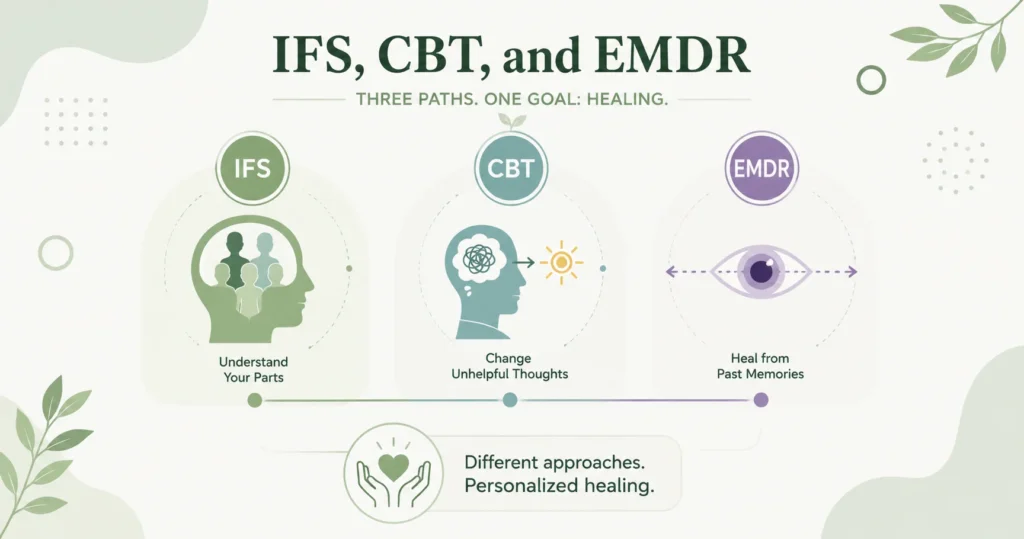
IFS, CBT, and EMDR are three different kinds of therapy that can help you feel better. IFS looks at the different parts inside you. CBT helps you notice and change thoughts that hurt you. EMDR helps your brain work through hard memories. Saalvio’s clinical team offers all three, and the right fit depends on you and what you are carrying.
You do not need to know the answer yet
Maybe someone told you to “try CBT.” Maybe a friend swears by EMDR. Maybe you read about IFS and the idea of “parts” made something in you feel seen for the first time. Or maybe you are just tired, and you typed a question into a search bar at midnight because you did not know who else to ask.
You do not have to pick the perfect therapy on your own tonight. You just have to understand your options a little better. That is what this blog is for.
What is IFS therapy?
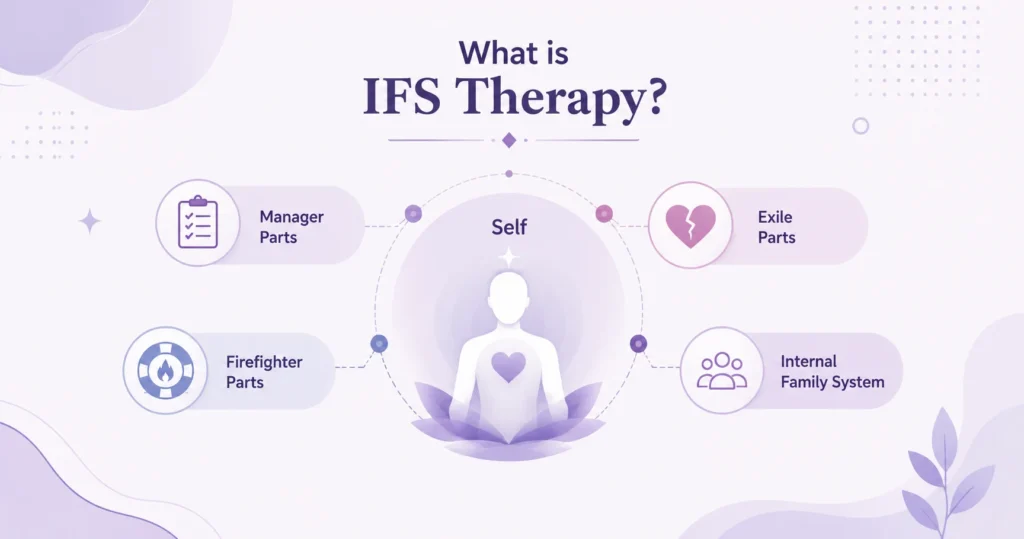
IFS stands for Internal Family Systems. It is a type of therapy built on one gentle idea: you are not just one single self. You have parts. If you want the full picture, check out our detailed blog on what IFS therapy is.
At the center of IFS is something called the Self. The Self is calm, curious, and steady. It is the part of you that is not a part at all. IFS therapy helps you build a relationship with your own internal family system roles, like the manager parts that plan and protect, the firefighter parts that jump in during a crisis, and the exile parts that hold the oldest hurt.
IFS was added to the U.S. Substance Abuse and Mental Health Services Administration’s National Registry of Evidence-Based Programs and Practices in 2015, and research on its use continues to grow, including studies on IFS therapy for trauma and PTSD and post-traumatic stress (IFS Institute research page).
What is CBT?
CBT stands for Cognitive Behavioural Therapy. It focuses on the connection between your thoughts, your feelings, and what you do. CBT does not spend a lot of time on the past. It stays close to what is happening in your life right now, this week, this day.
According to the National Institutes of Health (NIH), CBT is one of the most researched types of therapy, and evidence shows it works especially well for anxiety and depression. It is often described as a good fit for people who want clear tools they can use in daily life.
What is EMDR?
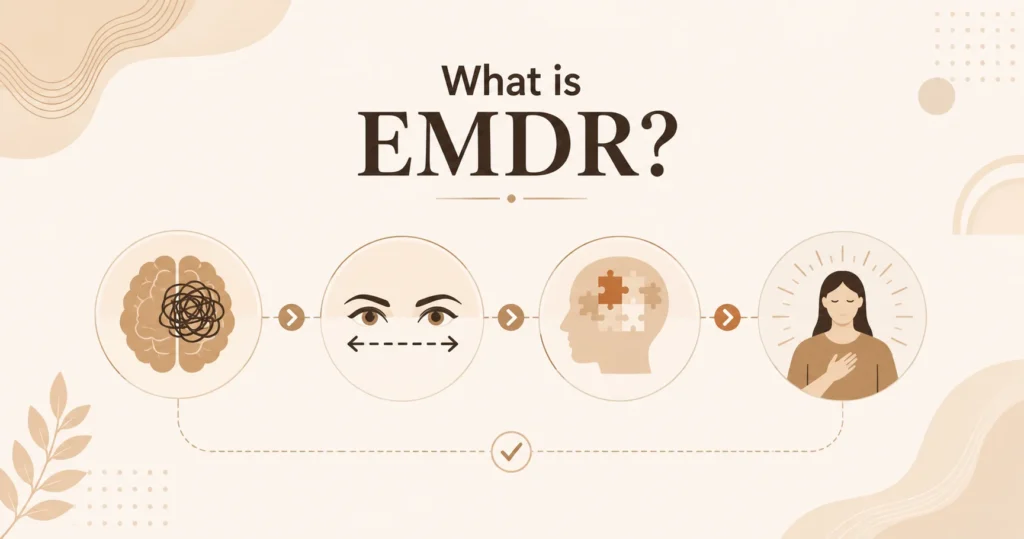
EMDR stands for Eye Movement Desensitization and Reprocessing. It was built to help the brain process memories that got stuck, usually memories tied to something frightening or overwhelming. During EMDR, a therapist guides you through a memory while using side-to-side eye movements, taps, or sounds. Over time, the memory often feels less sharp and less overwhelming to think about.
Most international clinical practice guidelines for PTSD, including those from the World Health Organization, recommend EMDR as a first-line treatment, and the American Psychological Association recognizes it as a treatment option for PTSD.
IFS vs. CBT: How are they different?
The IFS vs. CBT question comes up a lot, because both are common and both are backed by research. The real difference is where each one starts.
CBT starts with your thoughts. It asks, “What are you telling yourself, and is that thought helping you?” IFS starts with your parts. It asks, “Which part of you is speaking right now, and what does that part need?”
CBT vs. IFS therapy is not really a contest. Many people benefit from both, sometimes in the same course of care. If you like structure, homework, and clear steps, CBT may feel more natural at first. If you want to slow down and understand the deeper “why” behind a pattern, IFS may feel more natural. A member of Saalvio’s clinical team can help you figure out which starting point fits where you are right now.
IFS vs. EMDR: How are they different?
IFS vs. EMDR is another common question, especially for people carrying trauma. Both can help with hard memories, but they work in different ways.
EMDR vs. IFS therapy comes down to focus. EMDR works directly on a specific memory, using eye movements or taps to help your brain reprocess it. IFS works on your relationship with the parts of you that were shaped by that memory, like the part that still feels unsafe or the part that works overtime to make sure it never happens again.
Can IFS and EMDR work together?
Yes. IFS and EMDR therapy are sometimes used together, especially for trauma. A therapist trained in both may use IFS first, to help the different parts of you feel ready and safe, and then bring in EMDR to help reprocess a specific memory. This is a clinical decision made together with your therapist, based on what you are carrying and what pace feels right for you.
IFS vs. somatic therapy: What’s the difference?
IFS vs. somatic therapy is a helpful comparison because the two often overlap. Somatic therapy works by paying close attention to the body: your breath, your posture, the tension you carry without noticing. IFS pays close attention to your inner parts and the Self that can lead them.
In practice, many therapists blend the two, noticing how a part of you shows up in the body and using that awareness to build trust with the Self. Saalvio’s clinical roster includes therapists trained in somatic approaches alongside IFS, CBT, and EMDR.
How is IFS different from schema therapy and ego state therapy?
You may also come across the terms schema therapy and ego state therapy while researching your options. Both are established approaches used in the wider field of mental health.
IFS vs. schema therapy: schema therapy looks at deep, long-standing patterns called “schemas,” often formed in childhood, and works to change the coping styles built around them. Schema therapy vs. IFS shares some common ground, since both look at parts of the self that formed early in life, but schema therapy is built around identifying specific schemas, while IFS is built around building a relationship between the Self and every part.
Ego state therapy vs. IFS is a similar comparison. Ego state therapy also views the mind as made up of different states or parts, and it shares roots with some of the same clinical thinking that shaped IFS. The two are not identical, and the language and techniques differ.
How to choose the therapy that’s right for you
There is no single right answer to choosing evidence-based therapy. A few honest questions can help point you in a direction:
- Do you want clear tools and homework you can use this week? CBT may be a strong starting point.
- Do you feel pulled in different directions inside yourself, like one part wants to move forward while another part wants to stay safe? IFS may be a strong starting point.
- Do you have a specific memory or event that still feels raw when you think about it? EMDR may be a strong starting point.
- Not sure? That is completely normal, and it is exactly what your first conversation with a therapist is for.
You don’t have to figure this out alone
You do not have to choose blind. Before you book anything, you can send a message to any therapist on Saalvio’s clinical team and ask what IFS therapy techniques, CBT tools, or EMDR methods they actually use, and whether their approach fits what you are carrying. There is no cost and no commitment to ask.
If you would rather talk it through first, every new Saalvio client can book a free 30-minute consultation with a member of our clinical team. It is not a full therapy session. It is a chance to meet your therapist, share what brought you here, and ask any question on your mind, at no cost.
Alongside professional support, Saalvio also offers tools designed to help you build healthier coping habits between sessions. Through the Saalvio app, clients can access supportive resources and use Thrive AI, a CBT-based chatbot designed to help you reflect on thoughts, practice CBT techniques, and work through everyday emotional challenges. Note: Thrive AI isn’t a substitute for therapy.
Saalvio’s Registered Psychotherapists and Registered Social Workers are regulated by the College of Registered Psychotherapists of Ontario and the Ontario College of Social Workers and Social Service Workers. Sessions are typically reimbursable under most Canadian extended health benefit plans, and every client receives a detailed receipt for submission to their insurer.
Frequently Asked Questions
Is IFS therapy better than CBT or EMDR?
No single therapy is better for everyone. IFS, CBT, and EMDR are different, evidence-based approaches that work in different ways. The right fit depends on your history, your goals, and what feels right to you.
Can I try IFS, CBT, and EMDR at Saalvio?
Yes. Saalvio’s clinical team includes Registered Psychotherapists and Registered Social Workers trained in IFS, CBT, EMDR, and other approaches. You can message a therapist about their specific training before you book.
Do I need a diagnosis before starting IFS, CBT, or EMDR?
No. You do not need a diagnosis to start therapy. Saalvio does not diagnose. A therapist may use structured self-assessments to help understand what you are experiencing, but any diagnosis comes only from a qualified clinician working within their own scope of practice.
Will insurance cover IFS therapy sessions?
Saalvio does not bill insurers directly. Sessions with a Registered Psychotherapist or Registered Social Workers are typically reimbursable under most Canadian extended health benefit plans, and you will receive a detailed receipt to submit for reimbursement. Coverage varies by plan, so it is worth checking your specific benefits.
What if I am not sure which therapy is right for me?
That is one of the most common starting points. You can message a therapist with your questions before booking anything, or book a free 30-minute consultation to talk it through with a member of our clinical team.
Clinically reviewed
Usman Khan, Registered Psychotherapist
Usman Khan is the Clinical Director of Saalvio and a Registered Psychotherapist with the College of Registered Psychotherapists of Ontario (CRPO #13456). He holds an MD, an MPH from Western University, and an MA in Counselling Psychology from Yorkville University. He reviews all clinical content on saalvio.com before publish.
See also across Saalvio
Topics mentioned in this post that have their own page on the site.
Talk to our clinical team
Saalvio offers a free 30-minute consultation with any therapist on the team. There is no card on file. If we are not the right fit, we will say so and help you find one.